Shallow Shingle Roofs Drop Grit, Not Just Debris
Saddleback went up in the 1990s and 2000s, and the roofs match the era: architectural asphalt shingle on simple gable and hip forms, pitched somewhere around 5:12 to 7:12. That matters more than it sounds. A shallower pitch moves water off the field slowly and puts less energy into the gutter, so debris settles where it lands instead of getting flushed toward the outlet. It also means the roof sheds granules straight into the trough rather than past it. On a house this age the shingles are either well into their second half or coming up on replacement, and granule loss accelerates at the end of a shingle's life. When we scoop out a Saddleback gutter it's usually two-thirds asphalt grit and field dust, one-third organic. That's a different clog than a leaf-choked downspout, and it's a lot heavier than people expect.
The Trees Here Just Reached the Age That Matters
The trees planted when these houses were built are now twenty-five to thirty years old, which is exactly the age where they start filling gutters. Maple, ash, flowering pear, and the occasional blue spruce — standard Treasure Valley builder stock — throw enough canopy at that size to reach over the eave on at least one elevation. Almost every Saddleback house we work has one bad side and three easy ones. The run under the mature tree packs solid; the other three are just dust. Spruce is the worst of the group because needles drop year-round instead of in one autumn wave, and they knit into a mat that water runs over rather than through. If your lot still has small trees or none, your gutters are a dust problem and not a leaf problem, and you can stretch the interval out.
Downspouts on a Narrow Tract Lot
Lots in Saddleback are narrow, and the downspouts almost always live in the side yard between the house and the fence — five or six feet of gravel or bark with an AC condenser, a hose reel, and the gas meter competing for the same space. That's the part of the job that actually takes the time. We flush every downspout from the top and confirm it discharges, because on this vintage of house a fair number of them dump into a buried corrugated drain line running under the lawn toward the curb or a dry well. Those lines silt up with the same grit that fills the gutter, and a clear trough over a plugged underground line still backs water against the foundation. If a downspout won't flow after flushing, we tell you where the blockage is instead of calling the job done.
How to Tell If Yours Actually Need It Yet
Here's the check to run before you call anybody. Stand at the corner of the house during a real rain and watch the downspout. Steady stream means the system is doing its job. If water is sheeting over the front lip mid-run, or dripping off the back edge behind the fascia, you've got a clog or a pitch problem and it needs attention. Dry-weather version: look down into the outlet from a ladder, or hold a phone over the trough. Sediment sitting a quarter inch deep is normal and doesn't need service. Packed level with the top of the outlet, or growing weeds, means it's gone too long. Plenty of Saddleback houses with no overhanging trees genuinely only need this once a year, and we'll tell you that instead of selling you a second visit.
What the Job Looks Like Here
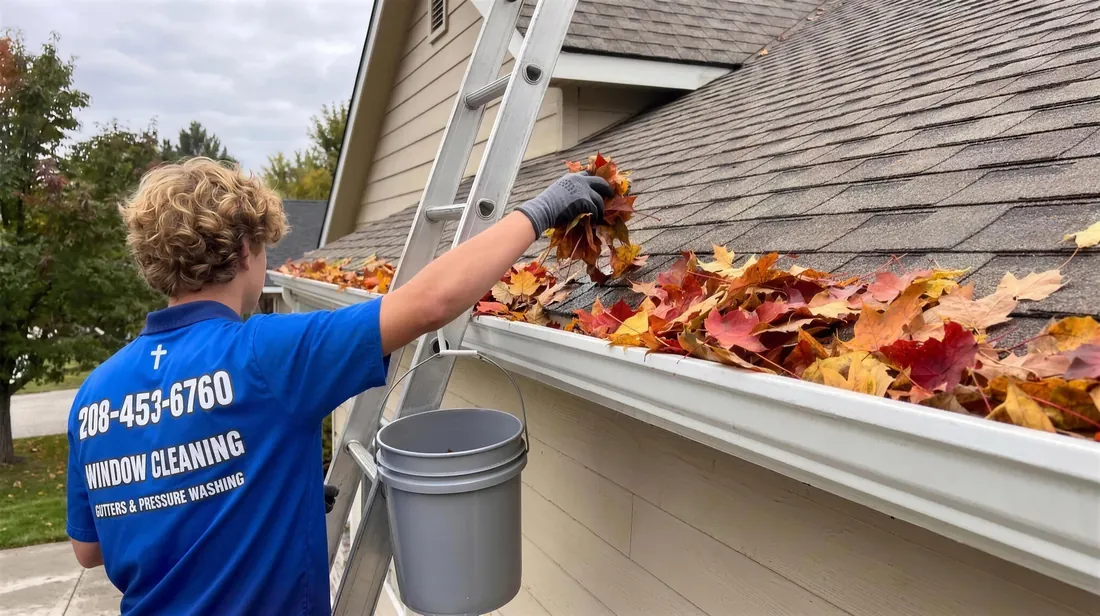
Gutter cleaning in Saddleback starts at $199 for one- and two-story homes, which covers essentially the whole neighborhood — standard tract footprints, driveway access, no three-story walls. We hand-scoop the troughs into buckets rather than blowing debris across your siding and landscaping, bag it out, flush the runs, clear the downspouts, and rinse the exterior face so the drip streaks come off too. Gutters and hardscape get standard soft-wash and flush methods; the pure deionized water is for window work. If you'd rather have it handled on a schedule, Monthly and Quarterly memberships are available with no contract either way, and there's a 7-Day Rain Guarantee. Reflekt is fully insured and locally owned, founded in 2025 by Hunter Stevens and Ethan Seusy, with 125+ Google reviews at 4.9 stars. Next-Day slots open up often since we route through Caldwell most weeks.
Ready for Gutter Cleaning in Saddleback?
Free, no-obligation quote — we'll call or text you with your price.
Get My Free Quote