Why two West Valley streets are a decade apart in damage
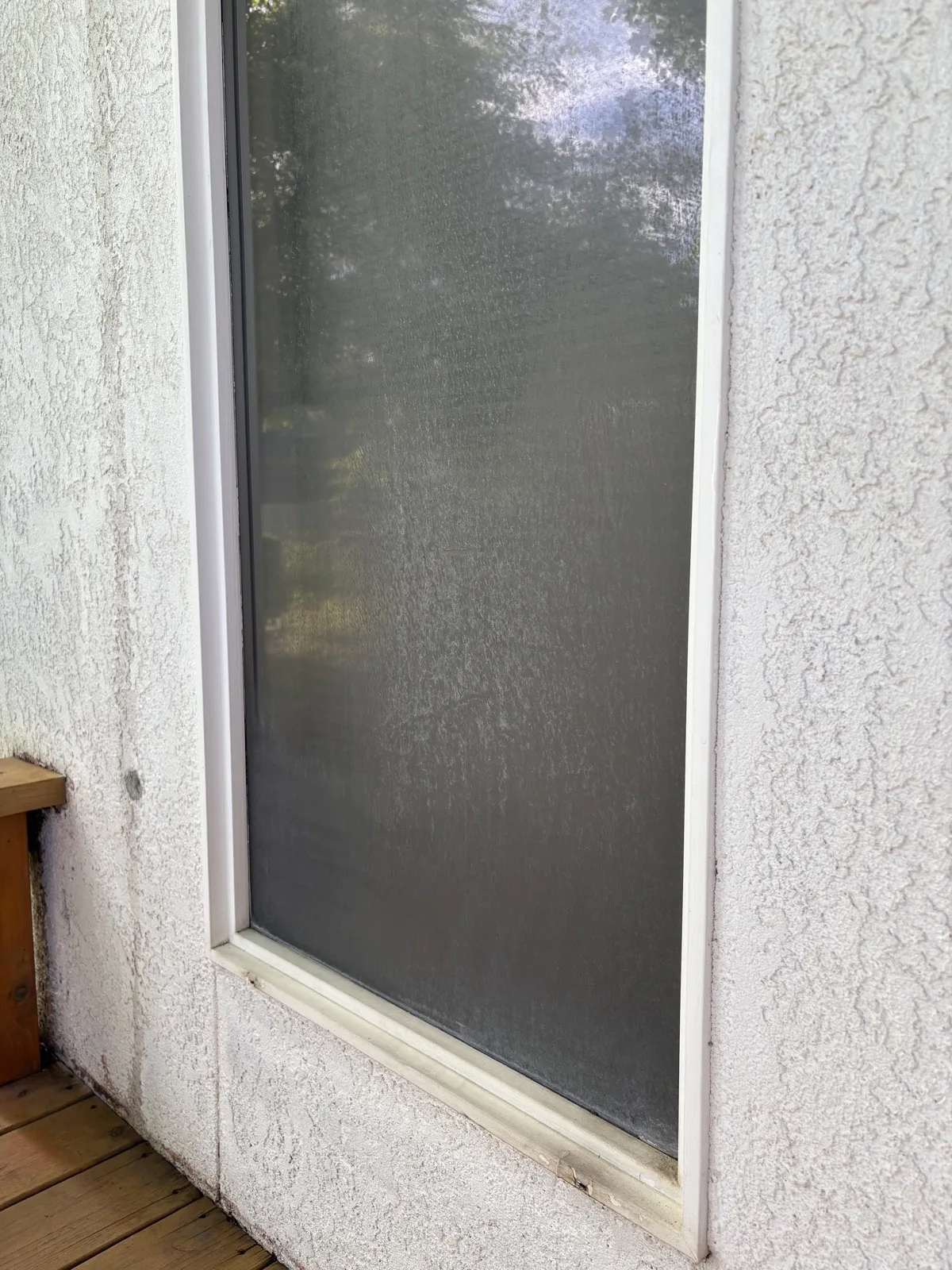
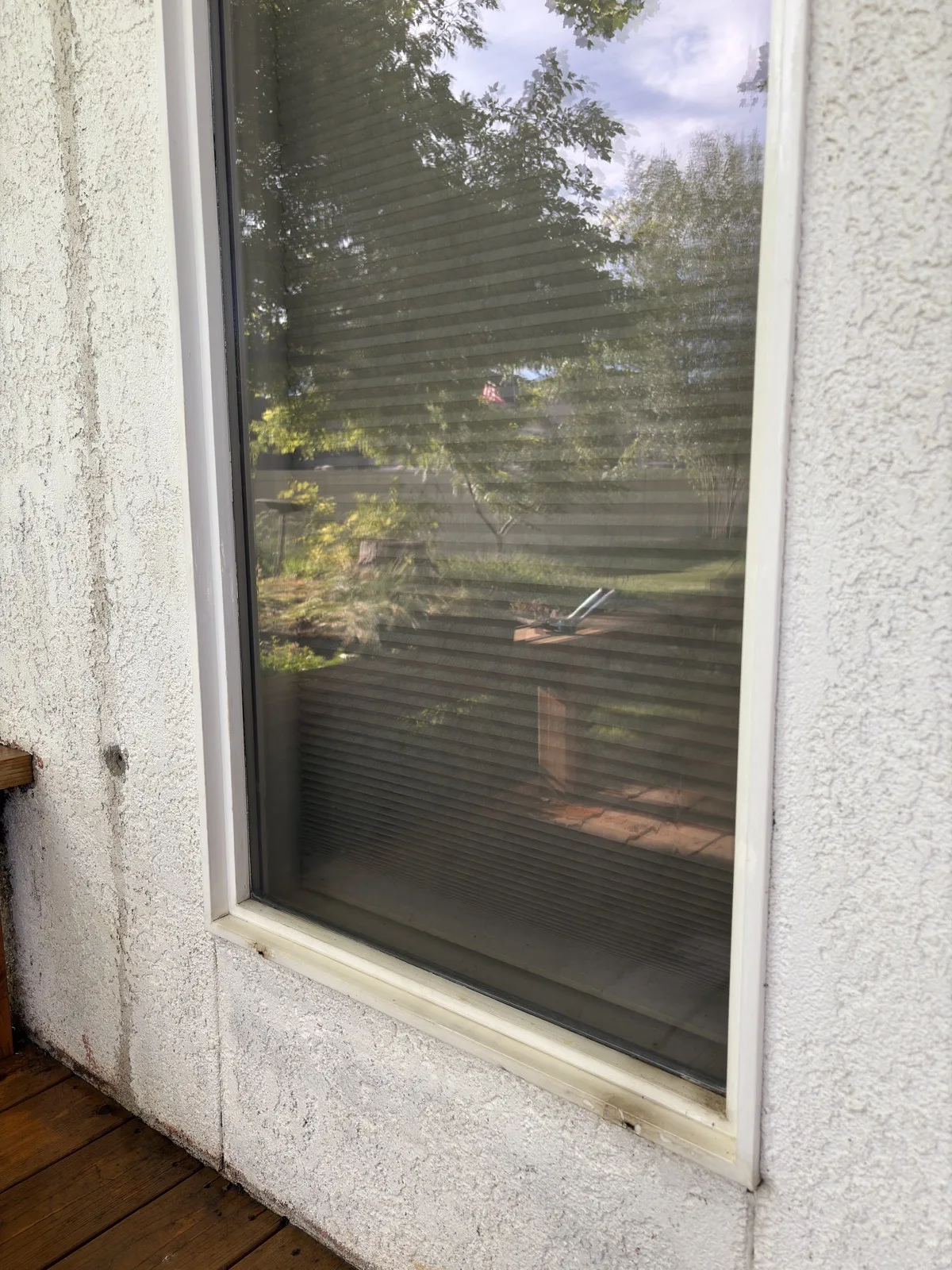
West Valley did not go in all at once. The blocks closest to Franklin and Curtis were platted in the mid-1970s, and the pockets north toward Emerald and the mall filled in through the late 1980s and early 1990s. That fifteen-year spread is why severity changes street by street. An original 1970s system runs brass impact heads at low pressure with big droplets, aimed at whatever looked even from the middle of the lawn. The systems that went in later use pop-up spray bodies at higher pressure, throwing a finer mist that drifts on the afternoon wind. Both reach windows, but they leave different marks: impacts leave heavy spotted rings low on the pane, spray heads leave an even haze across the whole thing. We can usually tell which one we are dealing with before we knock on the door.
Ditch water and city water do not stain the same
Two sources feed lawns in this part of Boise. Hose-bib and city-fed systems run the municipal supply, which on the west bench leans on deep wells and commonly tests in the 10-to-13-grain range. That is dissolved calcium and magnesium, and it dries clear before it turns white, so it sneaks up on you over a couple of seasons. Canal water off the Settlers and Farmers Union systems is untreated. It carries silt, algae and field minerals, and it dries to a gritty tan film with white underneath. The silt film washes off easily. The mineral under it may not. If your system draws out of the ditch you will also see that tan line on the vinyl frames, the garage door and the bottom of the siding, which is a quick way to confirm the source without opening a valve box.
Which elevations actually take the overspray
Overspray is never evenly distributed, and pricing a whole house as if it were is how people get overcharged. On a standard West Valley lot the worst glass is west and south, because those panes are still hot in the evening when most timers run and the water flashes off before it can sheet down. Ground-floor windows within about fifteen feet of a head take direct hits. On the split-levels through here, the half-height basement windows sit low enough to catch spray a taller window never sees, and they go unnoticed for years. Corner lots are the other bad case, with street-side heads on two sides plus whatever the city parkstrip or a shared common strip along an arterial throws when it runs. North elevations are usually fine. We quote what is damaged, not the full pane count.
Deposit comes off. Etching does not.
This is the part worth reading before you pay anyone. Hard water sits on glass as a deposit at first, and a deposit comes off. Left through repeated summers, the mineral slowly eats into the silica and becomes etching, which is a change in the glass itself rather than something sitting on top of it. No acid, no polish, no amount of pressure reverses that. The field test is simple. Wet the pane, drag a fingernail across the worst area, then look at it edge-on with the sun behind you. If it feels slightly raised and the haze moves when you scrub a corner, it is deposit and we can take it off. If the glass feels smooth and the cloud stays put in the same shape, it is etched, and the honest answer is a new sash. We run that test in front of you before quoting.
Fixing the cause, and what it costs
Cleaning the glass without touching the cause buys you exactly one season. Once the panes are clear we walk the zones with you and flag the heads actually hitting the house, usually two or three out of thirty. Most are a ten-minute fix: a nozzle swap, an arc adjustment, or dropping a riser so the throw clears the sill. Where a head has to reach past a window, a pressure-regulated body or a rotator throwing bigger droplets keeps mist off the glass. That walk-through is free. The restoration itself is quoted by severity, because a first-season film and a five-summer crust are not the same labor. It is included on the Monthly membership. Final rinse is 100% pure deionized water, so nothing we leave on the glass can dry into a new spot. Call (208) 453-6760.
Ready for Hard Water Stain Removal in West Valley?
Free, no-obligation quote — we'll call or text you with your price.
Get My Free Quote