The Concrete Out Here Isn't City Concrete
Downtown Caldwell has curbs, sidewalks and short poured aprons that all went in with the subdivision. The bench doesn't. Out here you get a long chip-seal or gravel drive with a concrete apron at the garage, a broom-finish slab at the back door, a patio that somebody poured themselves, and a shop or barn slab that's usually the biggest single piece of concrete on the property. Almost all of it is gravel-adjacent, and that matters more than people think. Grit tracked off the drive and pushed around by tires acts like sandpaper on a broom finish, opening the surface up so it holds dirt and oil deeper than a sealed subdivision driveway would. It also means we blow the loose rock off before any water hits, or we spend the job chasing gravel across your slab.
Where Sunnyslope Stains Actually Come From
Four sources cover most of what we see on the bench. First, iron. A lot of these properties run well or canal water through impact sprinklers, and that leaves rust-orange fan patterns on concrete right where the head throws — always the same arc, always sharpest on the drive and walkway edges. Second, tannin: leaf, blossom and dropped fruit off orchard rows and vines stain brown-black and bleed worse when they sit wet under snow. Third, equipment. Tractor and UTV tires leave black scuff, and the shop slab usually has hydraulic or diesel drips near the door. Fourth, biological growth — moss and algae on north-facing patios and any slab that stays shaded and damp, which is common on the lower properties toward Lake Lowell. Each of those wants a different approach, and pressure alone only solves one of them.
What Pressure Alone Will Not Fix
Worth saying plainly, because it saves you money. Well-water rust is a chemical problem, not a pressure problem. You can hit an iron fan pattern with 4,000 PSI all afternoon and it will still be orange, because the stain is mineral bonded into the pore, not dirt sitting on top. It takes an oxalic-based rust treatment and a dwell, and even then old deep staining often lightens rather than disappears. Same story with oil in an open broom finish — degreaser, dwell, and sometimes a second pass. And if your concrete is already spalled or pitted from de-icer, washing it will make it clean, not new; the pitting stays. We'll tell you which category your stain falls in when we look at it instead of quoting you a wash and hoping.
New Concrete and the Haze That Keeps Coming Back
There's still new building going on around the bench, and new slabs come with their own issue. Fresh concrete needs time to cure before it gets pressure washed — roughly a month at minimum, and we'd rather see a new pour go through a season first. Wash it too early and you can lace the surface with wand marks that never come out. The chalky white bloom people want gone on a new driveway is usually efflorescence, minerals working their way out of the slab as it dries. We can take it off, but it will likely come back once or twice during that first year no matter who washes it. That's the concrete finishing its cure, not a bad cleaning job, and it's not worth paying for three times.
How We Run the Job, and What It Costs
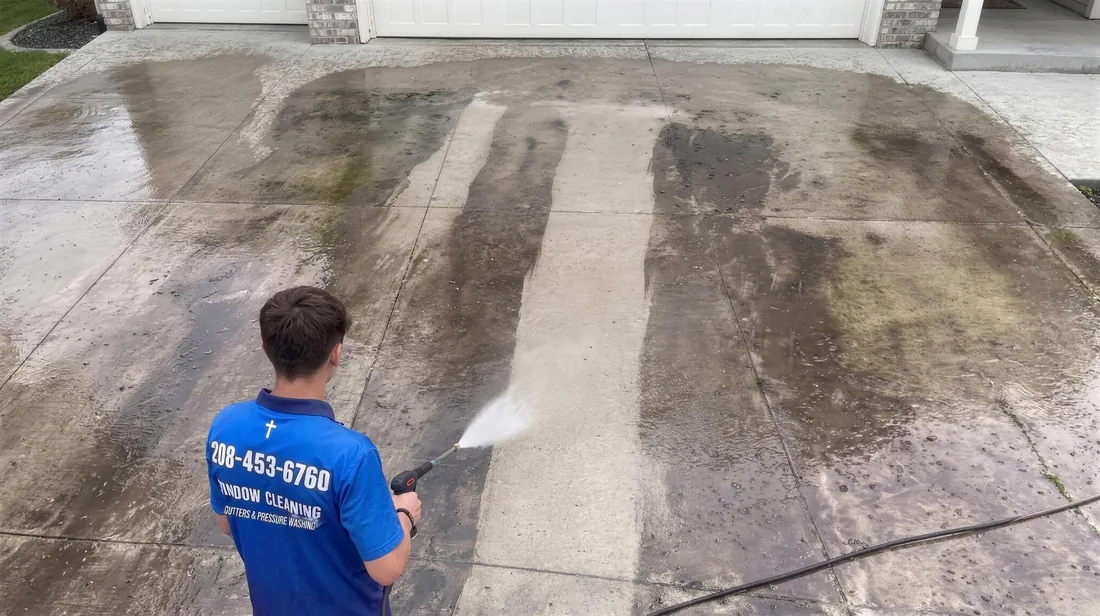
We use a surface cleaner for the flat work so passes come out even instead of striped, then wand the edges and any stain we treated separately. Pressure gets dialed to the slab, not cranked to the machine's limit — old bench concrete etches easily. Because most of these properties have vines, orchard rows or drip line running right alongside the drive, we pre-wet plantings and control where runoff goes before we start. Driveways, patios and walkways are $0.20 per square foot; we measure the concrete, not the gravel. Reflekt is locally owned, fully insured, and running 4.9 stars across 125+ Google reviews. Monthly and Quarterly memberships are available with no contract, and next-day slots reach the bench the same as the rest of Caldwell. Call (208) 453-6760.
Ready for Pressure Washing in Sunnyslope?
Free, no-obligation quote — we'll call or text you with your price.
Get My Free Quote