The sprinkler head decides the damage, not the neighborhood
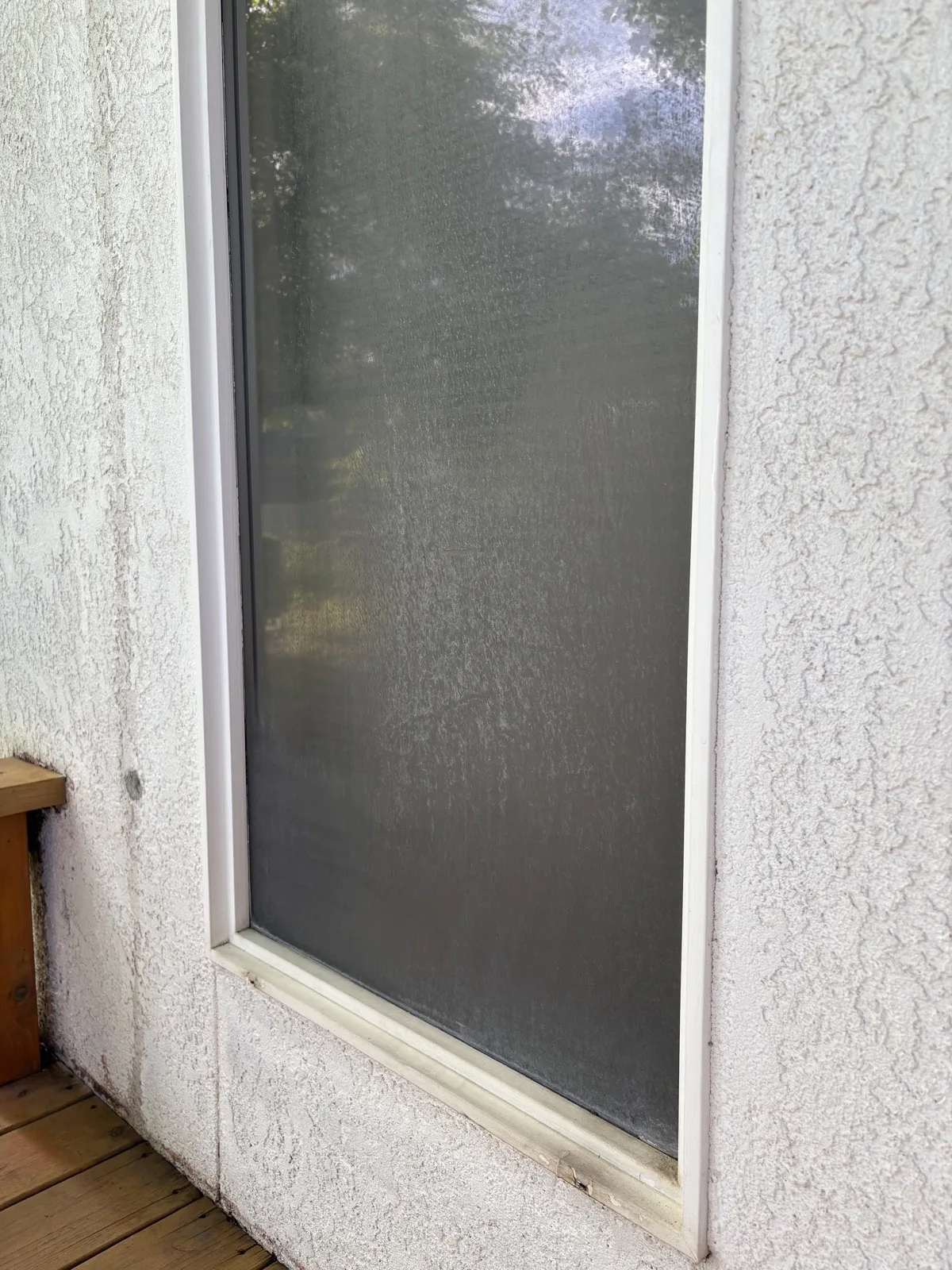
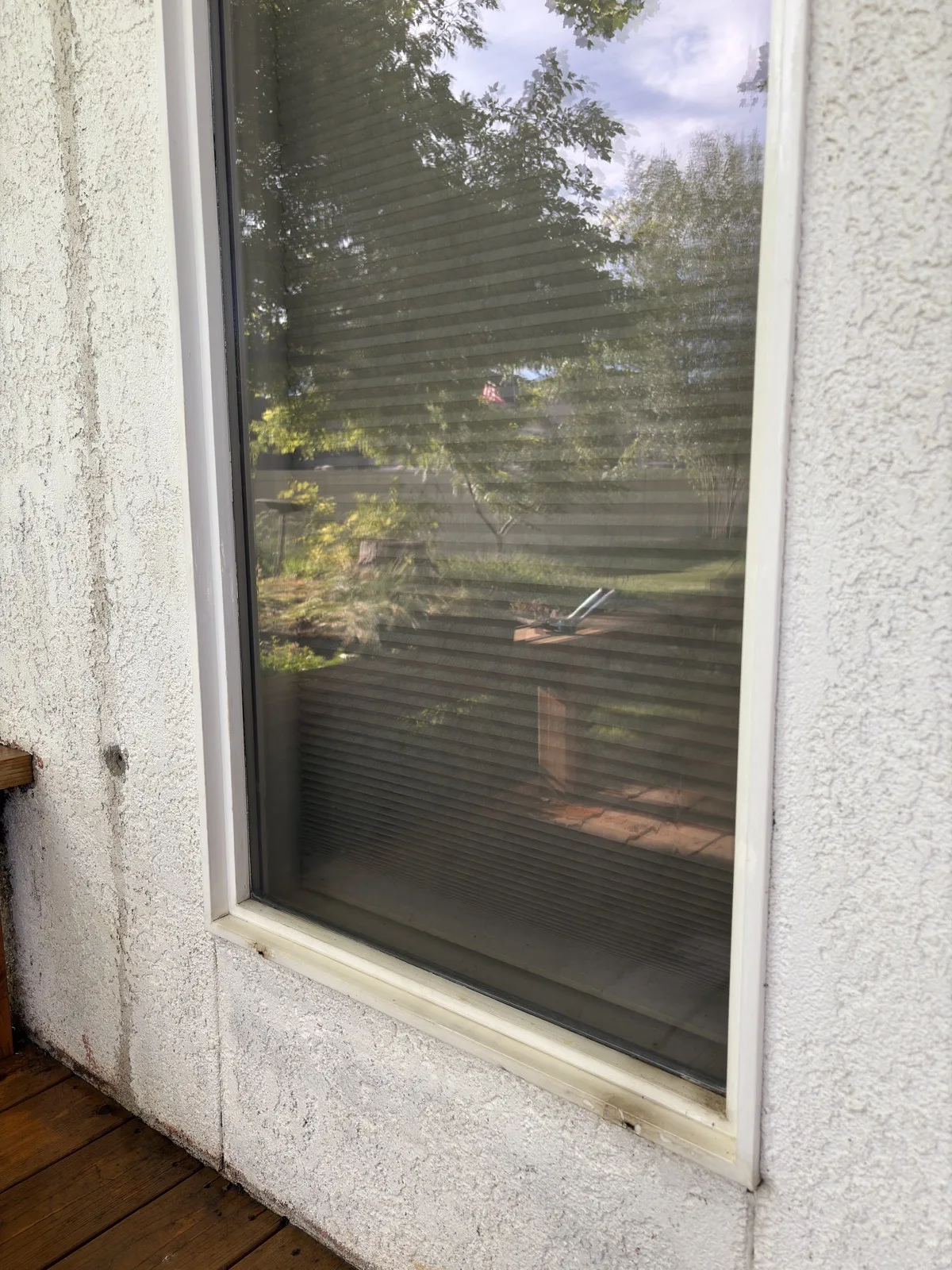
Hard water staining is the most house-by-house problem we deal with. Everything on this side of Nampa drinks the same water — untreated canal supply through the pressurized irrigation lines for the yards, hard well water on the hose bibs — so the mineral load is a constant. What changes is aim, arc and run time. We routinely quote two Ridgecrest homes a block apart where one has clear glass and the other has a permanently frosted band across the bottom third of every window on one elevation. The difference is a single half-circle rotor that got bumped out of arc years ago and has been washing the same wall four mornings a week ever since. Before we price anything, we walk the yard and find the head that did it. If we cannot point at the cause, we cannot promise the fix will hold.
Subdivision age changes what you are dealing with
The older phases around the course went in with brass impact heads and pop-ups set for lawns that have since been re-landscaped, re-graded and had beds pushed toward the foundation. Risers settle, sod builds up around them, and a head that once cleared a shrub now clears it by aiming higher — straight into the sill. Those houses tend to have deep, decade-old buildup that has already started etching. The newer infill lots came in with rotors and pressure-regulated bodies aimed low, so the staining there is usually shallower and newer, and it comes off. Same neighborhood, same water, completely different jobs. That is why we quote hard water stain work by severity after seeing it, instead of by square foot or window count.
HOA common landscaping is the part you cannot re-aim
Homes backing the common green strips, entry islands and course-side fence lines have a second irrigation system working on them that is not on their own controller. The association's zones run big rotors on long throw to cover open turf cheaply, and the tail end of that throw lands on the first-floor glass of whatever backs it. You can adjust every head in your own yard and still get hit every cycle. Those elevations are the ones we end up restoring most often here, and they are also the ones where a one-time restoration without a plan is a waste of money. If your worst glass faces common ground rather than your own lawn, tell us — it changes what we recommend, and it is usually the case for putting that side on a recurring clean.
The wet test: deposit or etching
Here is the honest part, and you can check it yourself in ten seconds. Wet the stained glass with a hose or a wet rag and look at it while it is still soaking. If the cloudiness disappears under the water and comes back as it dries, the mineral is sitting on top of the glass and we can take it off. If you can still see the white haze while the pane is wet, the minerals have eaten into the silica and that is etching. Etching is damage, not dirt. We can polish light etching down with compound and improve it a lot, but deep etching on a south or west elevation that has been washed daily for fifteen years does not come back to new — that pane needs replacing. We will tell you which one you have before we take your money.
What it costs, and keeping it from coming back
Hard water stain removal is quoted by severity, because a light seasonal film and fifteen years of baked calcium are not the same job. Light deposits often lift during a normal clean with our 100% deionized water. Heavy buildup takes acid or compound work by hand, pane by pane, and gets priced accordingly. On our Monthly membership it is included, which is the right structure for the elevations that get hit every irrigation cycle anyway. After restoration we can apply a RainShield sealant so the next round of overspray beads and releases instead of bonding. Then go move the head. No contract on memberships, 7-Day Rain Guarantee, fully insured and locally owned — Reflekt was founded in 2025 by Hunter Stevens and Ethan Seusy, and we hold next-day slots through irrigation season.
Ready for Hard Water Stain Removal in Ridgecrest?
Free, no-obligation quote — we'll call or text you with your price.
Get My Free Quote