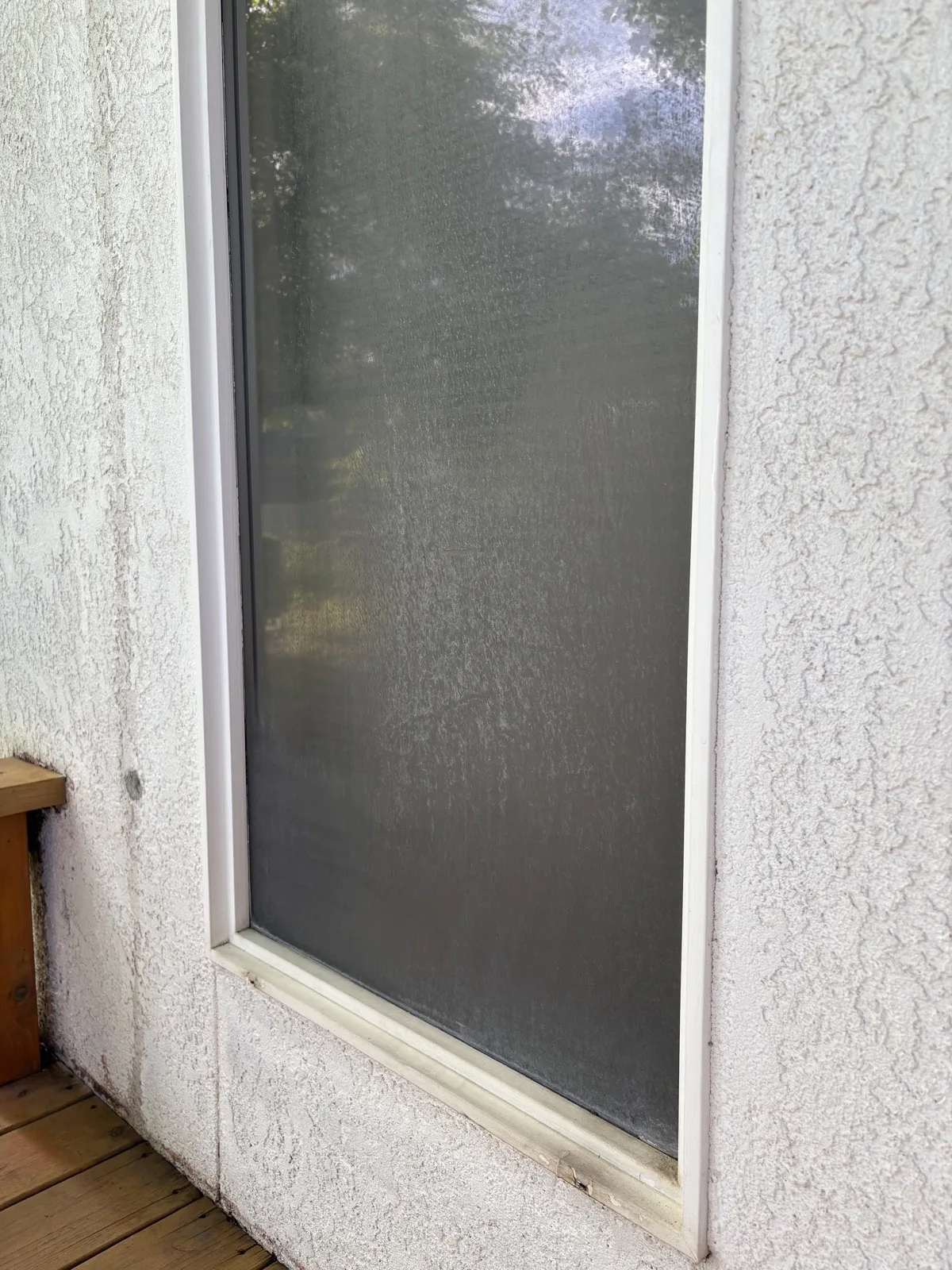
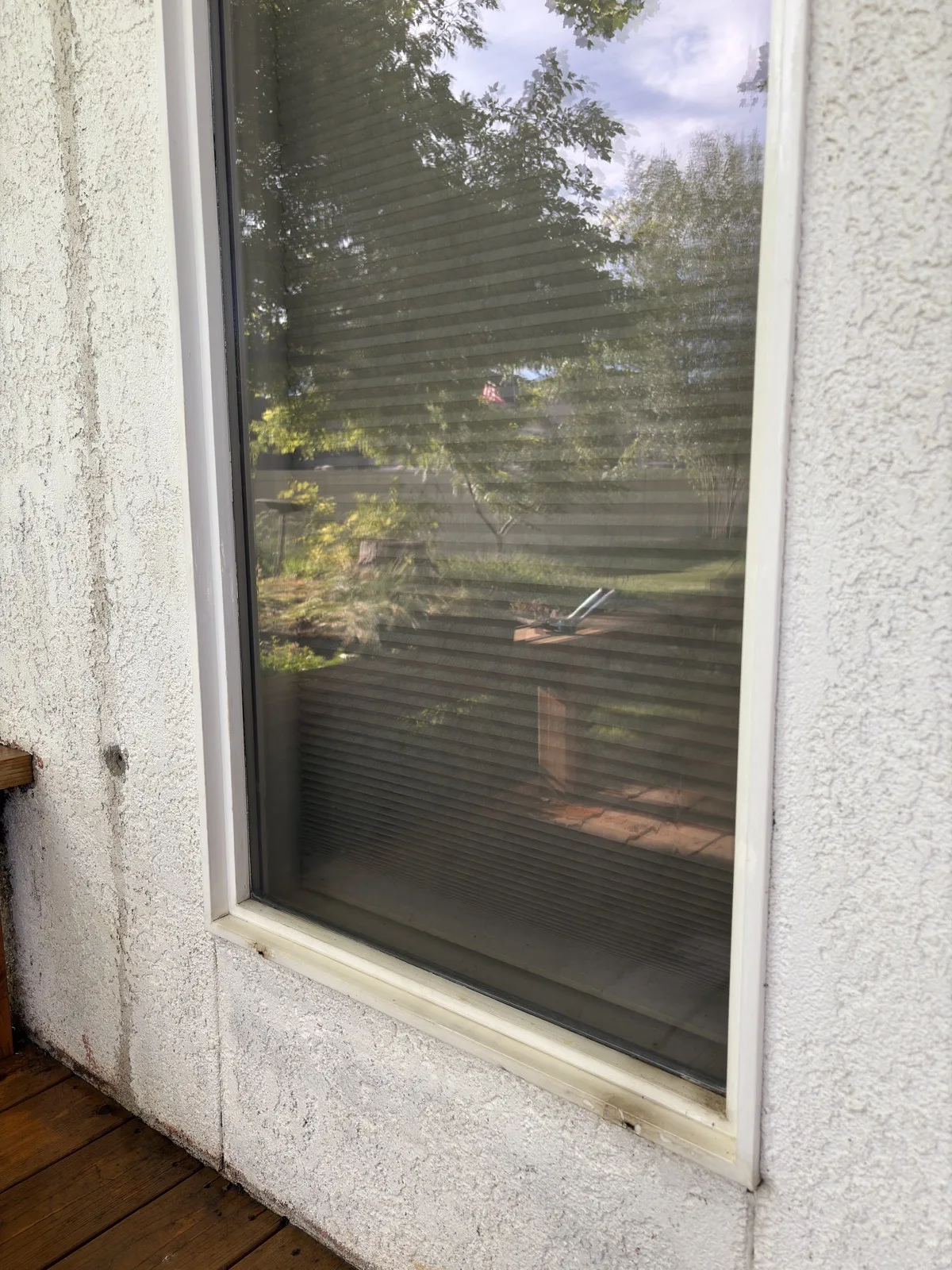
A young subdivision is the best time to catch this
Seneca Springs went up recently by Star standards, and that works in your favor. Hard water damage happens in stages: first a mineral film that wipes off, then bonded scale that needs a compound, then actual etching where the mineral has eaten a pit into the glass surface. Etching is permanent. Nothing takes it out but replacing the pane or grinding and polishing the glass, which costs more than the window on most residential units. On homes that have only had a handful of irrigation seasons on them, most of what we find is still in stage one or two, and it comes off clean. The same spots on a twenty-year-old house across Star are often past saving. If you have been looking at cloudy patches on your lower windows and putting it off, this is the window of time where putting it off is expensive.
One irrigation clock for the whole street
The HOA fee at Seneca Springs covers irrigation on each lot, so the association sets the schedule rather than twelve homeowners each guessing. Star runs on pressurized irrigation drawn off the canal system, untreated Boise River water that carries dissolved calcium and magnesium plus suspended silt, typically from mid-April through mid-October. Centrally run irrigation is a real advantage for us. In a normal subdivision, one neighbor waters at 4 a.m. and the next at noon in full sun, and midday watering is what bakes minerals onto glass fastest. Here the cycle is uniform, which means when we walk the street we usually see the same stain severity and the same affected elevations from house to house, and we can time a restoration visit to the shoulder of the season instead of fighting the system mid-summer.
Which elevations actually take the overspray
Quarter- to half-acre lots need rotors, not the little fixed spray heads a 6,000-square-foot Star lot gets by with. Rotors throw thirty feet or more, and anything thrown that far is in the air long enough for the afternoon breeze off the northwest to move it. That is why the damage on these lots is rarely the whole house. It is the ground-floor glass on the elevations facing the largest turf areas, usually the rear and one side, plus any window sitting within throw range of a head at the corner of the lawn. Sliders and great-room glass at grade get hit hardest because they start at the bottom of the arc. The two-story glass up top on these floor plans generally stays clean, since it is well above where a rotor stream carries. When we quote, we walk the sprinklers, not just the windows.
How we take it off, and the test that tells you if we can
Here is the honest diagnostic, and you can run it yourself before calling anyone. Dry the glass, then run a fingernail across the cloudy area. If it catches, if you can feel texture, the mineral has bonded and may have started into the surface. If it is smooth and the haze is only visible at an angle, it is surface scale and it comes off. We remove bonded scale by hand with a restoration compound worked in sections, then rinse with 100% pure deionized water so nothing dries back onto the panel. We do not pressure wash mineral off glass. Pressure moves water, it does not dissolve calcium, and on a stained window all it accomplishes is driving grit across a surface that is already compromised. If a section is etched past saving, we tell you on site rather than charging you to polish a pane that will still look cloudy.
Fix the head before you fix the glass
Restoration only holds if the source stops. If a rotor is clipping your rear slider every third day, we can bring that glass back and it will look identical again by the end of the season, and you paid twice. Because irrigation at Seneca Springs is HOA-run, the adjustment is usually a call to the association rather than something you turn yourself, so we note which heads are hitting the house and where, and you have something specific to hand them. Pricing on stain removal is quoted by severity, because a light seasonal film and three years of bonded scale are not the same job. It is included on the Monthly membership, which is what makes sense for homes where the overspray cannot be fully aimed away. No contract, 7-Day Rain Guarantee, next-day slots when we have them.
Ready for Hard Water Stain Removal in Seneca Springs?
Free, no-obligation quote — we'll call or text you with your price.
Get My Free Quote