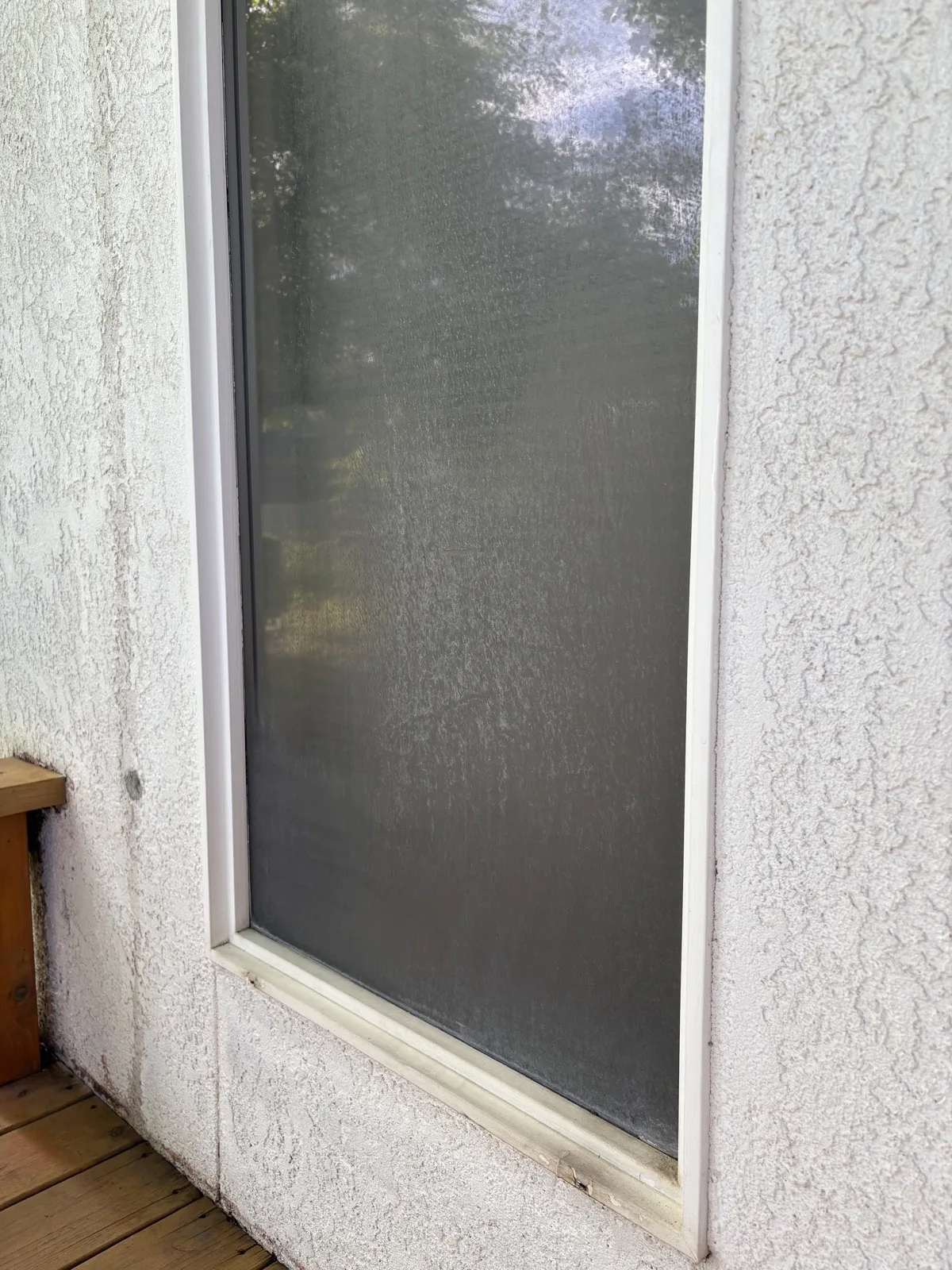
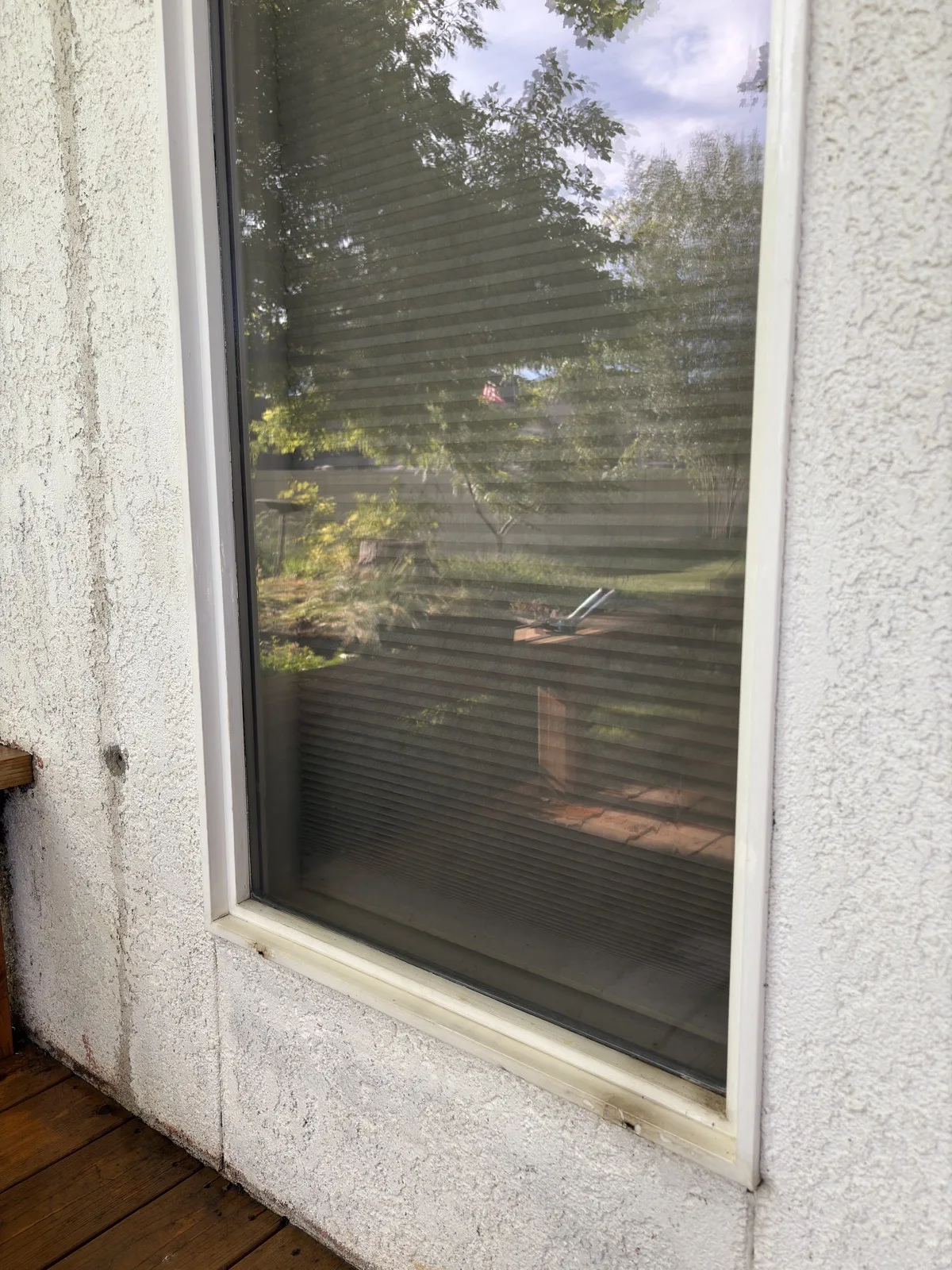
In this neighborhood, the age of the sprinkler system decides the damage
Hard water stains are the most address-specific thing we deal with. Two subdivisions a mile apart on Ten Mile can look completely different, and the reason is usually when the irrigation went in and whether anybody has touched it since. Ten Mile Crossing is recent construction, so most of what we find here is one to four seasons of buildup - a chalky deposit that still lifts off with the right acid and dwell time. Compare that to the 1990s and early-2000s subdivisions farther east on Franklin, where twenty-plus years of the same water hitting the same pane has cut into the glass and no product brings it back. If you own here, you are in the window where this is still a cleaning problem and not a glass-replacement problem. That window closes.
HOA common landscaping throws water farther than your own yard does
Walk a lot here and you will usually find low-trajectory rotator heads in the yard, set by the builder, aimed at turf. Those are not what wrecks glass. The damage comes off the common landscaping - the parkstrips, pathway corridors, detention areas and commercial frontage the HOA or the property manager waters on a separate controller. Those runs use bigger gear-drive rotors on higher pressure, throwing thirty feet or more, and nobody living there watches where the arc lands at 4 a.m. If your fence, patio or storefront backs a common strip, that is the elevation to check first. We see it constantly at the ground-floor commercial glass along the Franklin and Vanguard frontage, and on rear elevations of homes that back a shared pathway rather than a neighbor's yard.
Canal water, not city water
Most of Meridian, Ten Mile Crossing included, irrigates off pressurized delivery from the canal system rather than off the tap. That is untreated Boise River water, and it carries both dissolved mineral and suspended silt. When a drop dries on glass it leaves two things behind: a gritty tan film you can feel, and the mineral ring underneath it that you cannot wipe off. Homeowners often scrub the film away, decide the spots are permanent, and stop trying. They are not permanent yet - the film is just hiding a deposit that still responds to treatment. It also explains why running your windows with a hose does nothing here. You are rinsing them with the exact water that stained them.
The wet-glass test - is it deposit or is it etched?
Do this before you pay anyone, including us. Wet the pane with a hose or a wet rag and look at it while it is still soaked. If the spotting vanishes under water and reappears as it dries, the mineral is sitting on the surface and it comes off. If you can still see the ring pattern with the glass fully wet, it has etched into the glass and no chemical will remove it - only mechanical polishing, which on a large residential pane usually leaves visible distortion. We will tell you that on site rather than sell you a treatment that cannot work. One local note: the tempered glass in patio doors and low windows has a rougher surface from the tempering furnace and picks up mineral faster than the annealed glass beside it, so it is often the first to go.
How we take it off - and how you keep it off
Severity sets the method. Light seasonal spotting usually clears during a normal clean. Heavier buildup gets a dedicated acid treatment worked pane by pane with dwell time, then a full rinse and a finish pass in 100% pure deionized water so nothing streaks back as it dries. Pricing is by severity, because a two-season deposit and a five-season one are not the same job - and on our Monthly membership hard water treatment is included. The part most companies skip: none of it holds unless the head that caused it gets turned. Fix the aim yourself or get the HOA to adjust the common-area zone, otherwise you are buying the same service again next spring. We are locally owned, fully insured, founded in 2025 by Hunter Stevens and Ethan Seusy, at 4.9 stars across 125+ Google reviews.
Ready for Hard Water Stain Removal in Ten Mile Crossing?
Free, no-obligation quote — we'll call or text you with your price.
Get My Free Quote