Canal-Water Irrigation Is What Stains These Walls
Every lot out here runs pressurized irrigation off canal water rather than city tap, and that water carries silt and dissolved mineral that treated water doesn't. On a full acre the heads throw hard and far, so the bottom three or four feet of wall on the sprinkler side takes a soaking most nights all summer. On stucco it reads as a chalky white band with a tan silt line under it. On stone veneer and the mortar joints it shows up as a gray film that dulls the whole base of the house. It follows your zone layout, so it's usually ugly on one or two elevations and nearly clean on the rest. A soft-wash with proper detergent dwell time lifts the silt and the organic growth living in it. The mineral underneath is a separate conversation, and we get into that below.
North Walls: That's Algae, Not Dirt
The north and northeast elevations on these lots sit shaded most of the day, and with an irrigated acre of turf wrapped around the house, the humidity right at the wall stays up. That's exactly what green-black algae wants. On stucco it looks like a dull green haze that people read as shadow or general grime. On hardie and vinyl it collects in the lap lines and along the bottom edge of each course. Rinsing it with a garden hose mostly just spreads it around. Pressure knocks the surface layer off and it's back within a season, because the root structure is still down in the texture. What actually kills it is a soft-wash mix given time to dwell, then a low-pressure rinse. On a shaded wall that buys you a couple of years, not a couple of months.
Sun-Side Chalking on the Newer Lots
South and west walls here take full Treasure Valley sun with very little mature tree cover on the newer builds, and the finish oxidizes. Run your hand down a west-facing wall. If it comes back with white powder on it, that's chalk: the binder in the paint or the vinyl surface breaking down, not dirt sitting on top. This matters because a wash behaves differently on a chalked wall. The chalk comes off with the soap, and what's left underneath can look slightly patchy next to the shaded elevations that never oxidized. We'd rather tell you that in the driveway than have you find it after we've packed up. On heavily chalked paint, a house wash is the step before repainting, not a replacement for it.
Soft-Wash Only, and What It Costs
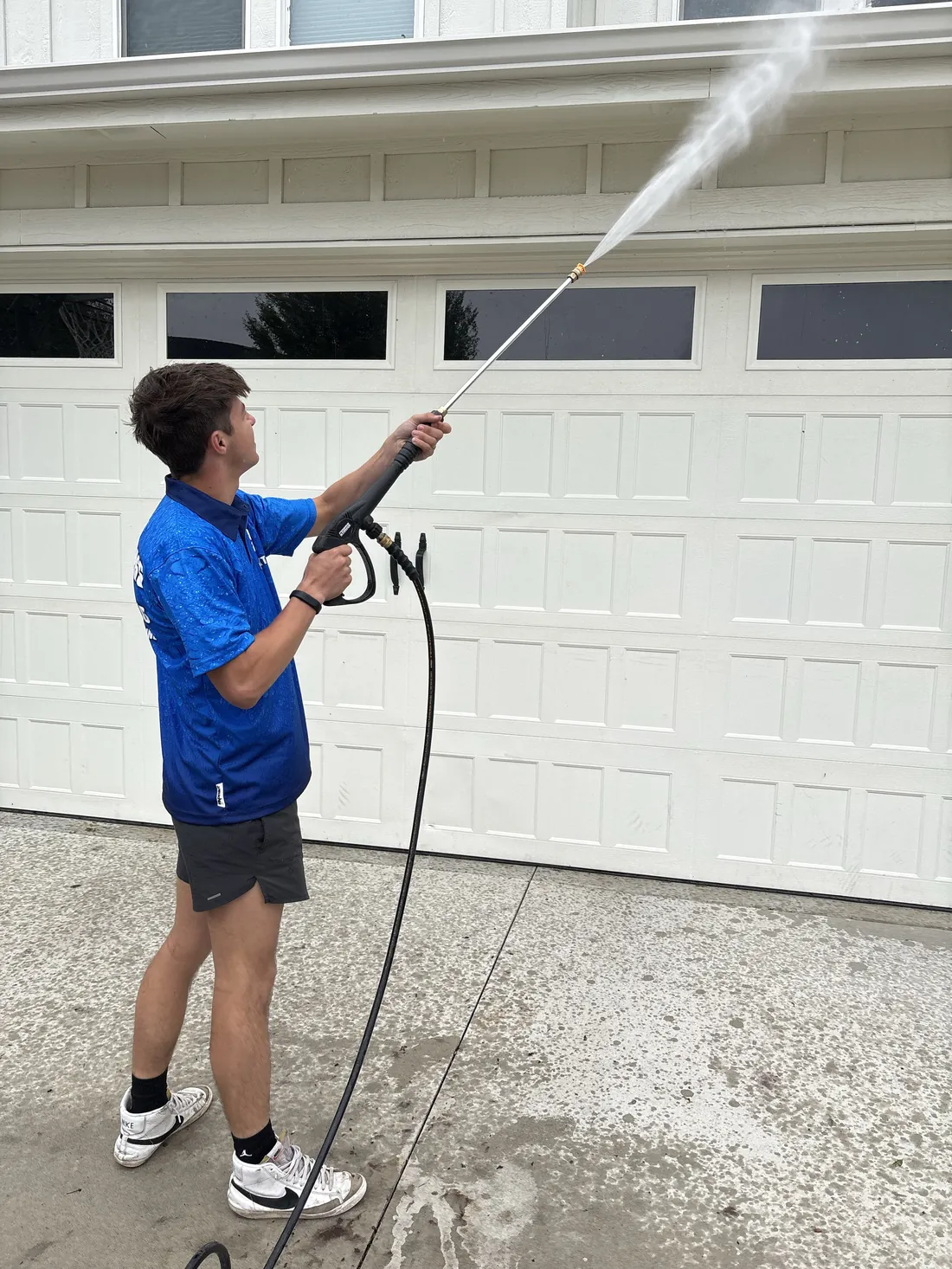
House washing here is soft-wash: low pressure, with the cleaning done by detergent and dwell time instead of force. On stucco that's the only method we'll run. High pressure cuts the sand out of stucco texture and leaves wand marks that don't come back out, and on lap siding it drives water up behind the courses. Pricing is $0.18 per square foot of wall, same rate whether it's stucco, hardie, vinyl, brick, or cedar. Acre lots mean long hose runs and a walk-around before we start, which we plan for on the schedule; it doesn't change the rate. Next-Day slots are often open, memberships run monthly or quarterly with no contract, and the 7-Day Rain Guarantee covers you if a spring storm rolls through the day after we finish.
What a Wash Will Not Fix Here
The honest part. That white band at sprinkler height on stucco is two things stacked: silt and organic growth on top, hard-water mineral bonded into the surface underneath. The wash takes the top layer and the wall looks dramatically better, but if that mineral has been building for five or six seasons, a faint shadow can stay. Pressure will not fix it, and anyone who tells you otherwise is about to chew up your stucco. The real fix is upstream: turn or shield the two or three heads that are hitting the wall, and we'll point out which ones while we're on site. Same goes for timing. If we washed you last spring and the north wall still looks clean, wait. Not every house in Purple Sage Estates needs this every single year.
Ready for House Washing in Purple Sage Estates?
Free, no-obligation quote — we'll call or text you with your price.
Get My Free Quote