Why Two Purple Sage Estates Homes Have Completely Different Damage
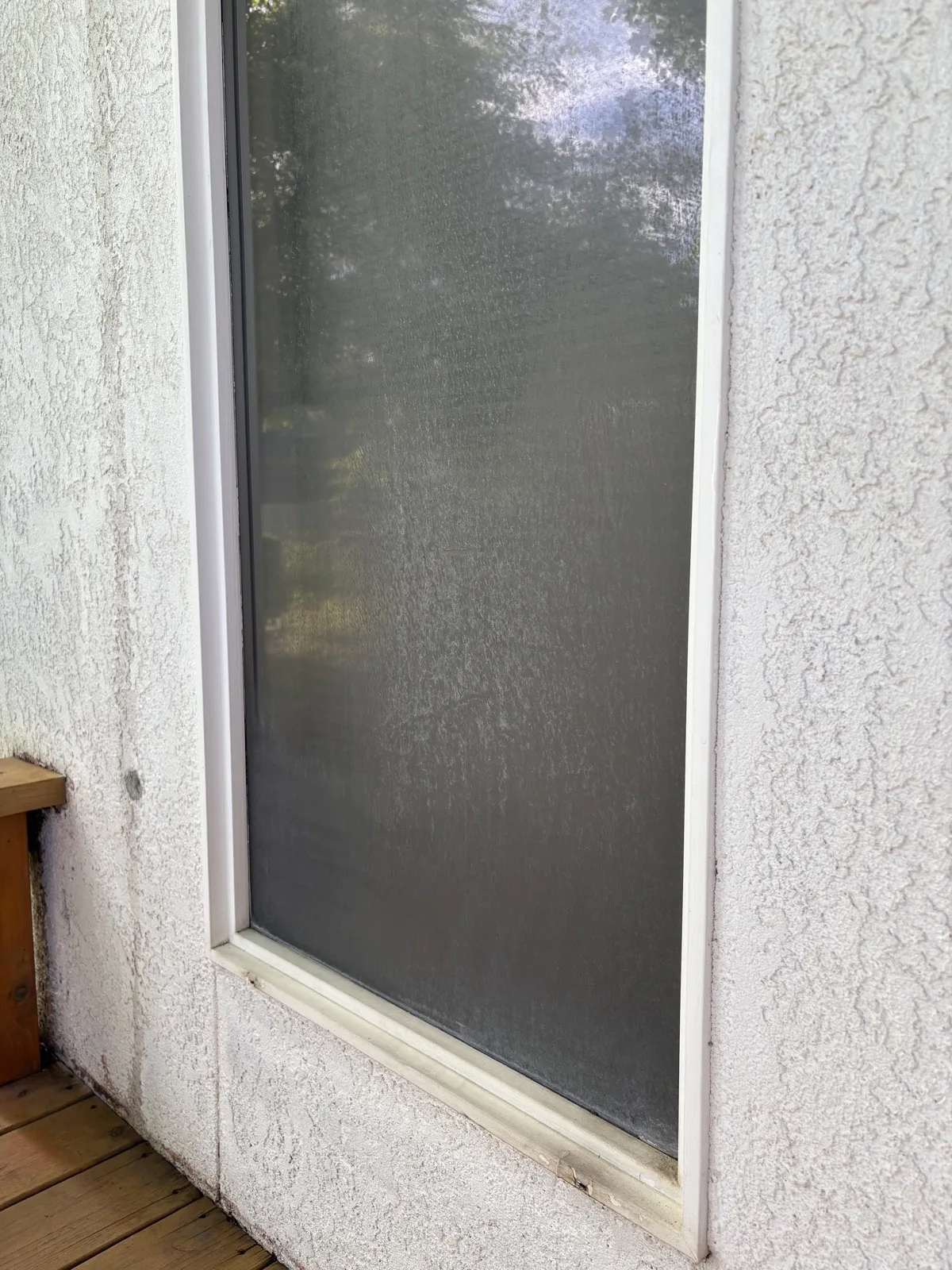
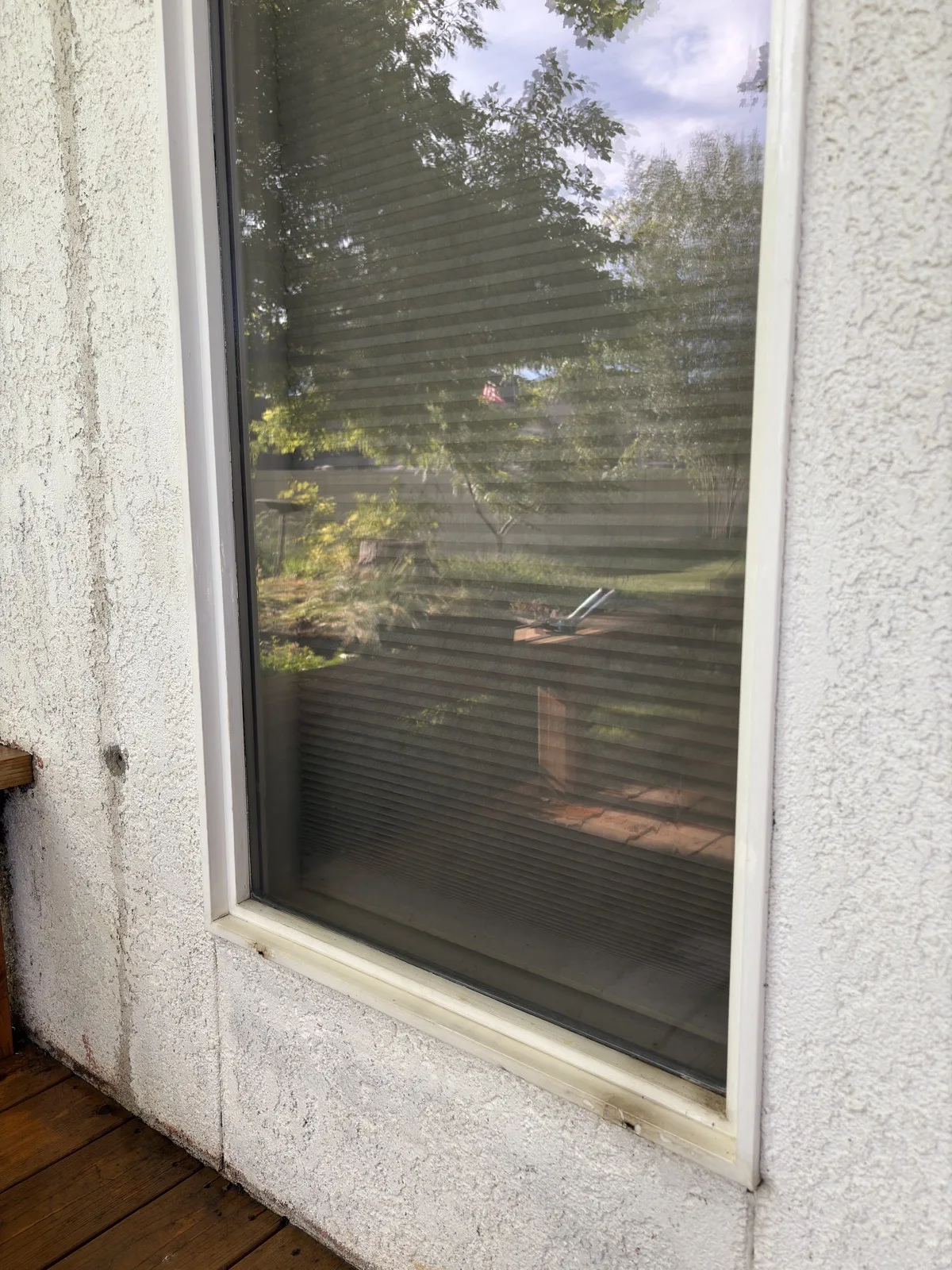
Most of the etching we grade out here traces back to a single decision made years ago: where the installer set the heads. These are individually built homes on acreage, and the irrigation went in lot by lot as houses were finished, not as one subdivision-wide system. One owner put rotors thirty feet off the foundation and aimed them away from the house. The next owner set them tight to the flowerbeds and let them throw at the wall. Both have run canal-sourced pressurized irrigation for years. Only one has ground-floor glass that looks permanently frosted. When we walk a Purple Sage Estates property, the first thing we do is look at where the heads sit relative to the windows, because that tells us more about what we are facing than the age of the house does.
What Canal Water Leaves Behind, and Why It Is Worse Than Tap
The pressurized irrigation serving this side of Caldwell comes off canal water, and it carries two things: dissolved minerals and suspended silt. The silt is the part homeowners underestimate. Tap water spotting is mostly calcium that sits on top of the glass. Canal water lands as a mineral-and-sediment slurry, dries fast in Caldwell summer sun, and each cycle bakes a slightly thicker deposit onto the same square foot of glass. Run that four or five nights a week for six months a year and the deposit stops being a film and starts being part of the glass surface. That is the difference between a window we can restore in twenty minutes and one that needs a full restoration pass, and it is why we quote this service by severity instead of by pane.
The Elevations That Take It on These Properties
The damage on an acre lot is rarely spread evenly. On most Purple Sage Estates homes it concentrates in the bottom three to four feet of ground-floor glass on whichever elevation faces the largest irrigated turf area, which out here usually means the golf-course side or the back lawn rather than the street front. Sliders and low picture windows near a lawn zone take the worst of it. We also see a hard line on stucco and stone accents at the same height, which is a good confirmation that the source is spray and not weather. Second-story glass is usually clean unless a rotor is throwing high off a corner. Street-facing windows on a long setback often need nothing at all.
How We Grade Severity Before We Quote a Number
There are three stages and they need different work. Stage one is surface deposit: the mineral sits on the glass, a fingernail catches nothing, and it comes off with a proper clean. Stage two is bonded scale, where you can feel roughness and the water beads oddly, and that takes a restoration compound and mechanical work. Stage three is etching, where the mineral has pitted into the glass itself. Here is the honest test you can run before we arrive: wet the window and watch it. If the haze disappears while wet and returns as it dries, it is deposit and it comes off. If the cloudiness stays visible while the glass is soaking wet, the glass surface itself is damaged and no amount of pressure or scrubbing will bring it back.
Fixing the Cause, or You Will Pay for This Twice
Restoration is worth doing once. It is a waste of money if the same head keeps hitting the same window all summer. Before we leave a Purple Sage Estates job we tell you which heads are the culprits, and the fix is usually cheap: swap a rotor nozzle for a lower arc, shift a head eighteen inches, or run that zone before dawn so the glass is not flash-drying in direct sun. After that, keeping it off is maintenance. Our window work uses 100 percent pure deionized water with no soap, so nothing is left behind for new mineral to bond to, and hard water stain removal is included on the Monthly membership. No contract, and our 7-Day Rain Guarantee applies. Next-Day slots are usually available.
Ready for Hard Water Stain Removal in Purple Sage Estates?
Free, no-obligation quote — we'll call or text you with your price.
Get My Free Quote