What These Houses Are Actually Sided With
Rosti Farms is new ground — the homes here went up in the current build cycle, and they're sided the way Star subdivisions have been built for the last several years: a vinyl or engineered-wood lap field over most of the elevation, a stone or cultured-stone wainscot running along the base, and board-and-batten accents in the gables. We haven't put a ladder on every house in the subdivision, so we won't tell you exactly what's on yours, but that combination covers most of what we see on the west end of Star. It matters because those three surfaces stain differently and take cleaner differently. Vinyl gives up dirt easily but chalks in the sun. Engineered wood and fiber cement hold their finish longer but hate standing water at the seams. Cultured stone is porous and grabs mineral. One rig setting for all three is how siding gets damaged.
The Sprinkler Line Is the Real Job Here
Star's newer subdivisions run pressurized irrigation off the canal system, on around mid-April and off in mid-October, and on lots this size the heads sit close to the house. Six months of untreated water hitting the same twelve inches of siding leaves two things behind: silt, which is just dirt and rinses off, and dissolved calcium and magnesium, which is mineral scale and does not. That's why a neighbor with a rented pressure washer blasts the wall, gets the top eight feet looking new, and leaves a tan ghost along the bottom. Mineral needs a cleaner and dwell time, not more pressure. We treat that band separately from the rest of the wall. Straight answer: heavy scale that's been baking into porous cultured stone for a couple of seasons usually lightens a long way but doesn't always vanish, and we'll tell you that at the quote instead of after.
North Walls Grow. South Walls Chalk. Different Problems.
Here's the diagnostic that saves people money. Go look at your north-facing wall and the shaded run under the eaves — if what's there is green or gray-black and lives in the shade, that's algae, and it's biological. Soap and pressure knock it down for a month; a soft-wash mix kills it and it stays gone through the season. Now go rub your hand down the sun-side wall, usually south or west. If your palm comes away with a chalky white film, that's not dirt at all. That's oxidation, the vinyl's own surface breaking down under Idaho's summer UV. We can wash the chalk residue off and the wall will look even and clean again, but no wash restores pigment that's already gone. Anyone quoting you a house wash that will make badly chalked siding look new is selling you something.
How We Wash a House in Rosti Farms
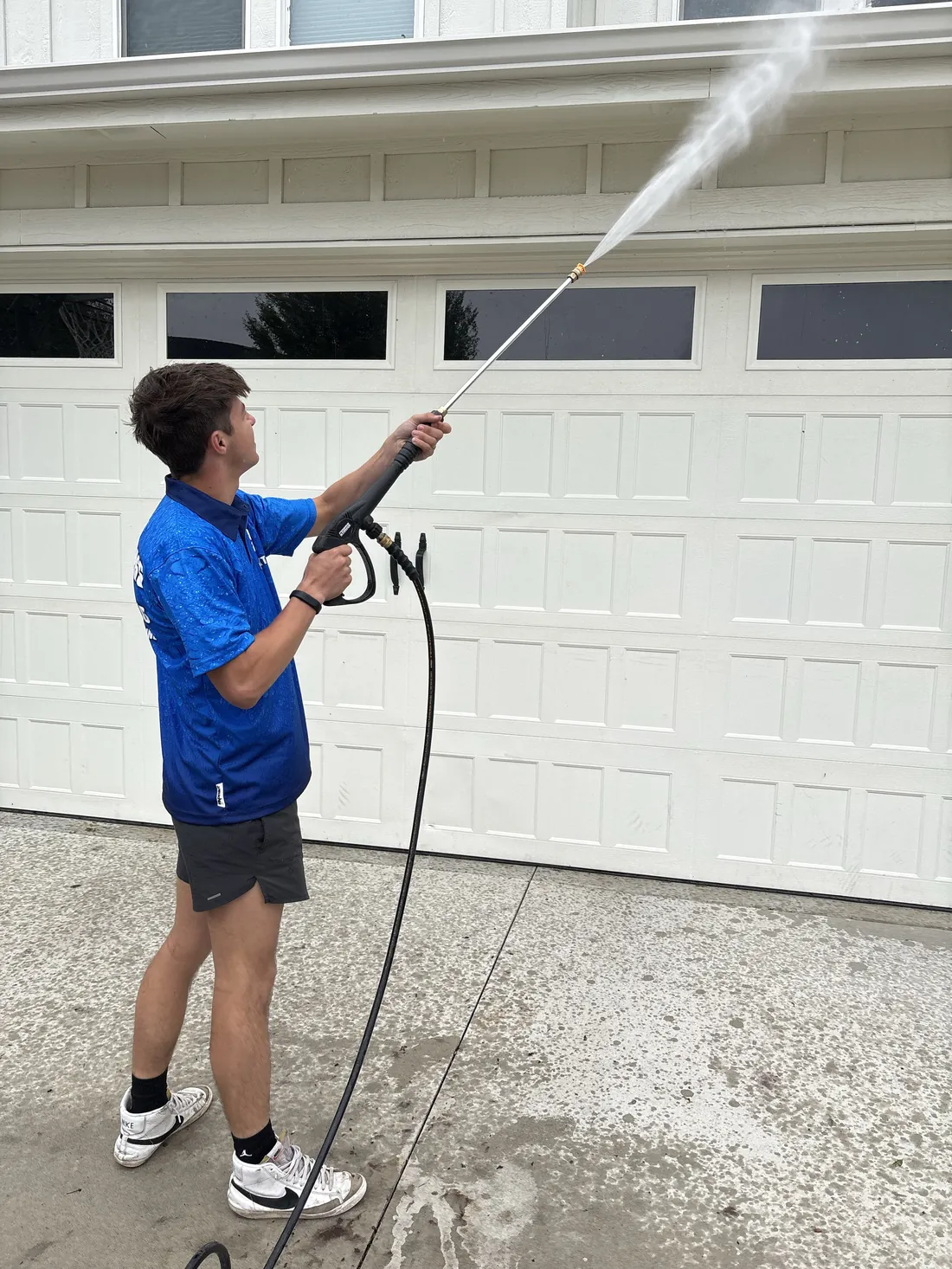
Soft wash means the cleaning is done by the solution, not by force. We run low pressure — closer to a garden hose than a pressure washer — apply the mix, let it dwell, and rinse from the top down. That's what protects vinyl seams, engineered-wood butt joints and window flashing on houses that are only a few years old and still under builder warranty. Before we start we soak the landscaping and rinse it again after, which on these lots means the new arborvitae and the strip of sod between the house and the fence. Pricing is $0.18 per square foot, and it's the same rate whether you're vinyl, hardie, stucco or brick. We do the gutter faces at the same time, because the black tiger stripes running down white fascia are the first thing people notice from the street and they come off with the same pass.
When to Book It and When to Skip a Year
The two windows that make sense in Star are late spring, after irrigation has been on a few weeks and the sprinkler line has started to show, or October, once the canal water shuts off for the year and everything that's going to stain has already stained. Fall is the one we'd pick if you're only washing once. Not every house needs it annually — if your north wall is still clean and your sun side is only dusty, you can often stretch to every other year and just rinse. Reflekt is locally owned, fully insured, founded in 2025 by Hunter Stevens and Ethan Seusy, and we hold a 4.9-star average across 125+ Google reviews. Memberships are Monthly or Quarterly with no contract, every visit backed by our 7-Day Rain Guarantee, and next-day slots are usually open in Star. Call (208) 453-6760.
Ready for House Washing in Rosti Farms?
Free, no-obligation quote — we'll call or text you with your price.
Get My Free Quote