What the siding here actually is
Walk Sutherland Farm and the exterior package barely changes house to house, because the whole tract went in on the same mid-2000s spec: vinyl lap siding, usually a light tan, clay or sage, over a cultured-stone or manufactured-stone wainscot running three to four feet up the front elevation. Trim, fascia and the garage-door surrounds are painted hardboard or LP, and a handful of the larger plans carry stucco on the front gable. That mix matters, because each of those surfaces takes a different chemical strength and a different rinse. Vinyl cleans easily but oxidizes. Cultured stone is porous and grabs mineral. Painted hardboard trim will soak up water at any open seam, which is exactly where a pressure wand does damage. We wash all of it with soft-wash pressure and let the solution do the work instead of the nozzle.
The bottom three feet: canal-water sprinkler stain
The single most common thing we get called about here is the band of discoloration along the bottom courses of siding and across the stone wainscot. That's pressurized irrigation. Almost every yard in Sutherland Farm runs on Nampa & Meridian district water — untreated Boise River canal water, silty, hard, and carrying enough iron to leave a tan-to-orange cast. On these tight lots the heads sit close to the house, so the same three feet of wall gets sprayed every cycle from April into October. A soft wash takes the dirt, the silt film and the light mineral off without touching the finish. Honest part: true iron staining is a rust deposit, not soil. It needs a separate oxalic rust treatment, and unless you turn or shield the head that's causing it, it comes back the next season.
North walls grow, west walls chalk
Twenty years of tree growth has changed the shade pattern in this neighborhood. North and northeast elevations, plus anything tucked behind a mature maple or ash, hold moisture and grow a green-black algae film on the vinyl — it looks like dirt but it's alive, and it will regrow in weeks if you only blast it off with water. We treat it so it dies at the root, then rinse. The west and southwest walls have the opposite problem: two decades of afternoon sun has broken down the surface of the vinyl, and it chalks. Run your hand across it and you get white powder. A wash removes that loose chalk and the wall looks noticeably better and more even, but the color underneath does not come back — the pigment layer is gone. Anyone promising restored gloss is selling you paint.
Why soft wash, and not a pressure wand
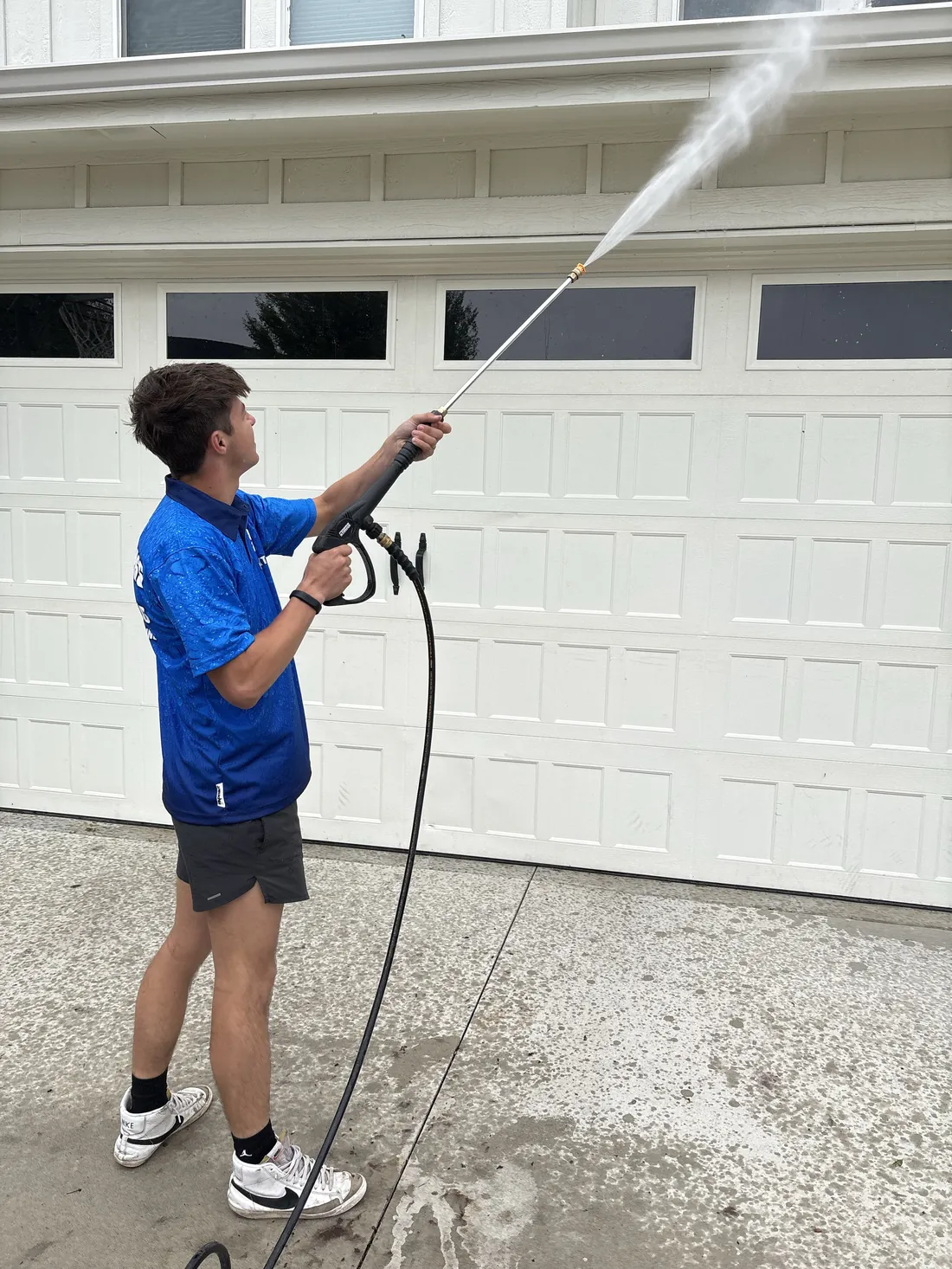
Vinyl lap siding overlaps and vents. Aim high pressure at it, especially upward or into a J-channel, and you drive water behind the course and into the sheathing, where it sits. On twenty-year-old vinyl the clips also get brittle, and a hard wand pops panels loose. Same story with the cultured stone: pressure strips the sealer and can chew the mortar joints. So we soft wash. Low pressure, the right cleaning solution for each surface, dwell time, then a controlled rinse from the top down. It costs $0.18 per square foot of wall area, measured, and a typical two-story plan in Sutherland Farm measures out somewhere between 1,800 and 2,600 square feet of washable surface. You get a firm number before we start — not a range that moves once we're on the ladder.
Gutter faces, soffits, and what a house wash does not include
The soffit and fascia get washed with the house, and that's where the spider webbing and the wasp starts usually are. What we want you to know up front: the black vertical streaks on the face of your aluminum gutters are not dirt. That's oxidized aluminum bonded with shingle runoff — tiger striping — and a house wash rinse will not lift it. It takes a dedicated gutter brightener applied and scrubbed panel by panel, which we quote separately. Same with the inside of the gutter; washing the exterior doesn't clean the trough. If your trees have filled in enough to drop a real leaf load, we clean gutters from $199 and pull debris by hand rather than blowing it across a lot this size. Bundling both means one setup and one trip charge.
Ready for House Washing in Sutherland Farm?
Free, no-obligation quote — we'll call or text you with your price.
Get My Free Quote