Why this subdivision etches harder than the one a mile away
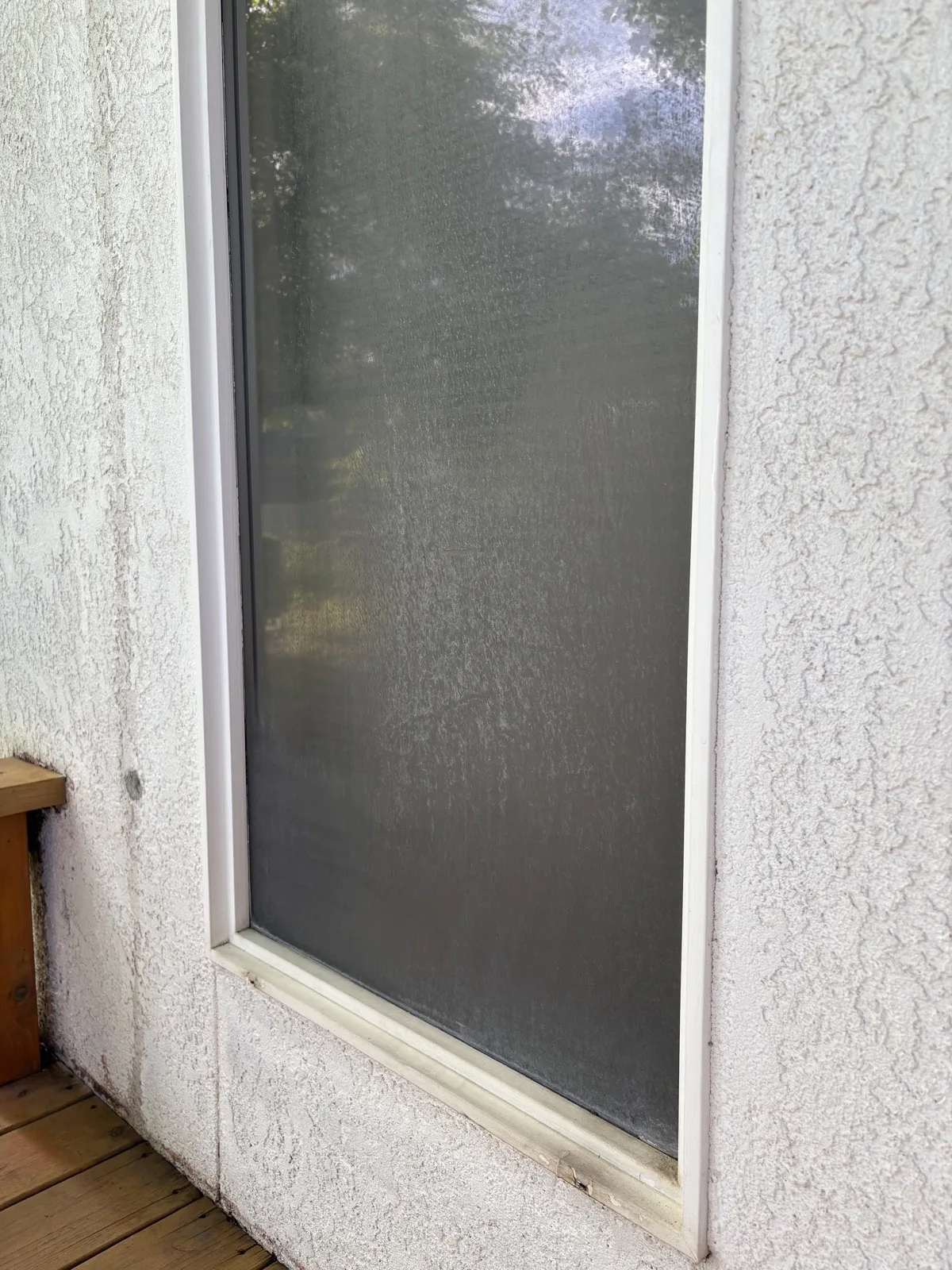
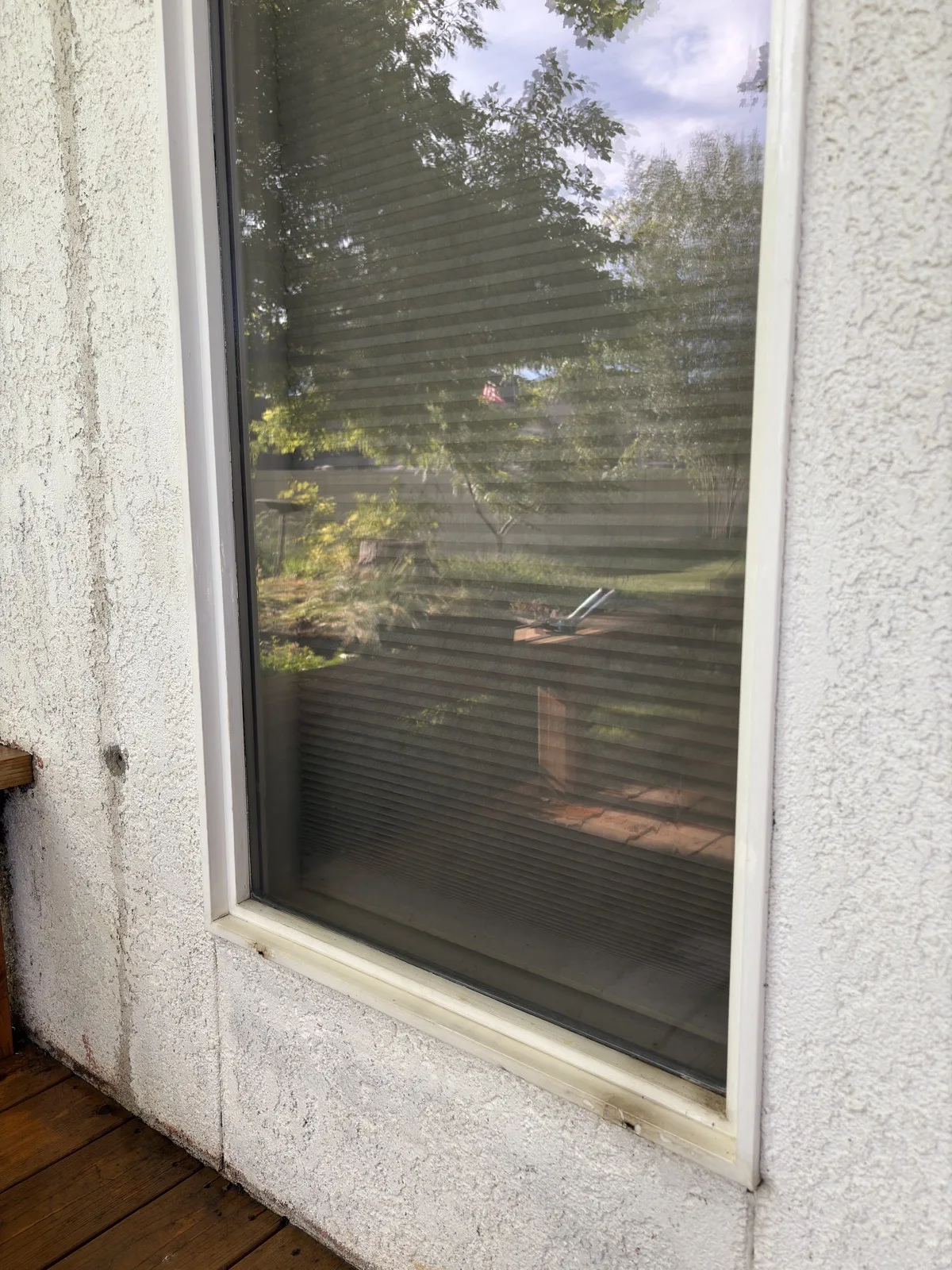
Two Meridian neighborhoods can sit a mile apart and have completely different glass, and the reason is almost always when the sprinklers went in and what they throw. Sutherland Farm was landscaped in the 2002-to-2008 window, when the standard install was fixed pop-up spray heads on short risers set tight to the foundation — a wide fan, big droplets, no adjustable arc on most of them. The tracts built after roughly 2015 got rotary nozzles that throw a slower, tighter stream out toward the lawn instead of back at the house. So a 2004 Sutherland Farm plan and a 2019 plan on the other side of Victory can run the same canal water and only one of them has a chalk line across the bottom of every ground-floor pane. Yours does. That is an install-era problem, not a housekeeping one.
Untreated canal water is the reason it bonds instead of rinsing
Almost every yard in Sutherland Farm runs on pressurized irrigation, not city water. That is untreated Boise River canal water delivered through the district, and it carries both dissolved mineral and suspended silt. When it lands on glass and dries in the sun, the water leaves and the mineral stays — calcium and silica bonded to the surface, not sitting on it. That is why a hose, a squeegee, or a bottle of blue cleaner slides right over it. Twenty-plus seasons of April-through-October cycles builds it in layers, and each layer traps the silt that came with it, which is why bad panes feel gritty before they look bad. Removing it is a chemical and abrasive cut sized to the deposit, followed by a pure deionized rinse so the panel dries with nothing left on it.
Which elevations take the overspray, and which ones we can save
On the compact Sutherland Farm lots — most run 5,000 to 9,000 square feet — the side-yard heads are the worst offenders, because there is barely eight feet between the house and the fence and the fan hits siding either way. Walking these homes, the pattern is consistent: south and west elevations are the hardest to recover, because the spray lands and then bakes dry in full afternoon sun, which sets the deposit fast and sinters it into the surface. North and shaded east glass takes just as many hits but dries slower, so the mineral stays looser and comes off with less work. Rear great-room walls usually score well because the heads there aim out at the lawn. When we quote, we grade elevation by elevation instead of pricing the house as one number.
HOA common landscaping versus your own zones
Sutherland Farm has two irrigation stories running at once. Your own system waters your lot and you control it — heads can be swapped, arcs trimmed, risers lowered. The common landscaping along the park, the entry, and the Victory and Eagle frontage is on HOA-run zones on a fixed schedule you do not set. If your home backs or sides onto common turf, especially in the Sutherland Downs patio homes ringing the park, the elevation facing that turf gets watered on someone else's clock. It is worth knowing which of your walls that is, because it changes the maintenance answer: on your own zones a nozzle change can stop the damage, and on the HOA side the realistic fix is keeping the glass cut on a schedule so nothing gets years to build.
What comes off, what doesn't, and what it costs
Honest version: stage one and stage two deposits — surface film and built film — come off completely, and the pane looks new. Stage three is etching, where the mineral has pitted into the glass itself, and no chemical, no pad, and no amount of scrubbing brings that back. It reads as a permanent cloudy band, usually on the bottom four to six inches of a south or west pane, and it will still be faintly there after we finish. We tell you which panes those are before we start, not after we invoice. This service is quoted by severity because a lightly filmed home and a twenty-year untouched one are not the same job. It is included on the Monthly membership. Windows finish with 100% pure deionized water, no soap, so nothing is left for mineral to grab.
Ready for Hard Water Stain Removal in Sutherland Farm?
Free, no-obligation quote — we'll call or text you with your price.
Get My Free Quote