Cottonwood Fluff Is What Actually Plugs a Screen Out Here
The cottonwoods along Kuna's canal and drain corridors let go in late May and early June, and out on open acreage the seed fluff travels. On glass it blows off. In screen mesh it mats — the fibers hook into the weave and build a felt layer you can see light through but air barely moves through. Add a pass of irrigation overspray and that felt sets hard. The windward elevation loads first, usually the side facing open ground rather than the barn. Spraying a hose at it from outside is the common mistake: it drives the mat deeper into the weave and tightens it. We pull the screen, wash it from the inside face out, and the fluff releases in sheets instead of shredding into the mesh.
Pollen Under Old Trees, Field Grit on the Open Lots
Lots on this stretch aren't uniform, and neither is what lands on the screens. A parcel with mature shade trees around the house collects a fine yellow-green pollen that goes sticky the first time it gets damp, then holds every bit of dust that follows it. A newer or more exposed lot with nothing tall on it gets the opposite problem — dry field and pasture grit, plus construction fines from any site still being built nearby, which is coarse, abrasive, and sits in the bottom third of the mesh where the frame catches it. Pollen needs soaking to release. Grit needs to be flushed out and downward, never rubbed, because rubbing grinds it against the mesh and dulls the weave permanently.
Old Frames: When We Pull a Screen and When We Leave It
Housing on the acreage belt is mixed — custom builds alongside manufactured and modular homes — and the older manufactured units carry thin roll-formed aluminum frames with corner keys that have gone brittle in the sun. Those do not tolerate flexing. We pull them flat with both hands on the frame rail, never by a corner, and they get washed lying down, not stood up against a wall. Here's the honest part: some screens should not be cleaned at all. Press the mesh with a thumb. If it dents and stays dented, or leaves gray powder on your finger, the fiberglass is UV-rotted through. Washing it will not brighten it and may open a hole. We'll say so on site and skip it rather than take your money.
How We Actually Wash Them
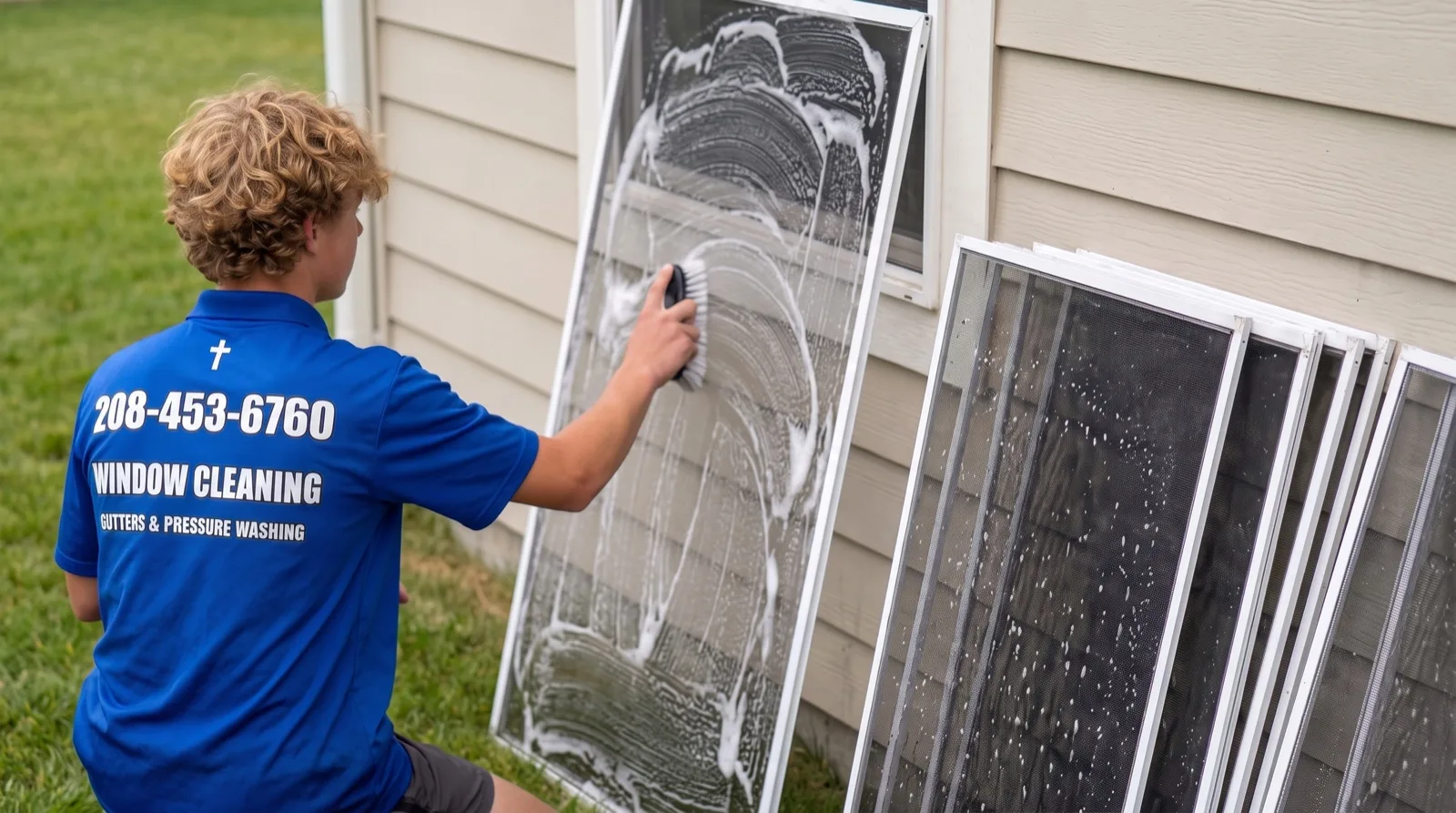
Every screen comes out and gets marked so it goes back in the opening it came from — screens are cut to the individual window, and a swapped pair will never sit right in the track again. They're laid flat, soaked to soften pollen and cottonwood, then washed with a soft brush working with the weave rather than across it, and flushed clean. Frames and tracks get wiped, because the sill channel is where the grit actually lives and putting a clean screen back into a dirty track undoes the work by the next windy afternoon. Screens go back in dry. We do this as part of a window visit, so the glass gets cleaned with pure deionized water while the screens are already out of the way.
Pricing, Timing, and How Often This Is Worth Doing
Screen cleaning is $50 added to a window service and covers the screens on that visit — it isn't sold on its own, because pulling screens without cleaning the glass behind them makes little sense. On any Monthly or Quarterly membership it's free once a year, no contract either way, with the 7-Day Rain Guarantee. On timing: schedule after cottonwood season ends in late June, not during it, or you'll do it twice. If a lot near you is under construction, wait until the dirt work is finished. Next-Day slots are usually open, and Bridle Ridge is on our regular Kuna route, so being out on acreage doesn't add lead time. Gates and long drives are fine — just send a code.
Ready for Screen Cleaning in Bridle Ridge Equestrian Estates?
Free, no-obligation quote — we'll call or text you with your price.
Get My Free Quote