No HOA, no common system, no two yards alike
In a newer subdivision the whole loop was piped at once off a pressurized irrigation district, and an HOA landscape contractor aims the common heads. Everything etches at roughly the same rate and you can predict a street from the plat year. South Boise Village has none of that. These lots were platted long before automatic irrigation existed, so every system on the block went in as a retrofit — one in the seventies off a ditch pump, one in 2004 off a city hose bib, one still flood-irrigated on a rotation with no heads at all. That is why we quote this service by severity instead of by house size. Two identical bungalows on the same street can be twenty minutes apart or four hours apart, and we cannot tell you which one you have until we wet the glass and look at it.
Ditch water and city water leave two different stains
Plenty of yards here still hold ditch rights off the Boise City Canal, and a fair number of the retrofits pull straight from that ditch with a pump rather than from the meter. Canal water is silty as well as hard, so the head throws grit and mineral together. It dries into a gritty tan crust that hides how much mineral is stacked underneath it, and homeowners scrub the crust off, decide the glass is fine, and stop. City-water heads leave the cleaner-looking version: flat white rings with a crisp edge, no silt, but the same calcium doing the same work on the surface. The ditch-fed stain usually looks worse and cleans up better. The city-water stain often looks lighter and turns out to be etched deeper, because it went unnoticed for more seasons.
Which elevations actually take the overspray
These are single-story and story-and-a-half houses on narrow lots, so almost all the damage sits low. The bottom sash of the front bungalow windows takes it off a parkstrip head that was aimed at the strip and now throws past it. Ranch picture windows on the 1950s infill take the worst of it because the lawn runs right up to the foundation with no bed to break the throw. Basement window wells are the ones people forget entirely — the well collects runoff and the glass sits in a wet box for months, and that glass is frequently the most etched on the property. Side-yard glass over a three-foot setback gets hit by the neighbor's system as often as your own. Second-story dormers and detached alley garages are usually clean, which is a good sign the source is a head and not the water itself.
What actually comes off, and what does not
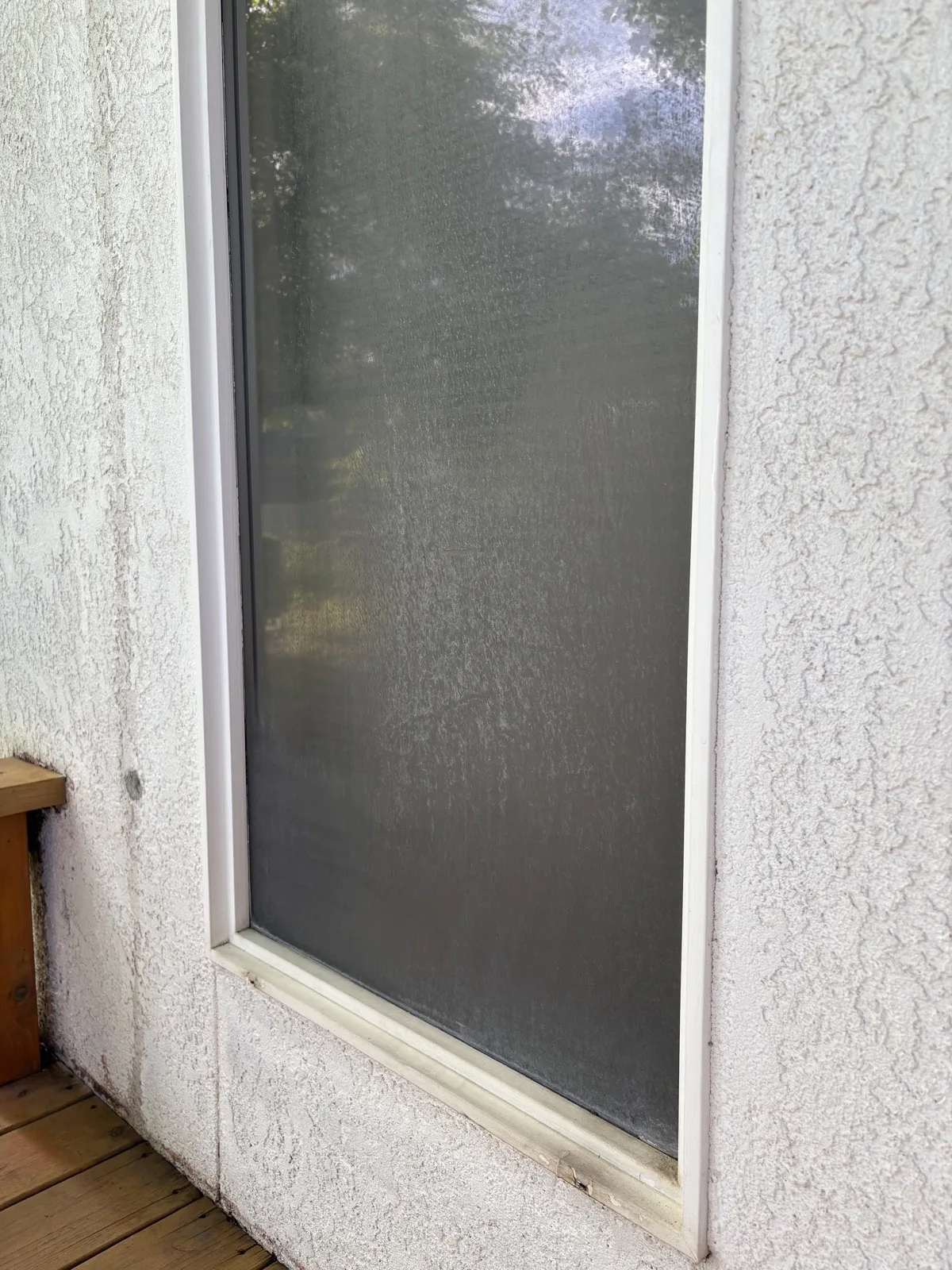
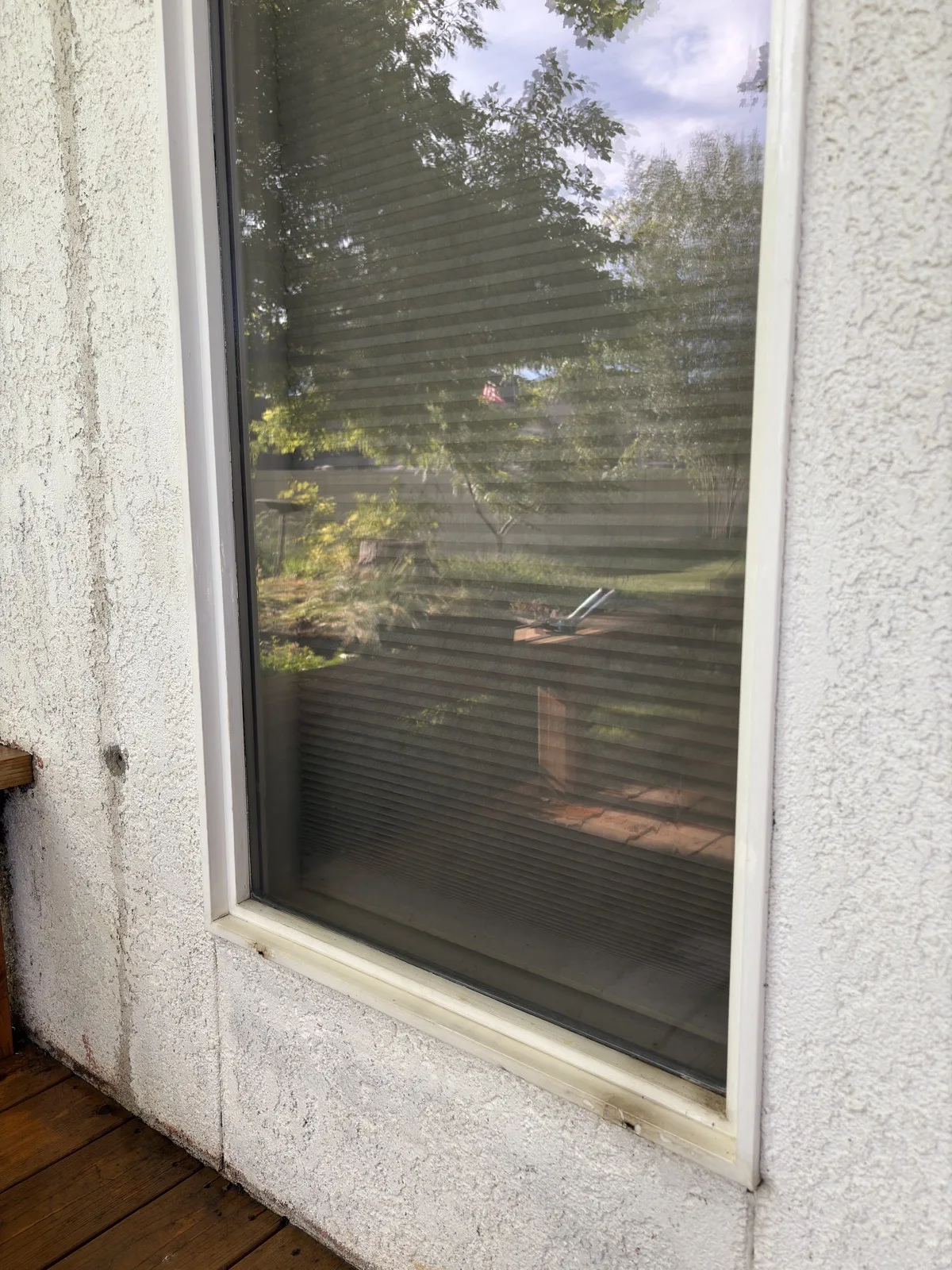
Here is the test you can do before we ever show up. Wet the pane and look at it while it is wet. If the spots disappear under the water and come back as it dries, that is deposit sitting on top of the glass, and it comes off. If you can still see the rings clearly while the pane is soaked, that is etching — the mineral has eaten into the silica and there is nothing on the surface left to remove. Etched glass can sometimes be improved by polishing out a layer, but it is slow, it is not free, and on a deeply pitted pane the honest answer is that replacement costs less than restoration. We will not take money for a pass we already know will not change the glass. Separately, haze trapped between two panes is a failed seal, not hard water, and no cleaner reaches it.
Fix the aim or you will pay for this twice
Removing the stain does nothing about the head that made it. Before we pack up we walk the zones with you and point out what is hitting glass — the parkstrip head that shifted when someone drove over it, the riser that has sunk two inches so it sprays flat, the impact head on a ditch pump running at a pressure it was never set for. Turning a head twenty degrees is a five-minute fix that protects work you just paid for. This service is quoted by severity and included on the Monthly membership, which is where it belongs — spots caught in one season wipe off, spots left three years get polished or replaced. Memberships are Monthly or Quarterly, no contract, every visit carrying the 7-Day Rain Guarantee. Next-Day slots are usually open. Reflekt is locally owned, started in 2025 by Hunter Stevens and Ethan Seusy, fully insured, 4.9 stars across 125+ Google reviews. Call (208) 453-6760.
Ready for Hard Water Stain Removal in South Boise Village?
Free, no-obligation quote — we'll call or text you with your price.
Get My Free Quote