Why Vienna Woods etches differently than the subdivision a mile away
Sprinkler age is the single biggest factor in how bad hard water gets on a house, and it varies block to block. Vienna Woods went in around the late 1990s and early 2000s, and a lot of these yards are still on the original system: tall pop-up spray heads set close to the foundation, throwing a high fan. After twenty-plus years of lawn heaving, freeze cycles and mower strikes, plenty of those heads sit tilted a few degrees off where they started. The water is untreated canal water off the pressurized irrigation system — silty and mineral-heavy, nothing like what comes out of your hose bib. Newer builds a mile north run low-angle rotary nozzles set back from the wall and barely touch the glass. That is why two Meridian subdivisions can look completely different on the same street of houses.
HOA common landscaping versus your own heads: who is spraying your glass
Which windows suffer depends on whose sprinklers are pointed at them. On interior lots, it is almost always your own system — front elevation bottom panes facing the lawn, and back-elevation sliders where a head sits in the bed directly under the window. On perimeter and corner lots backing the common landscaping, it is different. The association's rotors along pathway and entry strips throw thirty feet or more, and they run on a timer you cannot adjust from your garage, usually around four in the morning, so the owner never sees it happen. South and west glass ends up worst either way. Sun bakes the overspray dry in minutes, and mineral that dries on hot glass bonds far harder than the same water evaporating slowly on a shaded north pane under the Vienna Woods canopy.
The test that tells you whether the stain will actually come out
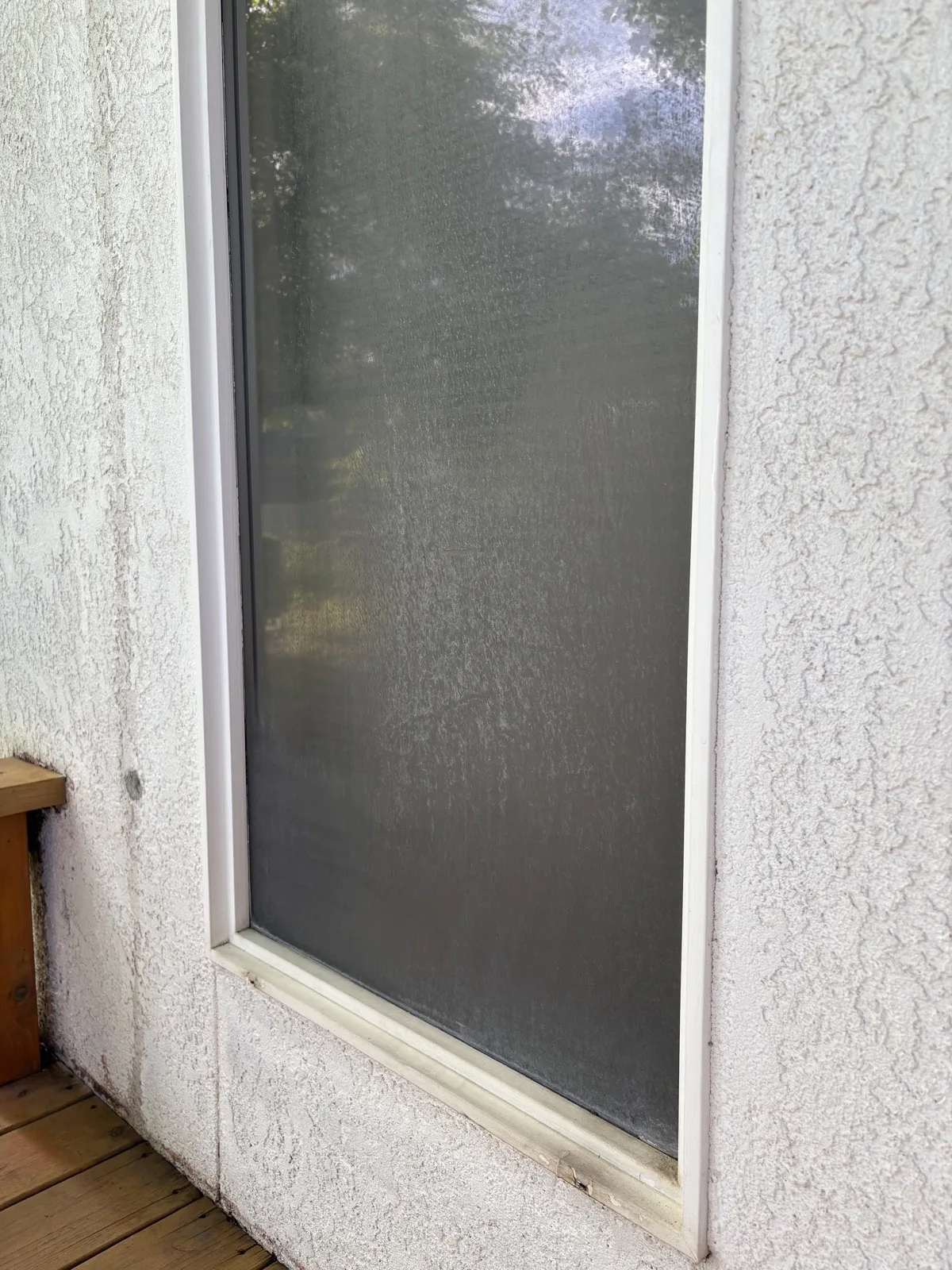
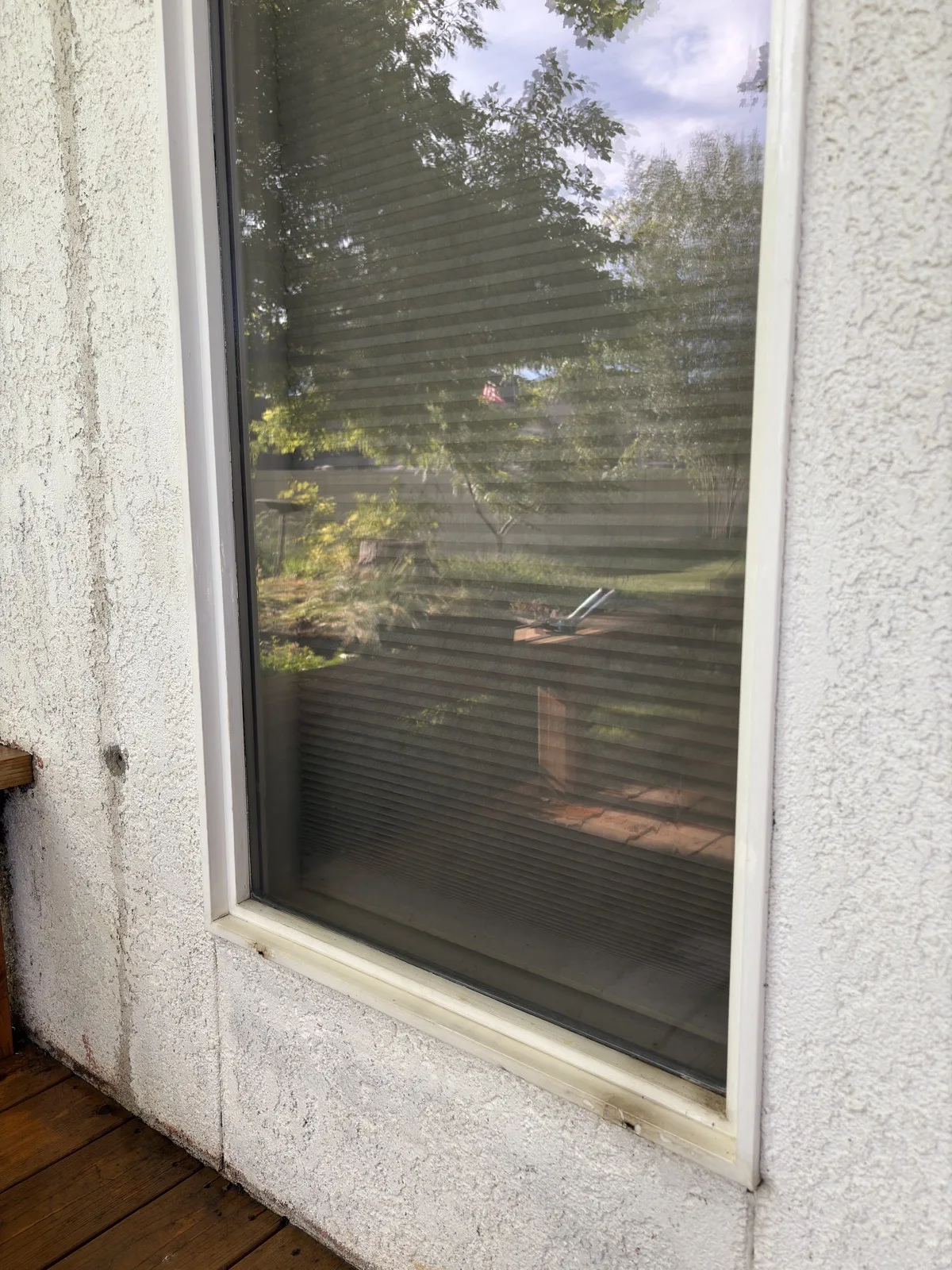
Before you pay anyone, do this yourself. Wet the pane with a hose or a soaked rag and look at it from a low angle. If the white haze disappears while the glass is wet and reappears as it dries, the mineral is still sitting on the surface and it comes off. If the cloudiness is still visible while the glass is soaking wet, the deposit has eaten into the silica and you are looking at etched glass. That is physical damage to the pane, not dirt. Restoration can knock etching back a long way, but I am not going to promise it will look like new — sometimes it finishes as a faint ghost in raking light, and on the worst west-facing bottom panes replacement is the honest answer. We test one corner and show you the difference before quoting the house.
Why pure water alone will not touch an old stain
Our regular window cleaning runs on 100% pure deionized water. That is exactly the right tool for keeping clean glass clean, and exactly the wrong tool for a deposit that has been building since the last owner lived here. Pure water rinses; it does not dissolve bonded calcium. Removal is a separate hands-on process: a mineral dissolver worked into the deposit, real dwell time, then a cerium-oxide polish on the panes that need it, working small sections so nothing dries on the glass mid-job. We keep it off the vinyl frames and off anodized or painted trim, which the older windows here do not forgive. Once the glass is back, we rinse the whole elevation with pure water so it dries with nothing left behind. It is slow work, which is why it is priced by severity instead of by pane.
Pricing, membership, and the two nozzles that save you the most
Restoration is quoted by severity. A season of film costs far less than a west elevation that has been sprayed for fifteen years, so we look before we price. It is included on the Monthly membership, and Monthly is genuinely the cheaper path on a house like this: once the glass is restored, deposit that gets rinsed off every few weeks never gets the months of dry-on time it needs to bond again. No contract on any plan, and every visit carries the 7-Day Rain Guarantee. The other half is on you, and it is free. Walk the yard during a watering cycle, mark any head throwing water onto siding or glass, then rotate the nozzle, swap it for a lower-angle one, or move the riser back a foot. Fixing two heads protects more glass than we can.
Ready for Hard Water Stain Removal in Vienna Woods?
Free, no-obligation quote — we'll call or text you with your price.
Get My Free Quote