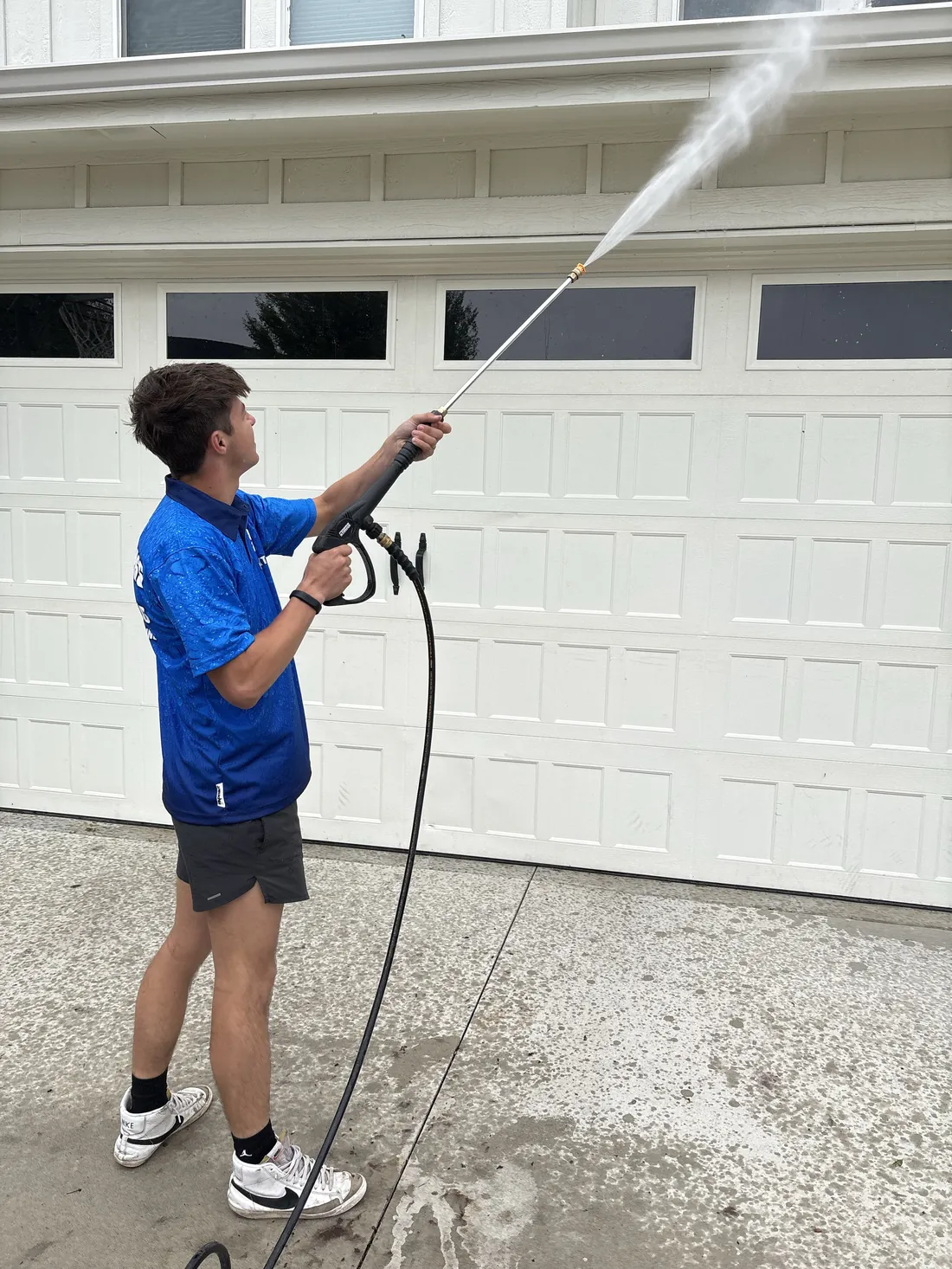
Two eras of siding, one block apart
Most of West End's original housing stock is narrow painted wood lap siding, some of it a century old, and a fair amount of it wearing a 1970s or 1980s aluminum or vinyl retrofit that was hung right over the wood. Scattered through those blocks are a few stucco bungalows and brick-front cottages. Then the infill wave brought fiber cement lap and board-and-batten, usually factory-finished, often with a stucco or metal accent panel. These do not wash the same. Painted wood is only as sound as its paint film and will not take pressure at the lap joints. Fiber cement is tough but its factory coating dulls if you scrub it. Stucco holds soap in the texture if it is not rinsed properly. We walk the wall and identify what we are actually looking at before anything gets wet.
The sprinkler band along the bottom of the wall
West End lots are small and the yards are tight, so sprinkler heads end up close to the house. Boise water runs hard, commonly 10 to 13 grains per gallon, and every arc that clips the siding dries into mineral. What you get is a chalky white band roughly a foot to three feet up the wall, heaviest on whichever elevation the zone waters, plus a rust tint if the head pulls from an older line. Soft-washing dissolves and lifts the deposit that is sitting on the surface. Be straight with yourself about the rest: on painted wood that has been getting hit for ten or fifteen years, some of that mineral has etched into the paint film and it will not come off with any chemical or any pressure. We will tell you which one you have on the walkthrough. Turning that head or adding a deflector is worth more than washing it twice a year.
North-facing walls and the narrow side yard problem
The infill builds went up on skinny lots, so you often have six to ten feet between your north wall and the neighbor's south wall. That corridor gets almost no direct sun and very little airflow, it stays damp from irrigation overspray, and it grows the green-black algae film you see stopping abruptly where the shade line ends. Same story under deep eaves and behind mature shrubs on the older cottage blocks. Pressure alone knocks the visible layer off and it looks great for about three weeks, because the root structure is still in the surface. A soft-wash mix with real dwell time kills it, which is why the north side stays clean for a season or two instead of a month. If only that one wall is affected, say so when you call. We will price the single elevation instead of selling you the whole house.
Sun-side chalking, and when washing is not the answer
South and west walls in West End take full high-desert afternoon sun with almost no canopy on the newer streets. Older paint oxidizes under that load. Run your hand down the siding and if it comes back white and powdery, that is chalking, and it is worth understanding before you book anything. We can wash the loose chalk off and the wall will look cleaner and more even. The faded color does not come back. Washing does not restore paint, and anyone who tells you it will is selling something. What a wash does do is prep that wall properly so a fresh coat bonds instead of peeling in two years. If your paint is chalking heavily, treat this as the first step of a paint job, not a substitute for one, and tell your painter it has been washed.
Pricing, access and getting on the schedule
House washing is $0.18 per square foot soft-wash, safe for all siding, whether that is 1915 painted lap, fiber cement, stucco or vinyl. We measure the wall area, not the floor plan, so a tall two-story infill build prices differently from a single-story cottage with the same footprint. West End access matters here: plenty of these blocks are alley-only, the side yards are narrow, and the corridor houses park on the street, so tell us about gates, dogs and parking when you book and the crew will not be guessing. Memberships run Monthly or Quarterly with no contract, every visit carries our 7-Day Rain Guarantee, and next-day slots are often open. Reflekt is locally owned and fully insured, founded in 2025 by Hunter Stevens and Ethan Seusy, with 125+ Google reviews at 4.9 stars. Call (208) 453-6760.
Ready for House Washing in West End?
Free, no-obligation quote — we'll call or text you with your price.
Get My Free Quote