Three kinds of debris hit these screens, not one
Down on the valley floor a screen mostly catches dust. Up here it catches a layered mess. Snowmelt and storm runoff drag decomposed granite down the pitch of Bogus Basin Road and the side streets, and passing traffic sprays that pale, sharp grit straight into the lower half of street-facing screens. Late May and June, cottonwood seed comes up off the drainages and mats into the mesh like felt. Behind that, the mature canopy below you in the North End throws pollen uphill on the afternoon breeze, and it sticks to whatever grit is already sitting in the weave. Each layer holds the next one. That is why a Boise Heights screen can look opaque from inside while the glass behind it is still clean, and why rinsing it with a hose from the yard does almost nothing.
Fresh construction dirt on the infill lots
There is steady infill going in on these hillside lots, and a build next door will load your screens faster than a whole season of weather. Cut-and-fill work on a slope means exposed dirt with nothing holding it, and the same downslope wind that drains out of the gulches at night carries it into the mesh on the uphill and canyon-facing elevations. Concrete and stucco work adds a fine cementitious dust that goes chalky-white in the weave and does not brush out dry. If you are living beside an active build, or you just moved into a new one, tell us. Construction dust needs a longer soak and more rinse passes than seasonal pollen does, and on a brand-new house we check the mesh for stucco splatter and mortar specks before we start, because those get picked off by hand, not scrubbed off.
Old frames flex, and flexing is what ruins them
Boise Heights has houses from the 1920s through the 1950s still carrying their original screens, and those thin roll-formed aluminum frames are the fragile part of this job, not the mesh. Sixty or seventy years of sun makes the corner keys brittle and the spline hard as wire. Lay one flat wrong, lean on it, or twist it coming out of the opening and the corner separates or the frame bows and never sits square in the track again. We carry them flat with two hands, lay them on a padded surface rather than propping them against siding, and wash with a soft brush and light pressure so the mesh never gets pushed out of plane. Nothing here goes near a pressure washer. We also tag every screen to its own opening as it comes out, because on an older house no two are quite the same size.
When a screen should not be cleaned at all
Some screens are past the point where washing helps, and we would rather tell you that than take your money twice. Hold a screen up to the light. If the fiberglass mesh looks chalky, has gone brittle, or frays when you rub a corner between your fingers, the sun has already cooked it and washing will open holes in it. Same with mesh that has stretched and bellied out in the middle, or old aluminum wire that has gone white and powdery with corrosion. Cleaning will not tighten a bellied screen or bring color back to rotted mesh. What it will do is make a dirty but sound screen genuinely see-through again, which on most Boise Heights houses is the actual problem. If yours need re-screening instead, we will say so and point you at what to ask a repair shop for.
How we do it, and what it costs here
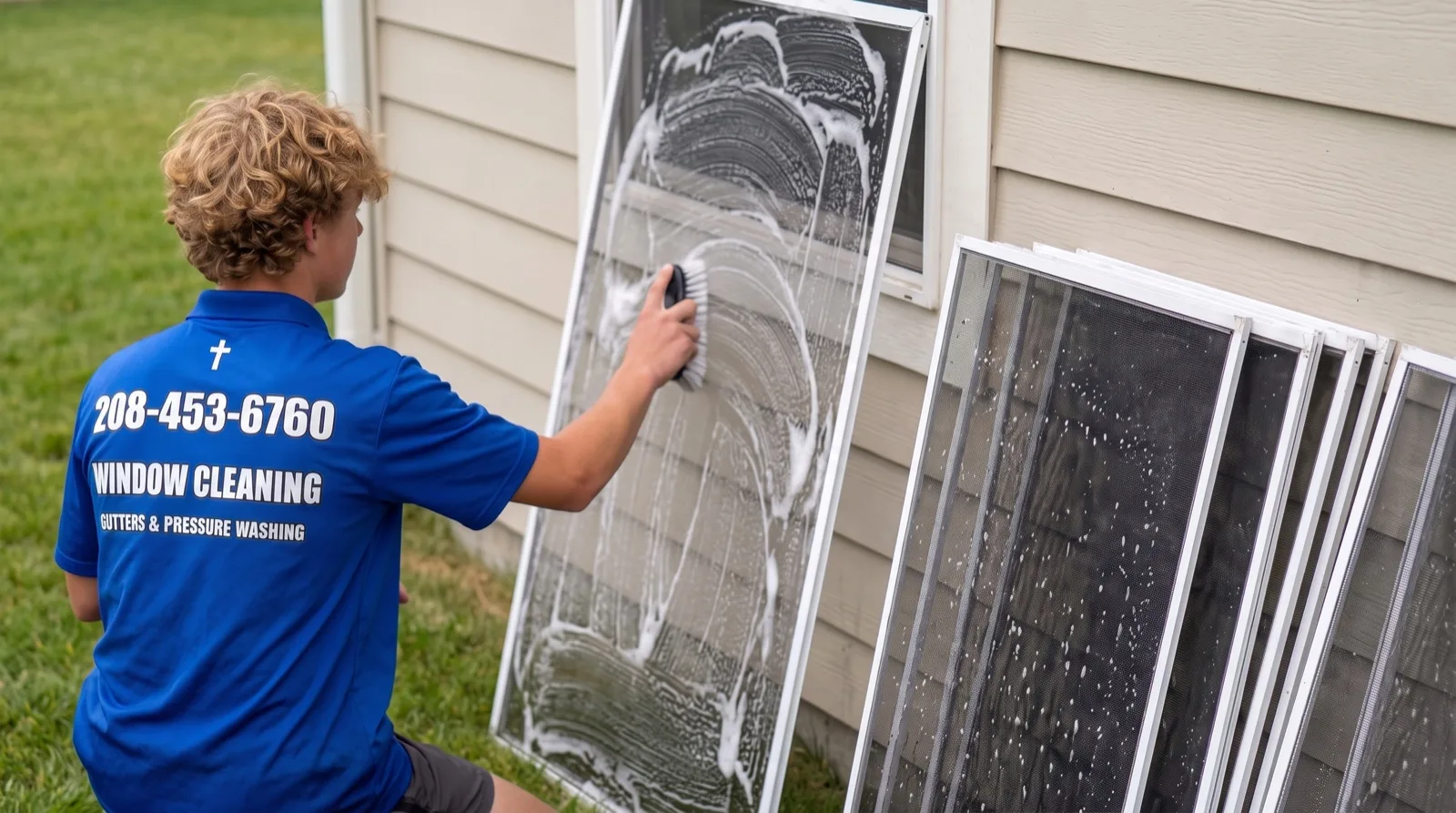
Screens come out, get tagged, and get laid flat. We wash both faces with a soft brush, flush the frame channel where grit collects and later bleeds back onto clean glass, then rinse with the same 100% pure deionized water we use on the windows so nothing dries with mineral spotting on the frame. They go back in the same visit, in their own openings. Screen cleaning is $50 added to a window service, and it is free once a year on any membership, Monthly or Quarterly, with no contract. On this hillside the timing that works is right after cottonwood season ends in late June, so the mesh goes into summer clear. Every job carries our 7-Day Rain Guarantee. We are fully insured and locally owned, founded in 2025 by Hunter Stevens and Ethan Seusy. Call (208) 453-6760.
Ready for Screen Cleaning in Boise Heights?
Free, no-obligation quote — we'll call or text you with your price.
Get My Free Quote