Young sprinklers, shallow damage — for now
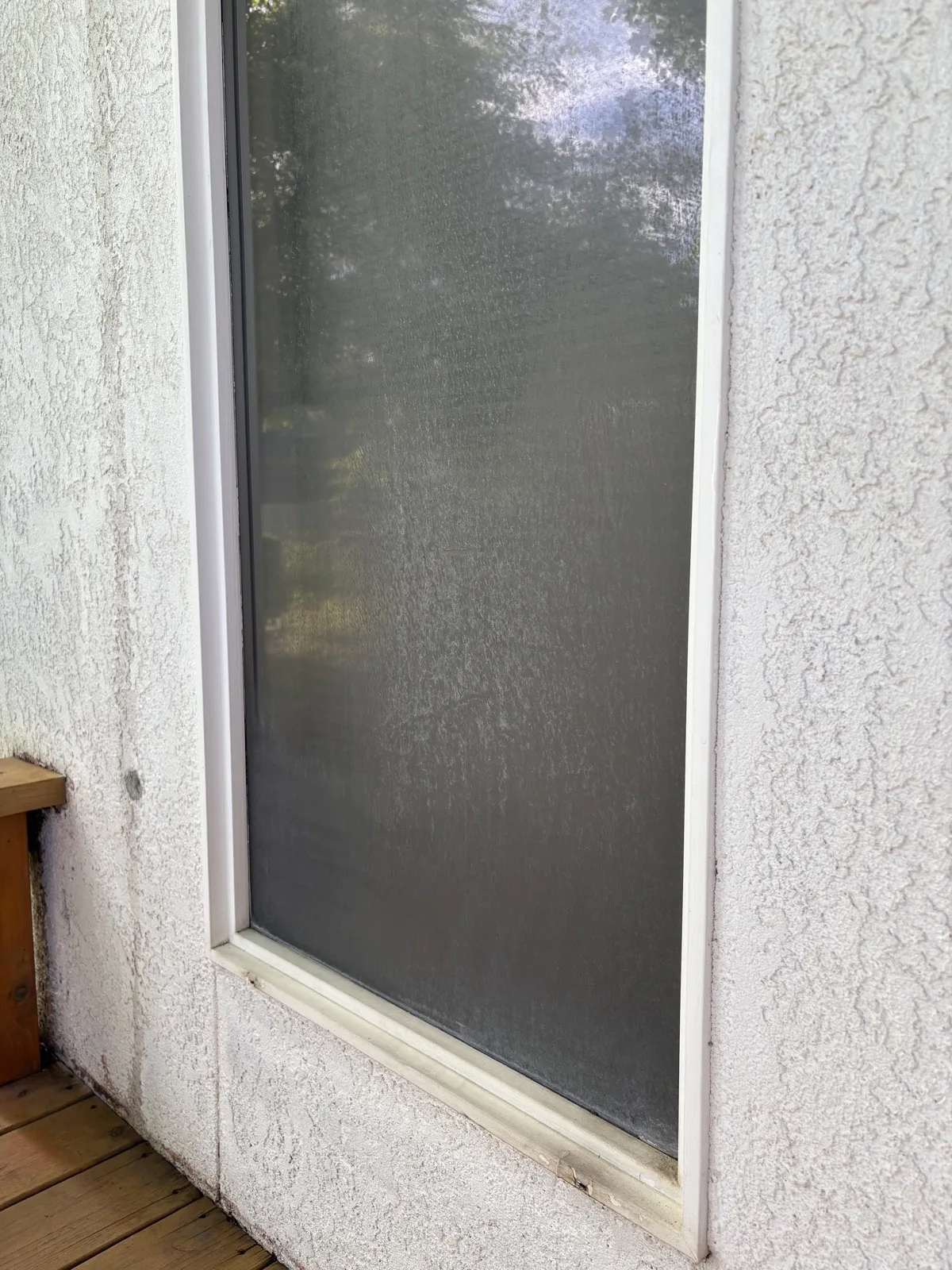
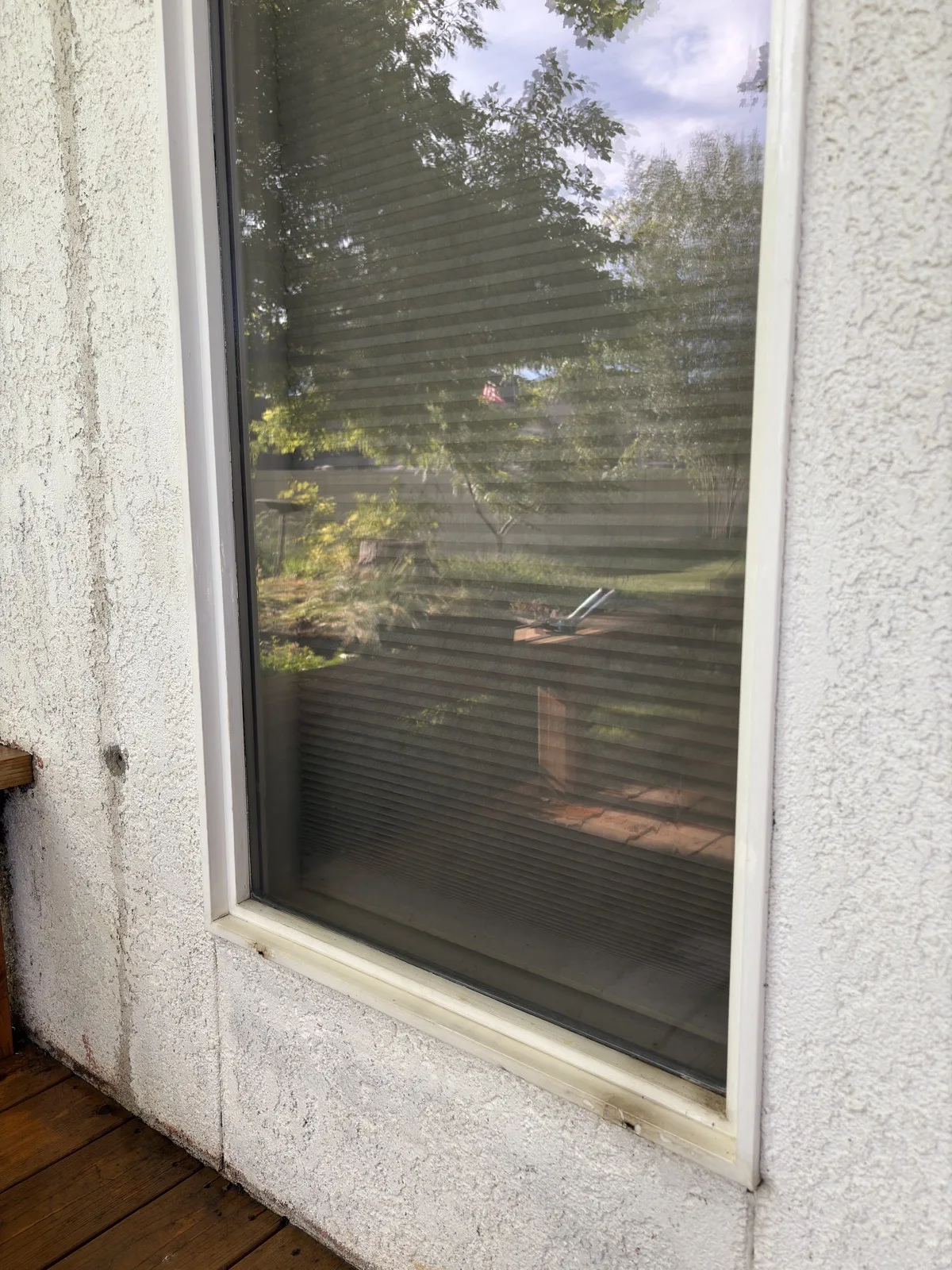
Hard water damage on glass is cumulative. Every cycle that lands on a pane and dries in the sun leaves a thin mineral layer, and each layer bonds tighter than the last until the deposit stops sitting on the glass and starts eating into it. Pradera's irrigation was trenched in when the subdivision was built out, so most homes here have far fewer seasons of buildup than the older streets closer to downtown Caldwell or Greenmont. In practice that means when we get called to a Pradera house, the spotting is usually still in the removable range — a bonded scale layer we can break down and pull off, not a pit in the silica. That window closes. Every summer a misaimed head keeps hitting the same pane, the odds of a full recovery drop.
HOA common-area heads and your own zones run on two different clocks
This is the part that surprises Pradera owners. The turf strips and entry landscaping along the common frontage are watered on the association's controller and schedule, not yours. Your own lot heads run when you set them. So a homeowner can shorten a run time, cap a head, or shut a zone off entirely and still watch the same front-elevation window spot up again, because the water hitting it never came from their system. Before we quote a recurring problem, we ask which side of the property line the offending head sits on. If it's a common-area rotor, the fix is a conversation with the HOA's landscape contractor about arc and nozzle — we can tell you which head to point them at, but we can't turn it down for you, and no cleaning we do will outlast it.
Which elevations take the overspray in Pradera
Pradera lots are large by Caldwell standards, and large lots get rotors, not spray heads. Rotors throw thirty feet or more, which puts glass inside the pattern in a way a short-throw bed sprinkler never does. On most homes here the ground-floor rear sliders and great room windows take the worst of it, because the big back yards need the longest throw. West-facing panes are second, since the prevailing west wind out of the Notus and Wilder farm ground drifts the mist further than the arc alone would carry it. On the front elevation, the lower panes of that two-story entry stack catch the drift on breezy mornings while the upper glass stays clean — a split we see over and over in this subdivision, and a quick way to tell irrigation spotting from dust film.
Irrigation water is not what comes out of your tap
Much of the newer growth ring in Canyon County is served by pressurized irrigation off the canal system rather than treated city water, and that water is a different animal on glass. It carries suspended silt on top of dissolved mineral, so it dries down as a gritty film rather than a clean spot ring, and on a 95-degree afternoon it flashes off the pane in minutes — the shortest possible dwell time and the tightest possible bond. That's also why a garden-hose rinse makes it worse. You wet the deposit, walk away, and it re-dries with a fresh mineral layer on top. If your Pradera lot is on pressurized irrigation, assume the spots on your glass are working faster than they would in a neighborhood on culinary water.
How we grade it, and the honest limit
We check severity before we quote, because stain removal is not one job. Drag a fingernail sideways across the spot: if it glides, it's surface scale and it comes off. If you feel a catch or a texture, mineral has already displaced glass, and no chemical, no polish and no amount of pressure puts that back — the surface can be brought from cloudy to clear-ish, but the etch is permanent and the honest answer is replacement or living with it. We say that up front instead of selling you a restoration that won't deliver. Pressure alone never removes hard water; the bond is chemical, not physical, so a pressure washer just cleans the dirt off the scale. Removal is quoted by severity, and it's included on our Monthly membership.
Ready for Hard Water Stain Removal in Pradera?
Free, no-obligation quote — we'll call or text you with your price.
Get My Free Quote