No HOA system here — every sprinkler on this block is a retrofit
There is no HOA out here running a shared irrigation program, and no developer who installed one system across the whole neighborhood in a single season. This district was laid out in an era of gravity ditch water and hose-end sprinkling, and the underground systems watering these lawns now went in one yard at a time — some in the seventies, some last summer, plenty of them laid out around a lawn shape that has since changed. That is the whole reason hard water etching is so uneven along these streets. Two houses forty feet apart can be twenty years apart on system age, on head type, and on whether anybody ever re-aimed a head after a porch got rebuilt or a hedge filled in. We quote severity per elevation here, not per house, because the house is rarely uniform.
Which elevations actually take the overspray on these lots
On the typical lot in this district — narrow, deep, house set close to the sidewalk with a parkway strip out front — the front elevation usually takes less abuse than people expect and the side yards take the most. The front lawn is small and often covered by half-circle heads throwing back toward the house, so the front damage concentrates in the lower sash of the first-floor windows and the porch glass, rarely the second story. The side yards are where it gets ugly. A narrow run between two houses forces a head to throw hard along the wall just to cover the strip, and that puts water on the same three or four windows every cycle, all season. Rear elevations off the alley vary the most, depending on whether a detached garage blocks the throw.
Canal water is silt plus minerals, and they behave differently
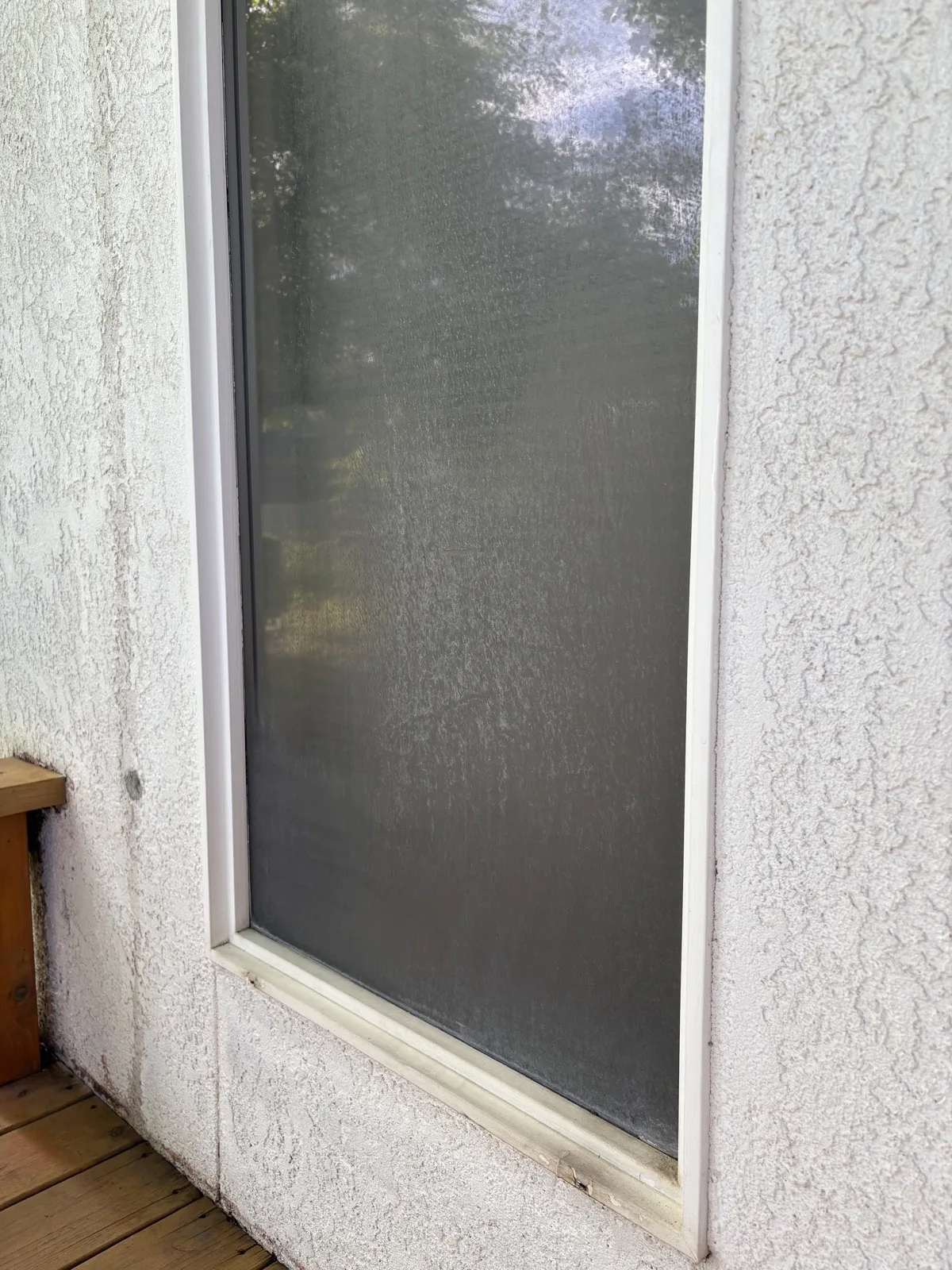
Irrigation water off Caldwell's canal system carries fine agricultural silt along with dissolved minerals, and those two things do not act the same on glass. The silt is surface dirt — it rinses off. The minerals are what stay behind when the drop evaporates on a hot wall, and every cycle bonds a little more calcium and magnesium to the surface. Sprinkler-fed spotting gets worse than tap-water spotting for a simple reason: high volume, hitting daily through July and August, drying in full sun before anyone walks past to see it. The rule of thumb we use on site is your fingernail. Film you can feel is mineral scale sitting on top of the glass, and it comes off. Haze you can see but cannot feel has usually already started etching into the glass itself.
What comes off, what doesn't, and where pressure is useless
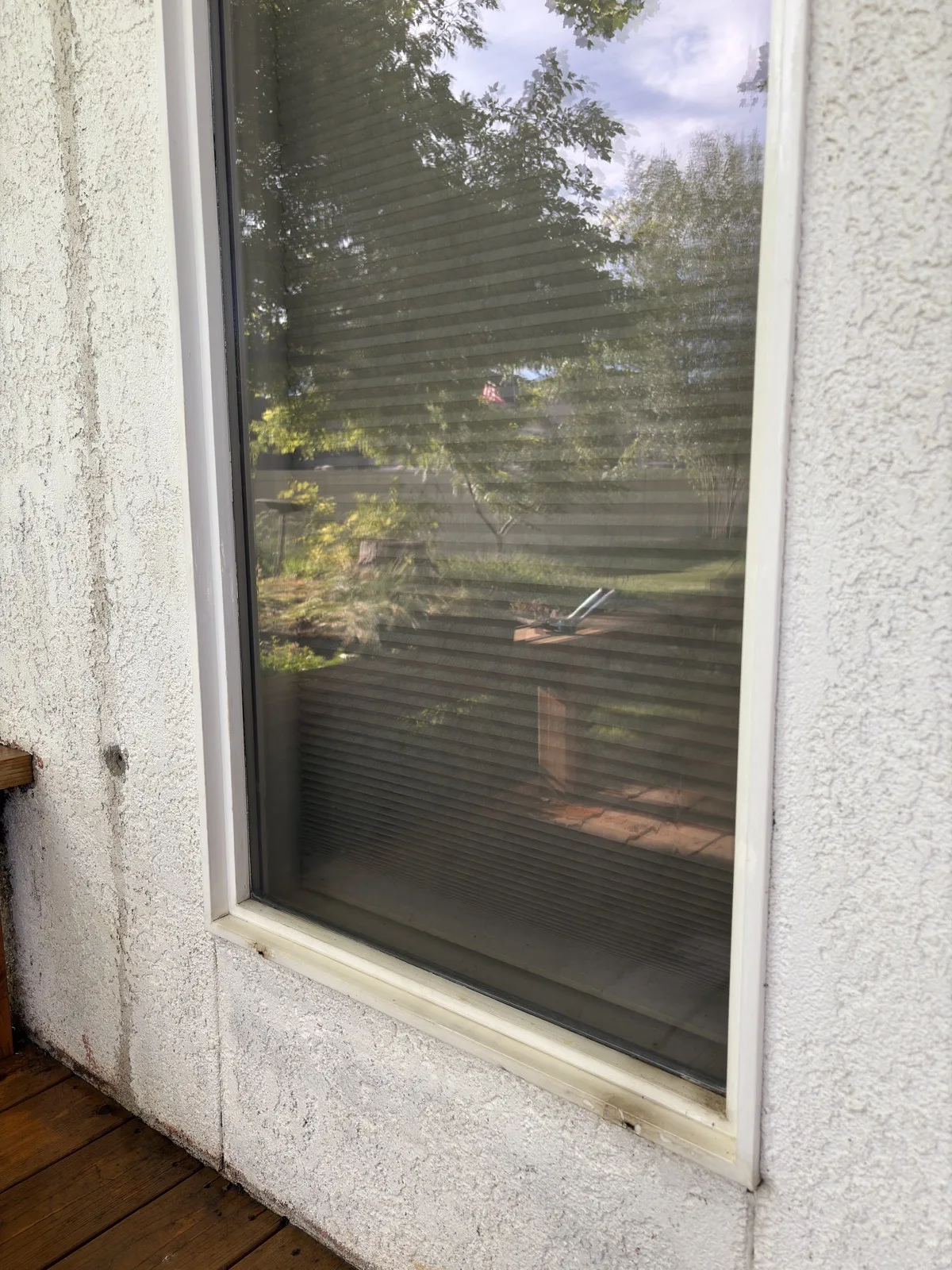
Here is the honest version, and it costs us work sometimes. Scale sitting on top of the glass comes off with a proper acid-stage treatment and a polish, and it finishes looking like new glass. Etching — where minerals have pitted the surface after several seasons of daily overspray on the same pane — does not fully come out. We can knock the haze down a long way and make it much less noticeable, but we are not going to tell you a badly etched pane will match the one beside it that never got hit. Pressure does nothing for either problem; this is a chemical and abrasive job, not a force job, and running pressure at an old wood sash just drives water into the glazing. If a pane is past saving we will say so on the quote.
How we work it here, and what it runs
Restoration is quoted by severity rather than pane count, because a lightly spotted window and a five-season etched one are completely different amounts of labor. We test a small area first so you can see what is actually going to lift before you commit to a whole elevation. On original wood windows — and this district still has plenty — we mask and control runoff so nothing acidic sits on century-old glazing putty or painted sills. Routine window cleaning finishes on 100% pure deionized water, no soap. Stain removal is included on the Monthly membership; Monthly and Quarterly both run with no contract and a 7-Day Rain Guarantee. Reflekt was founded in 2025 by Hunter Stevens and Ethan Seusy, locally owned and fully insured, 4.9 stars across 125+ Google reviews. Next-Day slots open most weeks — (208) 453-6760.
Ready for Hard Water Stain Removal in Steunenberg Residential Historic District?
Free, no-obligation quote — we'll call or text you with your price.
Get My Free Quote