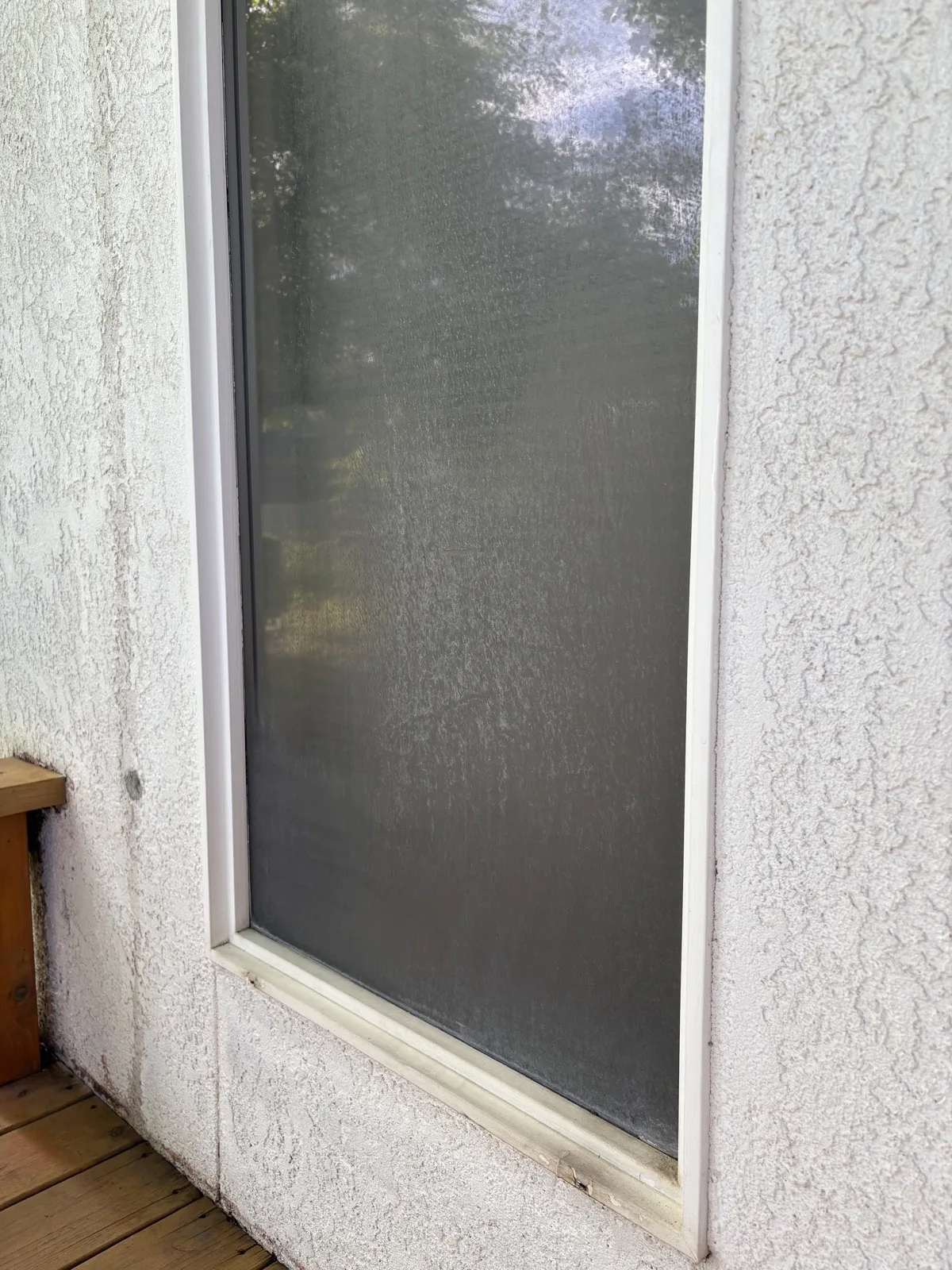
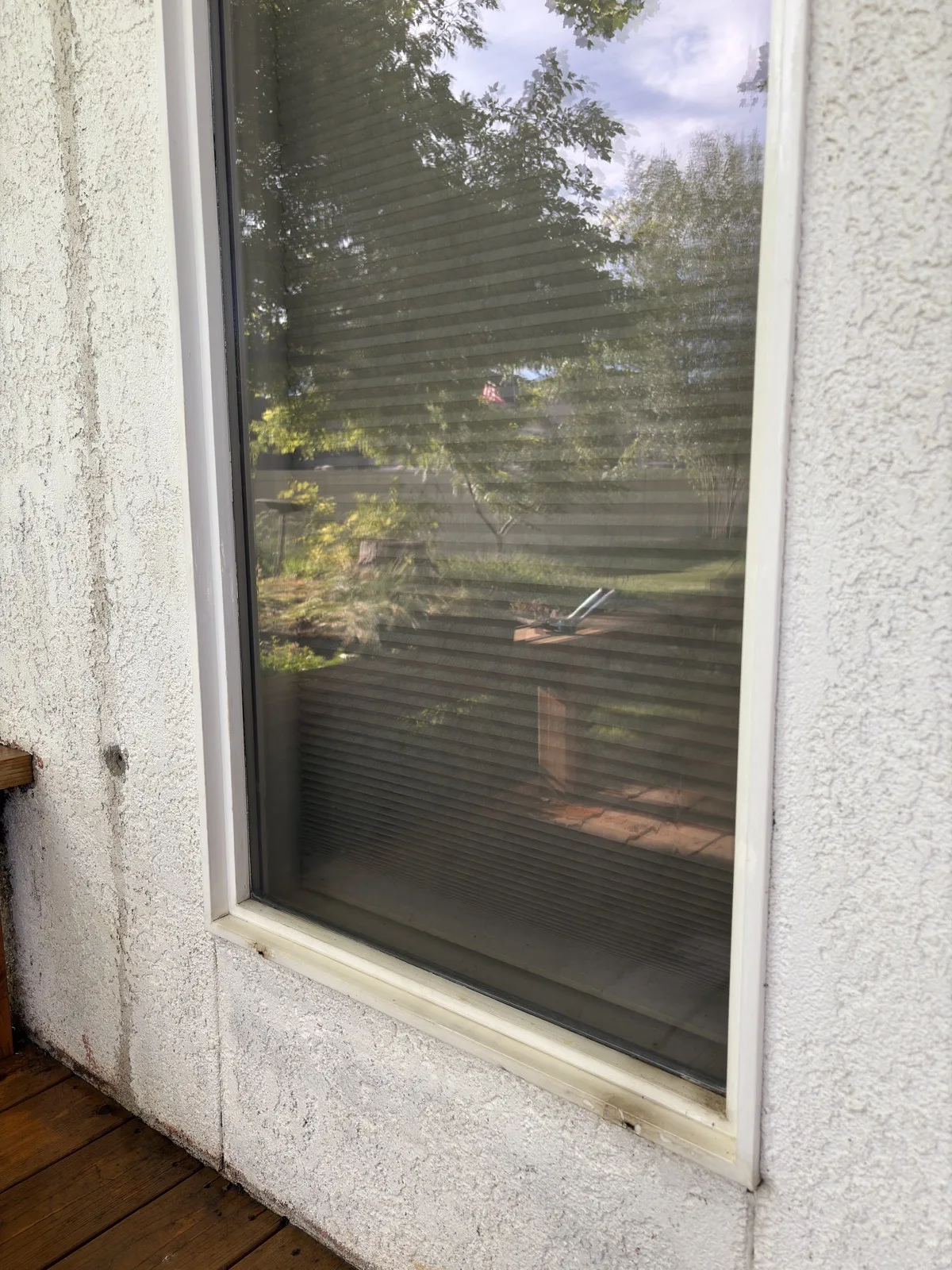
Why two Plantation streets a block apart etch differently
The Plantation did not go up all at once. Building ran from the 1970s into the 90s around what was then Plantation Country Club, and that spread matters more for hard water than anything else about the neighborhood. A system trenched in 1978 is on its second or third round of head replacements by now, usually mixed brands, usually aimed by whoever owned the house in 1996. A late-90s lot got a system designed after spray heads got better and got set lower. You can see the difference walking the streets: one block with clean lower panes, the next with a chalk line three feet up every slider. We quote by severity for exactly this reason. Same neighborhood, same water source, completely different damage on the glass.
HOA common landscaping versus your own controller
Common landscaping here — entry islands, pathway strips, turf along the pond edges and course frontage — gets watered on a commercial schedule with heads sized to cover ground fast. Those heads throw farther and harder than anything a homeowner puts in their own yard, and they run on a set clock whether or not the wind is up. If your lot backs or sides onto common turf, your ground-floor glass on that side is taking water that is not yours and not on your controller. We see it worst on the property-line elevation and on any window within about twenty feet of it. Nothing you adjust on your own system fixes that. It does mean one elevation needs restoration more often than the rest of the house, which is worth knowing before you pay to treat every window the same.
Ditch water, silt, and which elevations take the overspray
Garden City yards run on pressurized irrigation off the canal system, not treated tap, and ditch water carries suspended silt on top of dissolved calcium. That is harder on glass than a hose bib: the mineral bonds and the silt gives it something to grip. Add river-bottom humidity and a spotted pane stays wet longer each morning, which is what turns spots into etching. On most Plantation homes the damage stacks on the lower three or four feet of the west and south elevations, the panes closest to grade catching afternoon sun that bakes the deposit before anything rinses it. Upstairs glass on the same wall is usually fine. Tell us which side looks worse when you call. Nine times out of ten it is the fairway or common-turf side, and that tells us where the heads are pointed before we arrive.
What comes off, and what does not
Hard water damage comes in stages, and this is the part worth being straight about. Fresh deposit, weeks to a few months old, lifts with a proper mineral treatment and the pane looks new. Bonded scale, a season or two of buildup, takes an acidic treatment plus mechanical work and usually comes back 90 to 100 percent. Then there is true etching, where mineral has pitted the glass surface itself, and that is no longer a cleaning problem. Etched glass can sometimes be polished, which is slow, costly, and can leave slight distortion, and on tempered patio glass it is often not worth attempting. On original 1970s and 80s aluminum-frame sliders here we have seen panes past saving. We test an inconspicuous corner before quoting the house, and if a window will not come back we say so rather than charging you to find out.
Fixing the source, pricing, and booking
Restoring glass without moving the sprinkler head just buys you a season. Before we leave we walk the affected elevation with you and point out which head is doing it, usually one or two: a fixed spray bumped by a mower, or a rotor that started overshooting after someone raised system pressure. A deflector, a nozzle swap, or five degrees of rotation solves most of it. If the culprit is a common-area head, that becomes an HOA request, and it goes better with photos of the spray pattern, which we will take for you. Hard water stain removal is quoted by severity once we have seen the glass, and it is included on the Monthly membership. Our window work uses 100% pure deionized water, so once the scale is off, nothing we use puts minerals back. Call (208) 453-6760 or book online; next-day slots are common.
Ready for Hard Water Stain Removal in The Plantation?
Free, no-obligation quote — we'll call or text you with your price.
Get My Free Quote