Every yard on this street irrigates differently
In a 1998 Meridian subdivision, every house on the block got the same pressurized-irrigation tap, the same rotor heads and the same install week, so the whole street etches at about the same rate. Warm Springs Avenue has none of that. There is no HOA running common landscaping, no single developer-set system, and no shared install date. Some of these lots still carry gravity ditch rights off the Boise City Canal that heads out of this stretch. Others were converted to a pump and city pressure decades ago. Plenty of yards are running a system somebody put in during the seventies or eighties, expanded twice since, with a mix of impact heads and modern rotors on the same zone. We quote by what is actually on the glass, because two houses four doors apart can be in completely different shape.
Which elevations take the overspray here
Lots on the avenue tend to be narrow and deep, with the house set back behind a long front lawn and mature foundation planting. That geometry puts the front-yard heads far enough out that a worn impact head throws all the way back onto the first-floor bay, the porch sidelights and the painted sills under them. That is where we find the worst of it. The other pattern is the side yard: two houses close together, a single line running the strip between them, and one head that mists the neighbor's north elevation every cycle without anybody noticing, because nobody stands in that gap. Second-floor sash usually stays clean unless a shrub has grown into a head and is fanning the spray upward. Dormers and stair-landing transoms are almost never the problem.
Ditch water and tap water leave two different stains
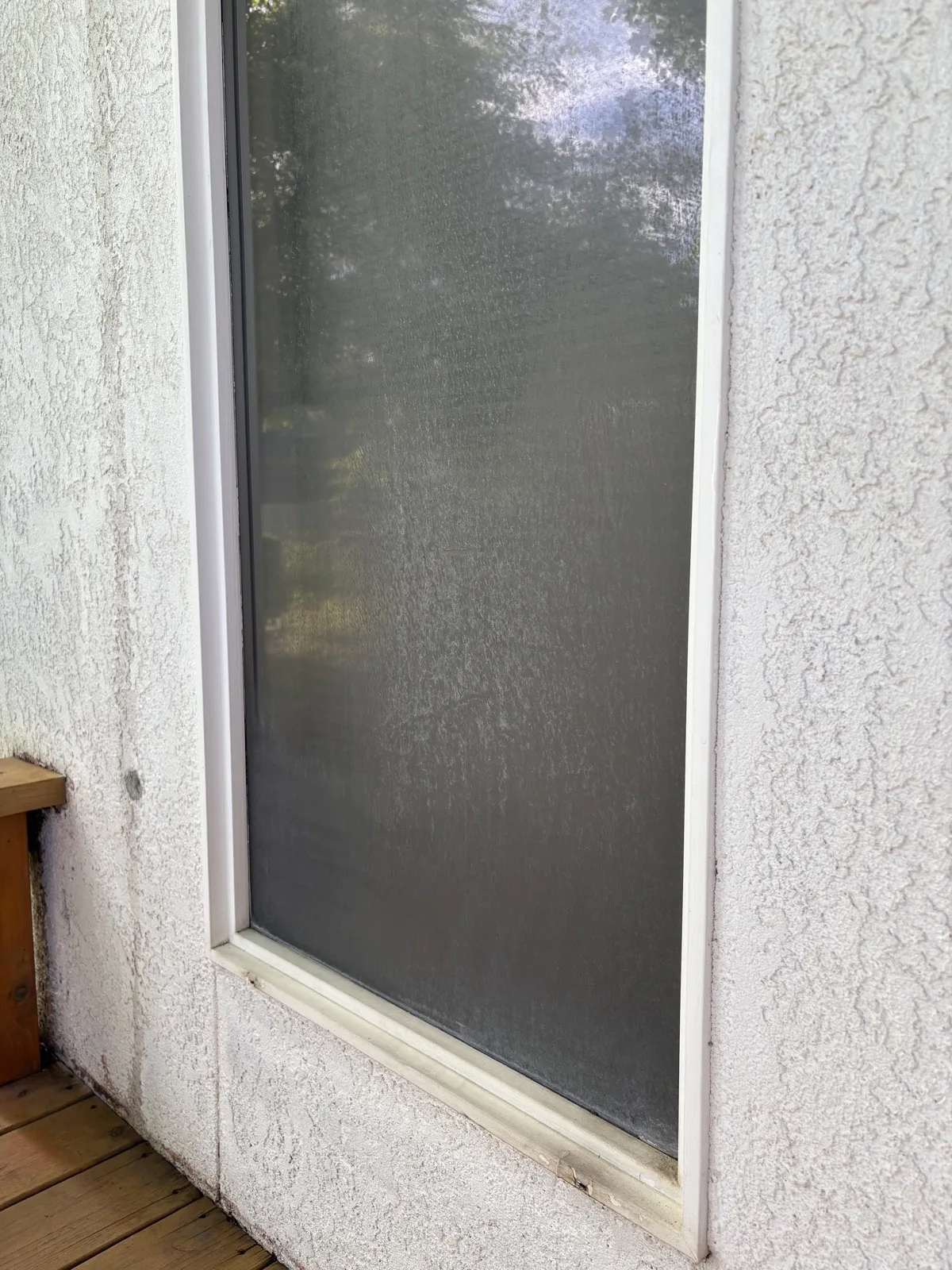
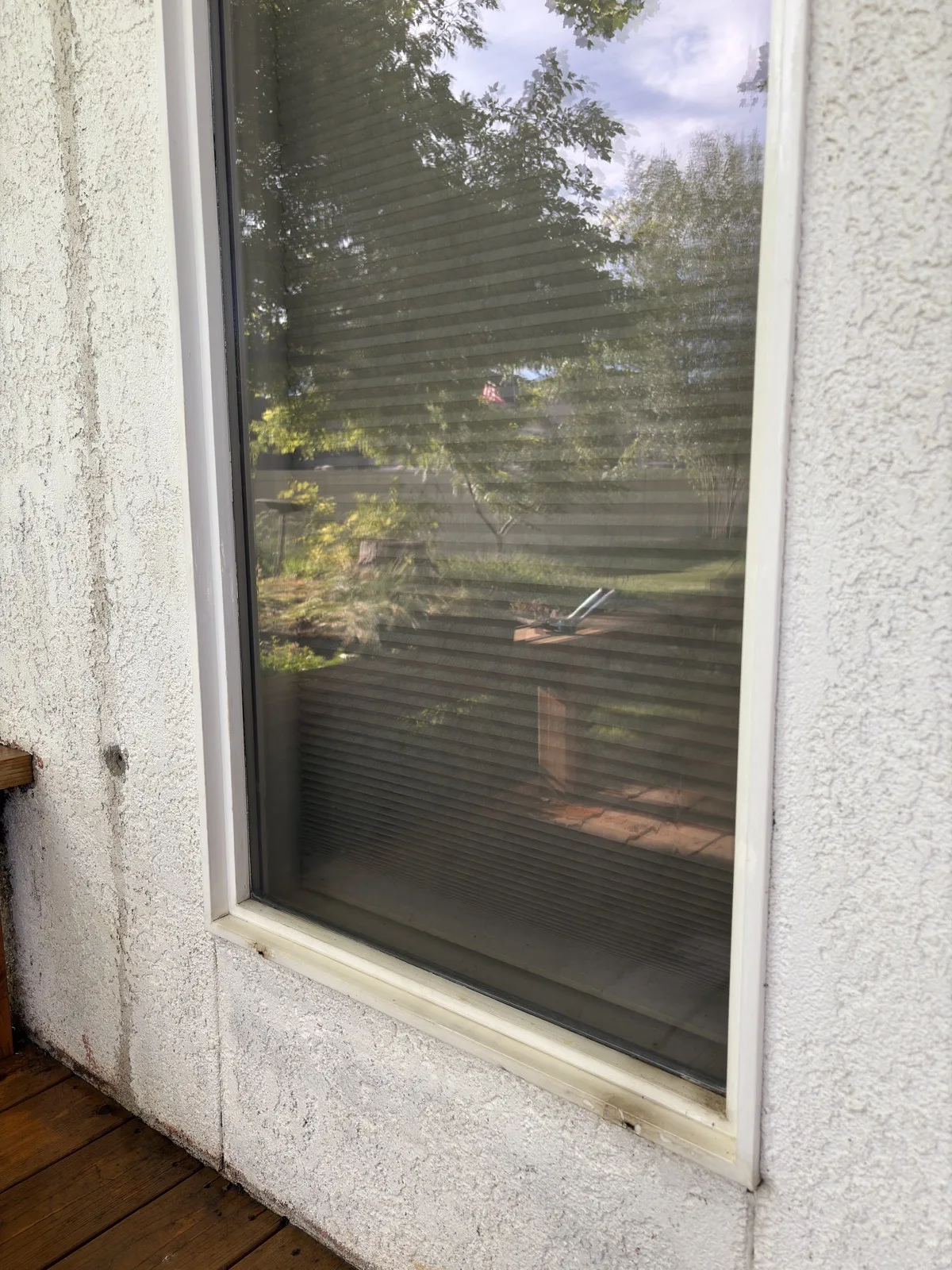
If a yard is on ditch water, the film is untreated canal water: silt, fine clay and algae on top of dissolved mineral. It reads as a gritty tan haze with white spotting inside it, and it comes off in two passes because the silt has to be lifted before you can work the mineral underneath. City water is cleaner but harder, running roughly ten to thirteen grains through this part of Boise, so it leaves clear-edged white rings that build one cycle at a time. A hose makes both worse. Rinsing with hard water just adds a new layer of dissolved mineral that dries in place. We treat the deposit, then final-rinse with 100% pure deionized water, which has nothing left in it to dry down.
The honest part: some of it is etched, not dirty
Mineral sitting on glass comes off. Mineral that has been baking on south-facing glass through several summers stops sitting on the surface and starts eating into it, and no product removes a void. The field test is simple: wet the pane. If the spots vanish while wet and reappear as it dries, the deposit is on top and we can take it off. If you can still see the rings clearly through the water, that pane is etched. On Warm Springs Avenue there is a second limit. The standard fix for etching is an abrasive cerium oxide polish, and we will not run that on original wavy 1890s to 1910s glass. It flattens the ripple and leaves a lens-shaped distortion you cannot unsee. On that glass the answer is restoration or replacement, and we will say so instead of selling you a polish.
Fix the head, then keep it clean
Removing a stain and leaving the sprinkler aimed at the house means you are paying for the same job next spring. Before we leave we walk the zones that face glass and tell you which head is throwing at the building, whether it is a bad arc, a nozzle worn wide, or a shrub that has grown into the pattern. Most of the time it is a five-dollar nozzle or a quarter-turn on the arc screw. Stain removal itself is quoted by severity, since a first-floor bay with one season on it and a bay with six are not the same job. It is included on the Monthly membership, and memberships are monthly or quarterly with no contract. Every visit carries our 7-Day Rain Guarantee. Next-Day slots are often open. Call or text (208) 453-6760.
Ready for Hard Water Stain Removal in Warm Springs Avenue?
Free, no-obligation quote — we'll call or text you with your price.
Get My Free Quote