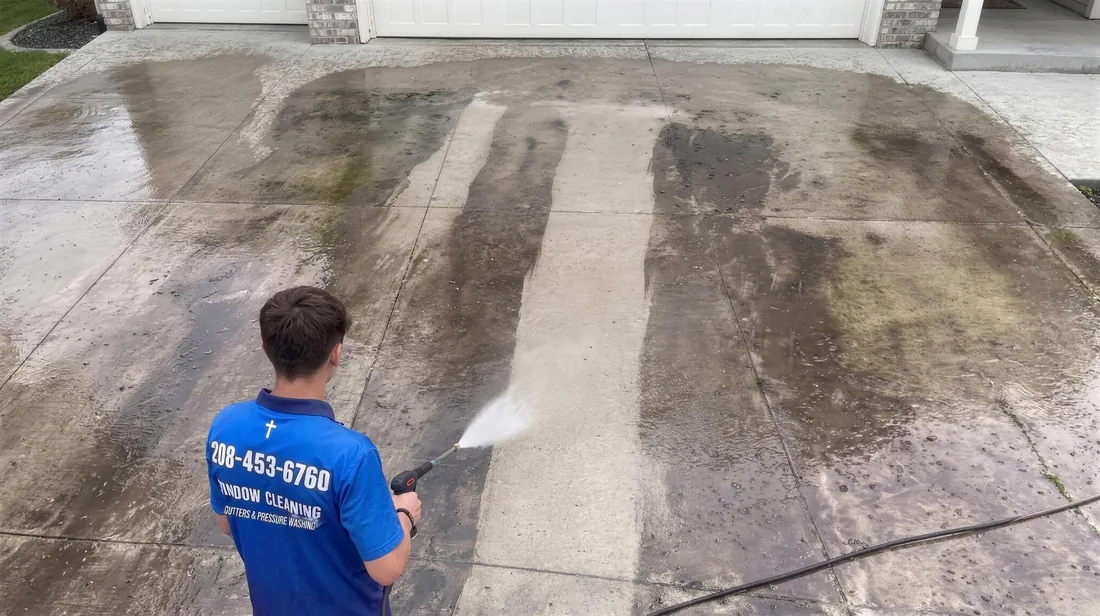
Young Concrete Takes a Different Kind of Dirt
Spring Valley concrete is new, and that shapes everything about how it gets cleaned. Most driveways here were poured within the last few years, and plenty of them still sit beside open dirt lots, gravel staging, and streets that see concrete trucks and framing trailers on a weekday. So the mess on the flatwork isn't twenty years of oil drips and organic staining — it's construction-era material: mortar splatter along the garage apron, stucco and paint mist that drifted over from the build next door, tire marks off a skid steer, and the same sharp decomposed-granite grit that blows down the Willow Creek and Beacon Light corridor, then gets ground into the broom finish by every car that pulls in. Different problem than an established Eagle Hills driveway, and it gets treated differently.
Irrigation Rust Is the Stain Nobody Expects
If your driveway or front walk has orange fan-shaped streaks radiating out from where a sprinkler head throws, that isn't dirt — it's iron in the pressurized irrigation water. Spring Valley runs on the same ditch-and-canal pressurized system as the rest of north Eagle, and that water carries enough iron to stain bare concrete within a season or two on a new lot with no mature landscaping to break up the overspray. Here's the honest part: pressure alone will not remove it. You can hit rust staining with 4,000 PSI all afternoon and only etch the surface while the orange sits right where it was. It lifts with an oxalic-based rust treatment given proper dwell time and a full rinse, and even then a deep stain in porous young concrete may only lighten rather than vanish. We'll tell you which one you have before quoting it.
New Slabs Need Less Pressure, Not More
Concrete poured in the last year is still curing and still pushing salts to the surface — that white, chalky efflorescence bloom along the edges and low spots. It looks like something a pressure washer should blast off, and it will come off, but hitting green concrete with a zero-degree tip at full pressure takes aggregate with it and leaves wand striping that never goes away. On newer Spring Valley flatwork we run a surface cleaner at moderate pressure with overlapping passes, so the whole slab comes up evenly instead of in stripes. Worth knowing: efflorescence also returns. It's the slab off-gassing, not dirt. If your driveway is under a year old, expect one or two more blooms before it stops on its own, and don't let anyone sell you a repeat cleaning as a fix for it.
Walkways, Mailbox Pads, and the Shaded North Side
The shared concrete in this part of Eagle — pathway strips, mailbox pads, front walks — often takes more abuse than the driveway does, and it collects a different mix: irrigation overspray at the edges, mud tracked in off gravel shoulders and unfinished lots, and green biological film anywhere a fence line or the house itself blocks afternoon sun. Those shaded north-facing strips are the ones homeowners overlook. Concrete that never fully dries out holds moisture through spring, grows a thin algae film, and turns slick underfoot before it ever looks dirty enough to bother with. That's a soft-wash-and-rinse job rather than a high-pressure one — the point is killing the growth so it stays gone, not just stripping the color off and watching it come back in six weeks.
What It Costs and How We Schedule It
Driveways, patios, and walkways run $0.20 per square foot. A typical Spring Valley three-car driveway plus the front walk lands in a predictable range once we have the actual square footage, and we'd rather measure it than guess over the phone. Next-Day slots open up most weeks. Reflekt was started in 2025 by Hunter Stevens and Ethan Seusy, we're locally owned and fully insured, and we hold a 4.9-star average across 125+ Google reviews. Every job carries our 7-Day Rain Guarantee, which matters more here than most places — spring runoff and construction traffic can re-dirty a fresh slab fast. Monthly and Quarterly memberships are available with no contract if you'd rather keep hardscape maintained alongside the window work than deal with it every couple of years.
Ready for Pressure Washing in Spring Valley?
Free, no-obligation quote — we'll call or text you with your price.
Get My Free Quote