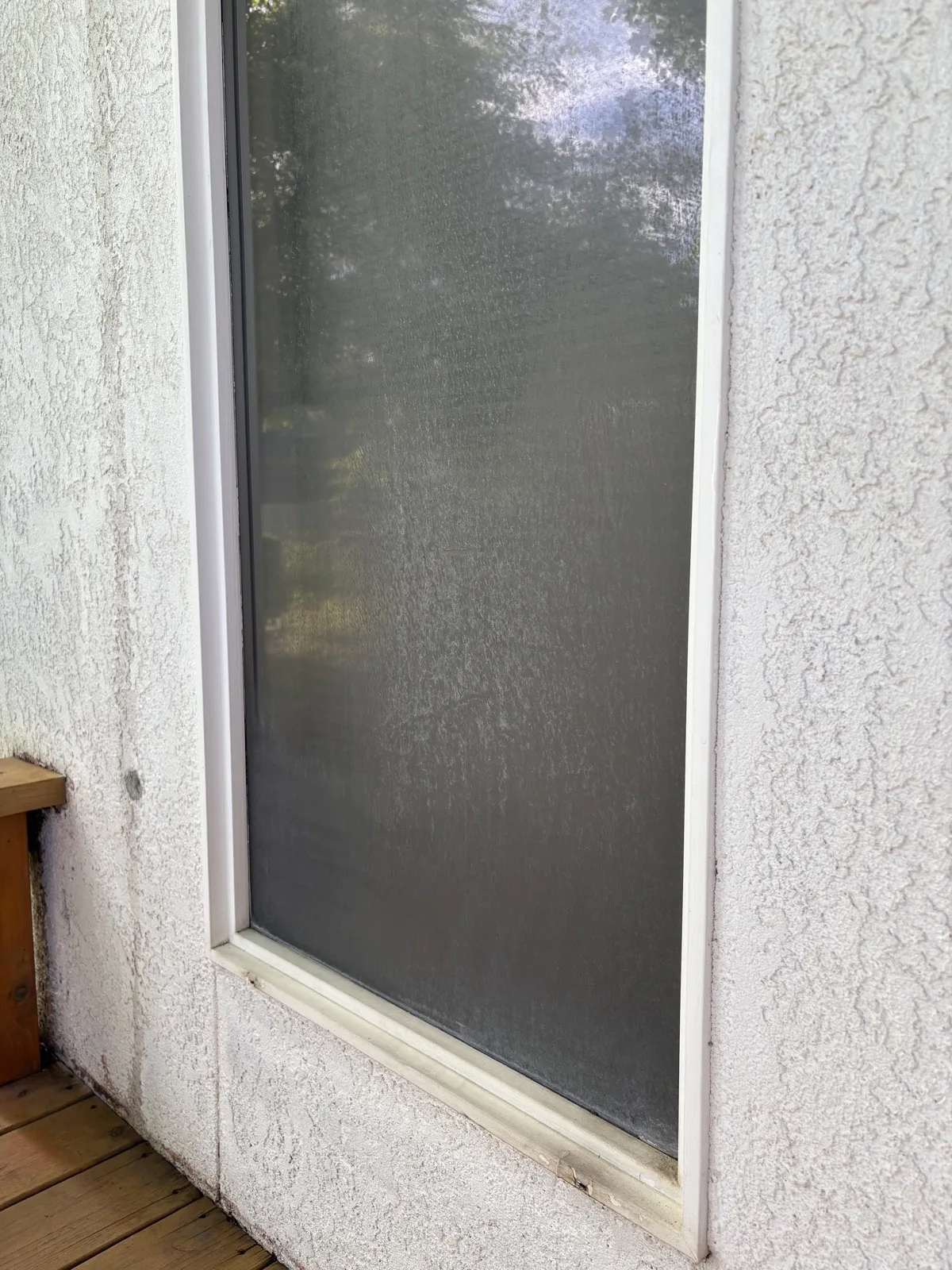
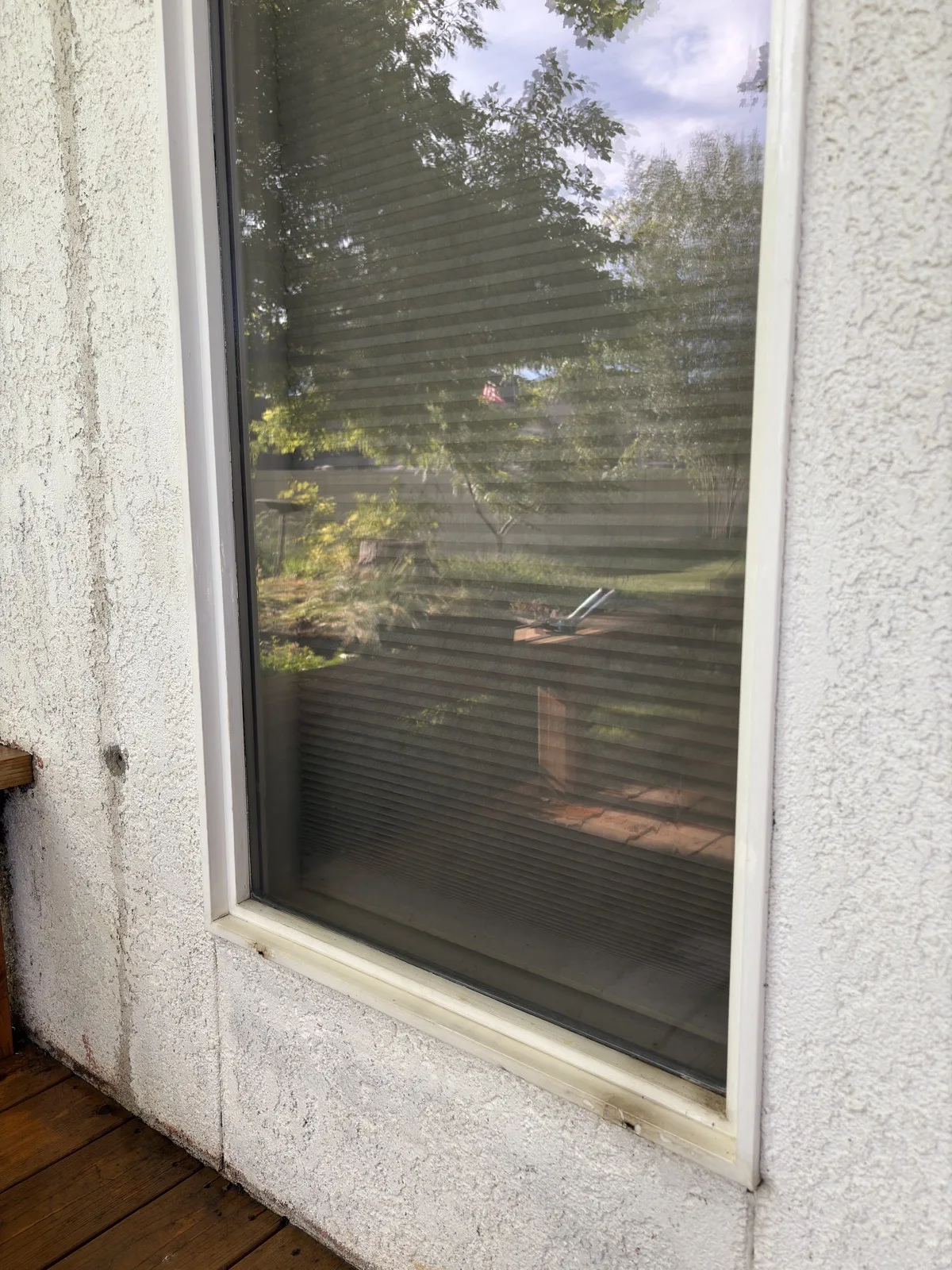
Why 1990s sprinkler systems etch glass harder than new ones
A lot of these yards are still watering off the original 1990s install. Thirty years of settling risers, replacement heads that don't match what was there, and arcs nudged by whoever was mowing means the spray pattern today is nothing like the pattern the installer set. Older brass impacts and early gear-drive rotors also throw a coarser, longer stream than the matched-precipitation nozzles going into new Garden City construction, so they carry farther and land higher on a wall. That's the single biggest reason etching severity swings so hard from one Riverwoods house to the next. It isn't the water quality, which is the same for the whole subdivision. It's the age and the aim of the hardware sitting in your beds.
HOA common landscaping vs. your own zones
There are two irrigation systems working on a Riverwoods home. Your own zones water the lawn and the foundation beds close to the house. The common landscaping around the ponds and the shared river frontage runs on its own schedule, usually with bigger rotors aimed to cover open turf. Common-area heads are tuned for coverage, not for keeping water off somebody's window, and they typically run before sunrise when nobody is outside to see where the spray is landing. Homes that back or side onto that common turf take a different hit than interior lots: fewer, heavier passes from farther away, leaving a broad haze across a whole elevation instead of the tight spotted band you get from your own bed heads three feet off the foundation.
Which elevations take the overspray here
On the typical Riverwoods floor plan the damage sorts out predictably. Pond and river-facing walls get the worst of it, because that's where both the common-area rotors and the homeowner's own shoreline zones point. Walkout lower-level windows sit low and close to grade, so they catch direct spray instead of drift. Narrow side yards between houses are the second-worst spot — one head has to throw the full width, so it sheets water onto both walls at head height. Front elevations usually show a defined band across the bottom third of the glass from park-strip and foundation-bed heads. Second-story glass is often clean except where a rotor throws high on a windy morning. We walk the whole house before quoting, because two elevations on the same home routinely need different treatment.
What comes off, and what honestly doesn't
Hard water damage runs on a scale and the answer depends on where yours sits. Fresh mineral sitting on the surface comes off with an acidic descaler and a scrub, and the glass looks new. Deposits baked on through several summers need a cerium oxide polish, which is slower work and priced accordingly. Past that point the mineral has eaten into the silica and left a pit. That's etching, not staining, and no chemical or polish brings it back. Pressure won't touch any stage of it — a pressure washer moves water fast, it doesn't dissolve calcium. We test a small patch in a corner and show you the result before you commit. If a pane is etched through, we'll say it needs replacing rather than sell you a restoration that won't hold.
Pricing, and fixing the cause while we're there
Restoration is quoted by severity, not by pane count, because a lightly spotted window and a five-summer buildup are different amounts of labor on identical glass. On a Monthly membership it's included, which usually makes sense here — restoring glass and then leaving the sprinklers aimed at it means paying to do it twice. Before we leave we point out which heads are hitting the house so you or your landscaper can adjust the arc or drop in a lower-throw nozzle. Ongoing window cleaning after that runs on 100% pure deionized water with no soap, so nothing mineral goes back on the glass from our side. No contract, 7-Day Rain Guarantee, next-day slots when we have them. Locally owned, fully insured, 4.9 stars across 125+ Google reviews. Call (208) 453-6760.
Ready for Hard Water Stain Removal in Riverwoods?
Free, no-obligation quote — we'll call or text you with your price.
Get My Free Quote