Every lot here has its own sprinkler history
The blocks between State Street and the river went in roughly between 1962 and 1985, before subdivision-wide irrigation design was standard and long before any HOA was running common landscaping out here. Lawns got watered by whatever the owner put in, and most of these systems have been added to three or four times since. What we walk up on is usually a mix: a couple of original brass impact heads set close to the foundation, a few newer gear-drive rotors somebody dropped in during a repair, and one riser that has settled and now tips toward the house. The impacts are the problem. They were set for a young yard with no shrubs, and forty years of grade change and sagging risers has them clipping siding and glass on every pass. A neighbor with the same house and a properly aimed system will have clean windows. That is the whole difference.
Ditch water and city water leave two different stains
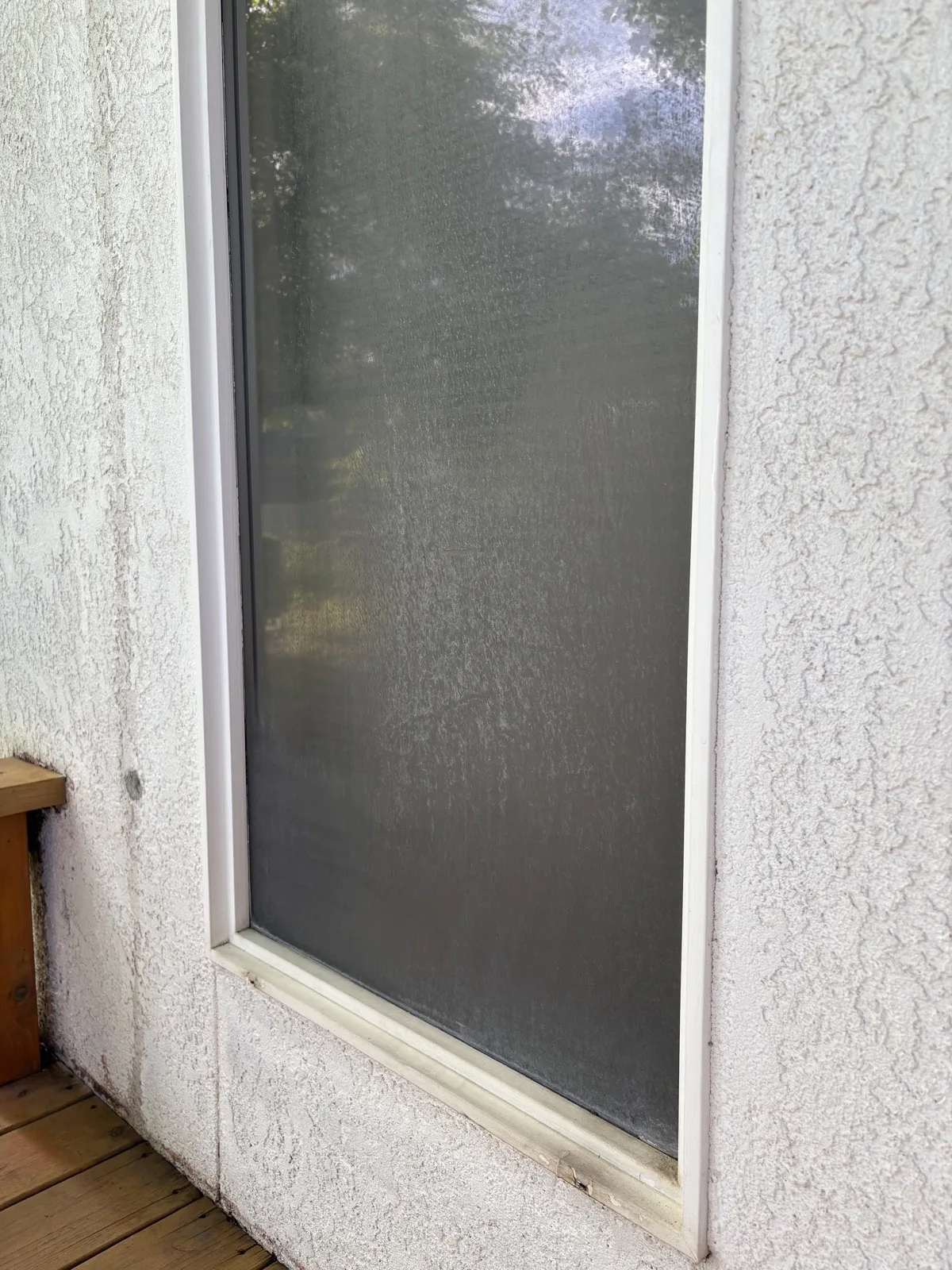
Not every yard down here is watered off the tap. Plenty of these older river-bottom lots carry surface water rights and pull from the old laterals, and some houses run both, tap on the parkway strip and ditch water on the back lawn. The two leave different marks and want different work. Ditch water is silty. It dries to a gray-brown film with fine grit in it, and it sits on the glass more than it bonds into it, so it usually comes off without much fight. City tap runs about 10 to 13 grains of hardness, and the west-side zones fed by deep wells sit at the high end of that. That mineral dries hard, white, and slightly raised, and after enough summers it stops being a deposit and starts being surface damage. If your spotting is gray, we are optimistic. If it is chalky white and you can catch it with a fingernail, we test before we promise.
On a single-story ranch, the heads hit the glass directly
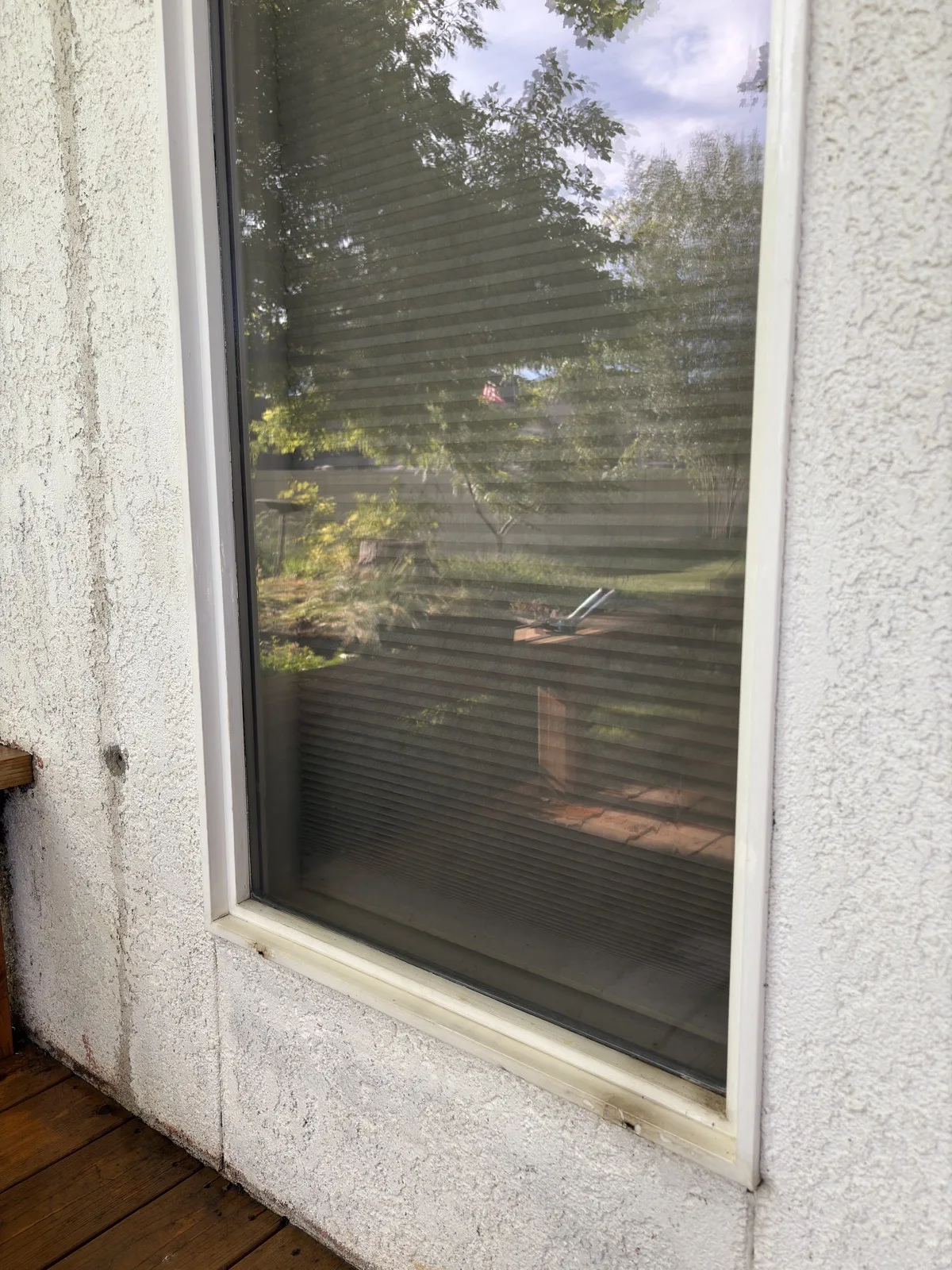
Height is what usually saves windows from sprinklers, and these houses do not have it. Most of Veterans Park is one story on a flat lot with a shallow eave, so the sill sits maybe three feet off grade and a head twelve feet out throws straight into the pane instead of dying against the foundation. The worst glass is almost always the street-side elevation, because that is where the biggest run of lawn and the most heads are, and low garden-level or daylight-basement windows on that same wall take it twice as hard. Aspect matters just as much. West and south glass flash-dries in July before the water can run off, so the mineral bakes in place. North-side glass stays wet longer, holds more film, and etches less. When we quote we walk each elevation separately, because one house routinely has three grades of damage on it.
We test a patch before we tell you it will come out
Hard water damage runs on a scale, and pressure has nothing to do with any of it. Fresh mineral sitting on the surface lifts with an acidic mineral remover and comes back to clear glass. Older buildup needs that plus a fine polishing pass, and it comes back most of the way but not always all the way. Deposits that have sat through five or six rainless Boise summers on south or west glass have pitted into the silica, and that is a hole in the surface, not a film. Nothing removes it. Polishing it harder just distorts the pane, and any company promising a full restoration on etched glass is going to hand you a bill and a window that still looks bad. So we clean a six-inch test patch on your worst window first, show you the result, and quote from that. Sometimes the honest answer is replacement.
Fix the head first, or you buy this twice
Restoring glass while the sprinkler that ruined it still points at the house buys you one season. Before we schedule, run your zones at the time they normally fire and watch what reaches the wall. A head that looks fine at noon can behave very differently at 5 a.m. on full pressure. Usually the fix is small: rotate the nozzle, swap an impact for an adjustable rotor, or shorten the arc on one or two heads. Once the source is handled, restored glass stays clear. Our regular window work then uses 100% pure deionized water with nothing dissolved in it, so what we rinse with cannot leave a spot of its own. Stain removal is quoted by severity and included on the Monthly membership. Memberships are Monthly or Quarterly, no contract, with a 7-Day Rain Guarantee, and we hold next-day slots on the west side. Locally owned, fully insured, 4.9 stars across 125+ Google reviews. Call (208) 453-6760.
Ready for Hard Water Stain Removal in Veterans Park?
Free, no-obligation quote — we'll call or text you with your price.
Get My Free Quote