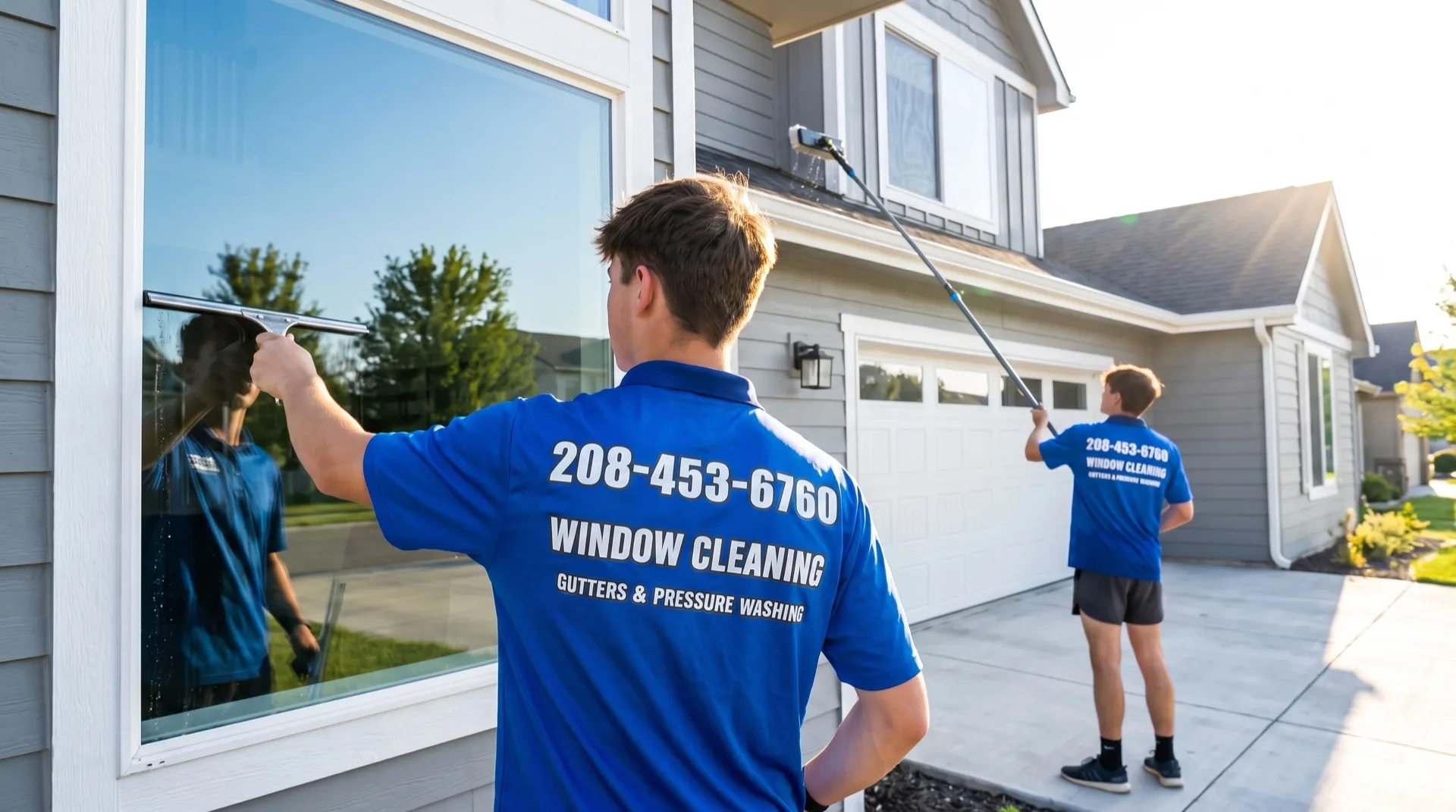
What direct sun does to the water
Water on a sunlit pane evaporates faster than it can be worked. Whatever minerals or soap were dissolved in it get left behind exactly where the drop dried, in a pattern that reads as streaking. That is not a technique failure or a bad product, it is evaporation outrunning the person holding the squeegee. On a 95-degree August afternoon a west-facing window is close to uncleanable by any method: soap and squeegee dries into a film before the blade finishes its pass, and even a pure water rinse can flash off before it has fully released what it lifted. The same pane in shade an hour later behaves completely differently with the identical water and technique. Nothing about the glass changed, only the evaporation rate did, which is the entire argument for scheduling around the sun rather than the clock.
How a crew sequences a house by shade, not by address
Professionals do not start at the front door and work around the house in order. A route gets planned by compass direction: east-facing glass gets worked in the morning while it is still shaded, west-facing glass waits for afternoon shade, and north-facing glass is workable most of the day regardless of season. On a multi-hour job the sun moves during the visit, so a crew will double back to an elevation that was in glare an hour earlier and is shaded by the time they return. Reflected glare off a neighbor's siding or a parked vehicle can heat a pane almost as much as direct sun, which is why an experienced crew reads the light on site rather than following a fixed plan. A homeowner cleaning their own windows can use the same rule: work whichever side of the house the sun is not currently hitting.
Early morning has its own catch
Very early starts trade one problem for another. Overnight dew sits on the glass until the air warms enough to lift it, and in winter that dew is frost, which means working wet glass in air too cold for anything to dry evenly. Squeegee work on a frosted pane just relocates the ice rather than removing it. Mid-morning onward is usually the sweet spot outside of high summer, once dew has burned off but before direct sun reaches full strength on the exposed elevations. In summer the priority flips: earlier is better simply to beat the heat, and a crew will often start on the most exposed south or west side of a house first thing, while it is still in shadow cast by the structure itself.
Why pure water is more forgiving, but not sun-proof
Deionized water carries nothing dissolved in it, so it has no minerals or soap film to leave behind even when it evaporates a little faster than ideal. That makes it far more forgiving of imperfect timing than a soap-and-squeegee clean, where any residue left by rushed work becomes tomorrow's streak. It is not immune to the underlying physics. On a scorching sunlit pane, water evaporating in seconds rather than minutes is still a problem for any method, because the brush and rinse need a few seconds of working time to actually lift what is on the glass before it sets again. The RainShield finish applied at the end also holds better on a pane that had time to be rinsed properly, which is one more reason scheduling around direct sun is standard practice rather than a preference.
Why the same timing logic protects glass from hard water
Sun exposure does not just cause streaking, it is also what turns ordinary sprinkler overspray into a bonded stain. Mineral-carrying irrigation water that lands on a hot, sun-baked pane in the middle of a summer afternoon dries almost instantly, and the calcium and silica it carried fuse to the glass rather than rinsing away. The same water hitting the same window in early morning or evening shade has time to run off before it bakes on. That is a large part of why irrigation systems are timed for early morning in the first place, and why a west-facing window under a midday sprinkler cycle tends to need hard water restoration years before a shaded elevation on the same house does. Timing is not just about how a cleaning looks the day it is done, it affects how much work the next cleaning needs.
Want This Done For You?
Free, no-obligation quote — we'll call or text you with your price.
Get My Free Quote