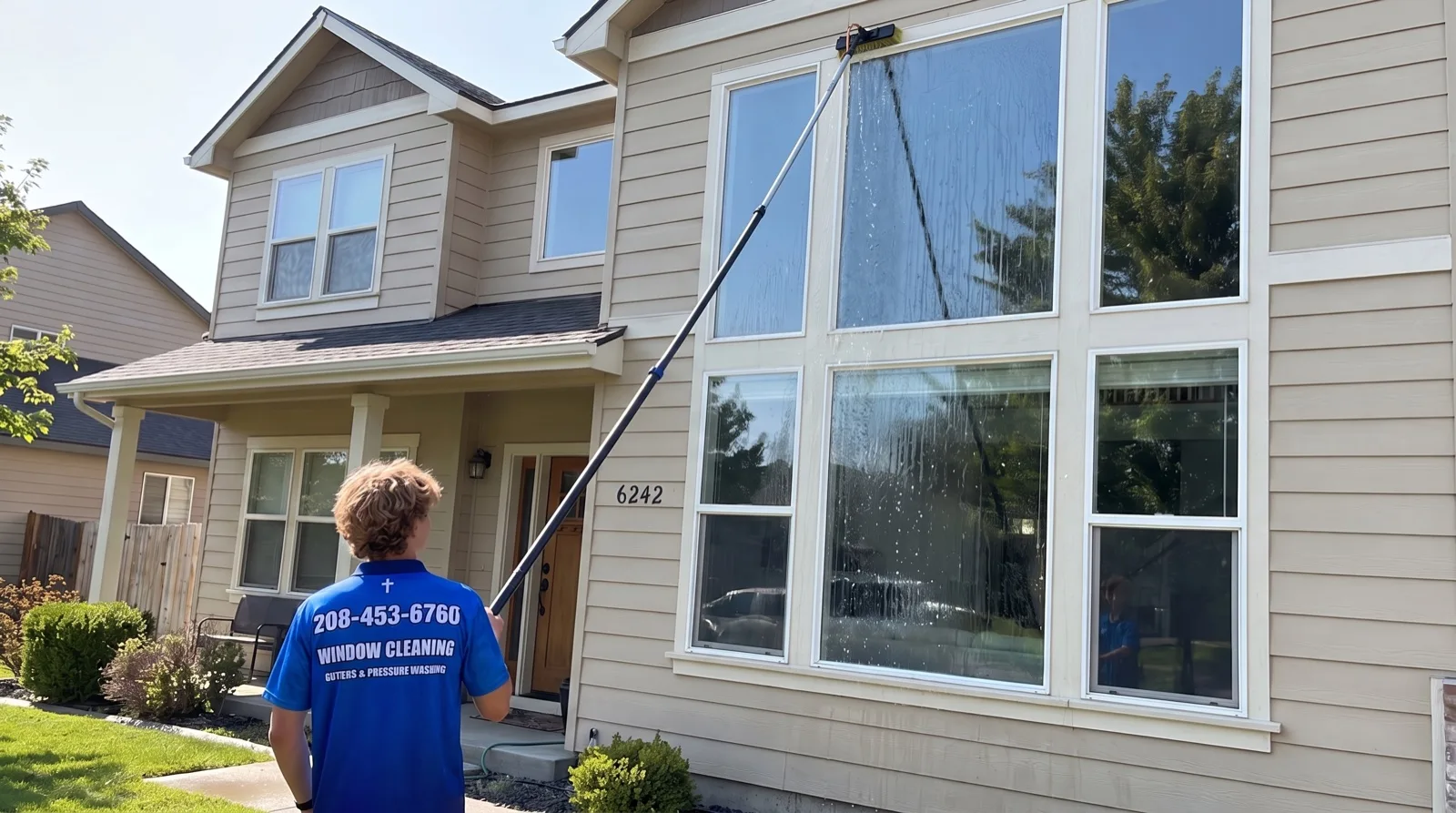
Insured: the one that protects your property
General liability insurance covers damage the contractor causes to your property, a broken pane, a cracked sill, a dented gutter, and injury to third parties who are not the contractor's own employees. This is the protection that matters most to a homeowner, and it is the one worth verifying carefully before anyone leans a ladder against your house. General liability coverage for a small service business is commonly written in the range of a million dollars per occurrence, which is the kind of number that actually matters if something goes seriously wrong at height. Ask for a certificate of insurance rather than accepting a verbal assurance; it is a standard document and any legitimate company produces it without hesitating or stalling.
Insured, part two: what happens if a crew member gets hurt
General liability and workers' compensation are not the same coverage, and this is exactly where the word insured tends to get used loosely by companies that only carry one of the two. General liability covers damage to your property and injury to other people who happen to be nearby. Workers' compensation covers injury to the contractor's own employees while they are working on your property, a ladder fall or a strained back on a second-story job, and it is a separate policy entirely from general liability. If a company has no workers' compensation and someone gets hurt on your property, that cost can end up shifting onto your own homeowner's insurance rather than staying with the contractor, which is a far larger financial exposure than a broken window and the real reason it is worth asking about specifically.
Bonded: a completion guarantee, not a damage guarantee
A surety bond is a three-party arrangement between the contractor, the customer, and a bonding company, and it works quite differently from insurance in practice. If the contractor fails to complete the job or violates certain obligations, a claim can be paid out of the bond, but the contractor then owes that money back to the surety afterward, so it is not free money sitting in reserve somewhere. What it protects against is non-performance, a company taking a deposit and disappearing, rather than accidental damage during a job that does get finished properly. For a residential window cleaning visit, where the real risk is a dropped ladder rather than a vanished contractor, bonding does far less for you than liability insurance does.
Licensed: mostly a paperwork signal here
Idaho does not require a specific occupational license for window cleaning the way it does for electrical or plumbing work, so there is no license number to look up or verify against a state board. A company saying it is licensed generally means it is a registered business in good standing, which is worth something as a basic legitimacy check but is not a competence credential the way a trade license is in other regulated fields. Because the word carries so little regulatory weight in this particular trade, it is worth asking a company directly what they actually mean when they say licensed, rather than assuming it implies the same vetting process it would for an electrician or a plumber working on your house.
The two-minute check
Ask for a certificate of insurance and confirm the policy period actually covers your job date rather than glancing at one that expired last year and quietly moving on without noticing. Ask separately whether they carry workers' compensation for anyone who will be on your property, since that is a different policy from general liability and gets skipped in the conversation more often than it honestly should. Confirm the business has a physical address rather than only a phone number and a van with a logo painted on the side. Those three answers together tell you considerably more about what actually happens if something goes wrong than the three reassuring words printed on the side of that same truck ever will.
Want This Done For You?
Free, no-obligation quote — we'll call or text you with your price.
Get My Free Quote