The traditional method and its limit
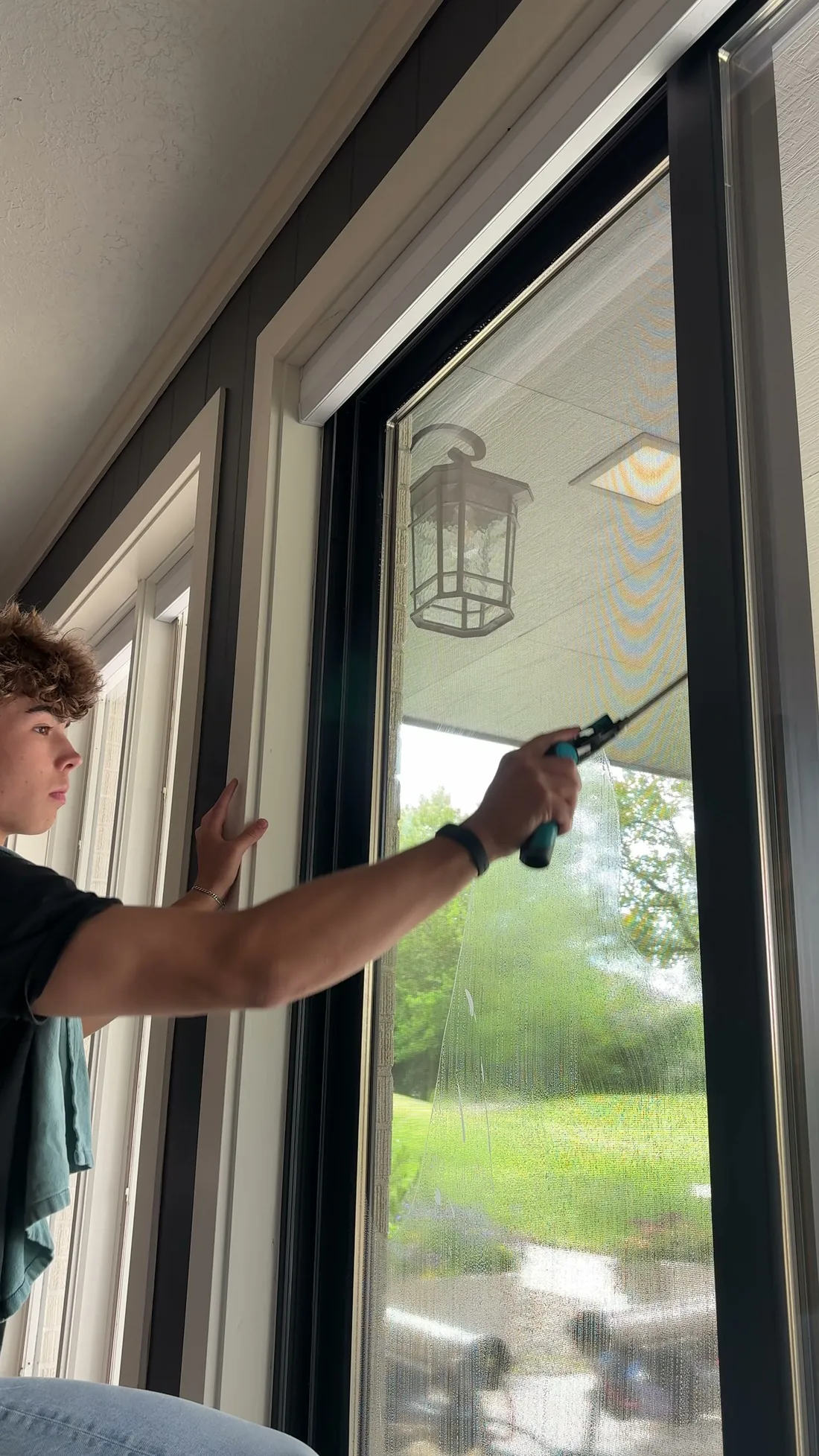
A wetting agent, a scrubber, and a squeegee, finished by hand at the edges with a cloth for the corners a blade can't reach cleanly on its own. In skilled hands it produces excellent glass on the day, and a good squeegee hand at street level can produce a finish nobody would ever fault. Its weakness is that the wetting agent is soap, and soap leaves a thin film by design, since that is exactly what lets it break surface tension and lift grime in the first place. That film attracts dust once it is on the glass, so soap-cleaned windows start dulling within weeks rather than months, even when the initial finish on the day was completely flawless to look at up close.
What pure water cleaning does differently
Water is run through resin beds that strip out its dissolved minerals through ion exchange, producing deionized water that typically reads under 10 parts per million on a TDS meter, close to zero compared with ordinary tap water pulled straight from a hose. Because it carries almost nothing, it aggressively picks up dirt sitting on the glass and then dries without leaving anything of its own behind on the surface. The glass is scrubbed with a brush on a pole, rinsed thoroughly from top to bottom, and left to dry completely untouched by anyone. There is no squeegee used on the exterior, no cloth ever touches the glass, and no residue left over for the next round of dust to grab onto and slowly build up on.
Why nobody wipes it dry
This is the part that looks wrong to people watching from inside, since every instinct built up from years of squeegee cleaning says a wet window is an unfinished one. Wiping is actually what introduces streaks in a soap-based clean, because it redistributes whatever is in the water across the glass as it dries rather than letting it settle evenly on its own. Pure water has nothing in it to redistribute, so the correct finish is to rinse thoroughly and walk away rather than chase it with a cloth purely out of habit. If you can see a crew leaving windows wet and moving on to the next one, that is the method working exactly as intended, not a job that got left half done partway through.
Where the ladder still comes out
Poles reach roughly three stories from the ground, which covers nearly all residential work in the Treasure Valley without anyone ever setting a ladder foot down in a flowerbed by the front door. Deep recesses, glass behind mature landscaping, and windows above a lower roof line still need ladder access regardless of how far a pole can technically reach on paper in ideal conditions. A company that only owns one approach will either skip those specific windows entirely or improvise something unsafe to get to them anyway, and it is fair to ask any crew exactly how they plan to reach a given window before assuming the answer is the same for every single pane on the whole house every time.
The method only works if the water is actually pure
Resin beads wear out with use and eventually stop stripping minerals the way they did when new, which means a crew running spent resin is effectively spraying ordinary tap water through an expensive-looking pole. The glass still gets wet, still gets brushed, and still spots on drying anyway, because the water carrying the dirt away is no longer the pure water the entire method depends on to work correctly. That is why a serious crew carries a TDS meter and checks the reading before starting rather than assuming the system is still working from last week, since the number tells the truth about the water regardless of how new or expensive the equipment itself looks sitting on the truck that day.
Want This Done For You?
Free, no-obligation quote — we'll call or text you with your price.
Get My Free Quote