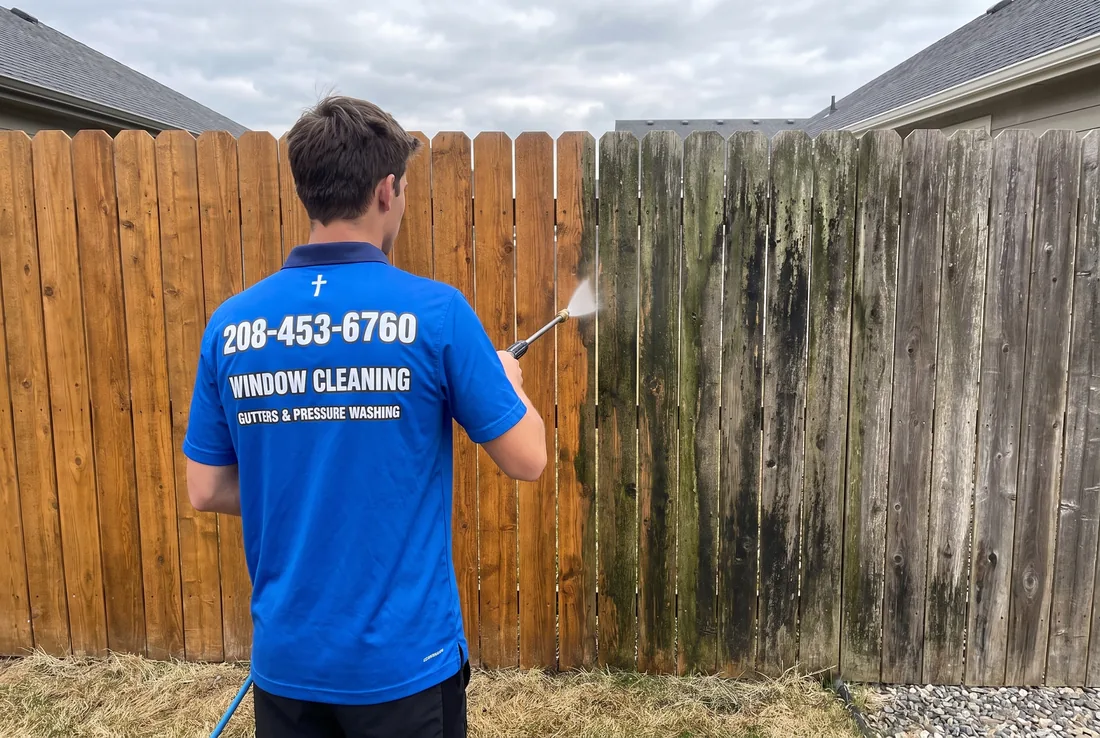
Green algae and black mildew are not the same problem
A slick green film is algae, a photosynthetic organism that needs light along with moisture, which is why it sheets across open faces of a damp fence rather than clustering in corners. Black speckling is usually a mold or mildew, a fungus that does not need light at all and instead feeds on the wood itself, specifically the lignin and cellulose in the grain. That is why black growth often shows in shaded, airless corners and post bases where algae is thin, and why scrubbing it off the surface can look successful while the fungus is still established in the wood underneath.
Why the north side and the sprinkler line go first
The shaded face of a fence dries slowest and stays damp longest, so algae establishes there first and heaviest. A fence line backing onto irrigated lawn or standing under a sprinkler's overspray gets the same treatment regardless of which direction it faces, because the moisture source matters more than the compass. It is a moisture map more than a dirt map, and two fences on the same property can be in completely different condition if one catches lawn spray and the other does not.
What pressure does to wood
High pressure erodes the soft spring growth between the harder grain lines, raising the grain and leaving a fuzzy, rougher surface. That rougher surface then holds more moisture and more spores, so a pressure-washed fence often regrows faster than one cleaned gently. It also drives water into the end grain at post tops and board edges, which is exactly where wood absorbs moisture fastest and where rot starts.
The gentler approach, and where it stops working
Organic growth on wood responds to an appropriately diluted cleaning solution and dwell time at low pressure, which kills the growth rather than eroding the surface it lives on. That is genuinely enough for most fences. It is not enough where growth has been established for years and the wood underneath has gone soft or spongy. At that point the fungus has been breaking down the wood fiber itself, not just sitting on top of it, and no cleaning solution restores wood that has already started to decay. That board needs replacing, not another wash.
Vinyl and metal fencing behave differently
Vinyl fence panels take cleaning easily but oxidize like siding under sun, so a chalky white residue that comes off on your hand is degraded surface plastic rather than dirt, and no amount of washing brings the original color back. Metal fencing near sprinklers develops rust staining that is a chemical reaction between iron and standing water, not a growth or a pressure problem, and it needs a rust-appropriate treatment rather than a stronger scrub.
Want This Done For You?
Free, no-obligation quote — we'll call or text you with your price.
Get My Free Quote