What oxidation actually is
UV exposure breaks the molecular chains at the surface of the vinyl polymer, a process called chain scission, and as those chains break down the pigment and filler that were bound into the material are released as a loose powder. That powder is the chalk on your hand. It is not dirt that landed there, it is the siding itself coming apart at a microscopic level, one thin layer at a time, which is why west and south elevations are always worse than north ones.
Why the Treasure Valley accelerates it
This region sits at roughly 2,700 feet with around 200 clear days a year and intense summer sun, and that combination of altitude and clear sky puts more UV on a wall here than the same siding would take in a cloudier, lower-elevation climate. Siding that might chalk lightly over a decade elsewhere can show visible oxidation in five to eight years on an exposed south or west wall here, which is why this complaint shows up earlier than homeowners moving from other states expect.
What washing does and does not do
Soft washing at $0.18 per square foot removes the loose chalk along with dirt and organic growth, and the wall genuinely looks better and more even afterward. What it cannot do is put pigment back into the polymer. Under the chalk is faded siding, and cleaning reveals that rather than reversing it, the same way washing a faded car does not restore its original paint color.
Why aggressive washing is counterproductive
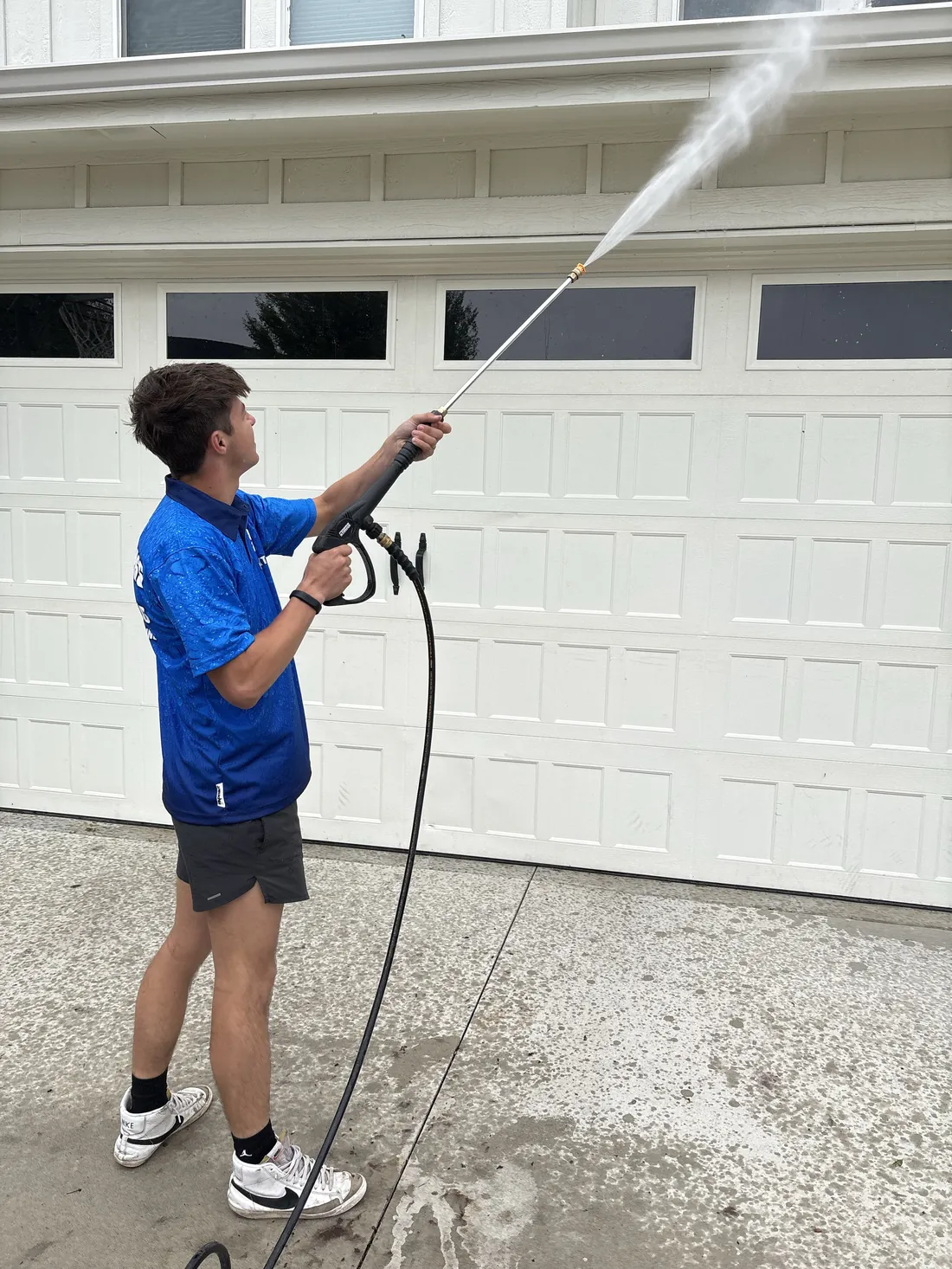
Pressure washing oxidized vinyl strips more of the already-degraded surface layer and can leave a blotchy result where some areas came away more evenly than others, since chalking is rarely perfectly uniform across a wall. It also forces water up behind the courses at the laps, which is a separate moisture problem layered on top of the cosmetic one. Trying harder here produces a worse and more uneven appearance, not a better one.
The honest options once the color is gone
Cleaning to remove chalk and growth, then accepting the faded color, is the low-cost route and often looks fine from the street. Beyond that, vinyl can be painted with products specifically formulated to bond to it, or the siding can be replaced, and both are genuine projects rather than cleaning services. Any company promising to restore original color with a wash is describing something that does not happen at a chemical level, regardless of the product used.
Want This Done For You?
Free, no-obligation quote — we'll call or text you with your price.
Get My Free Quote