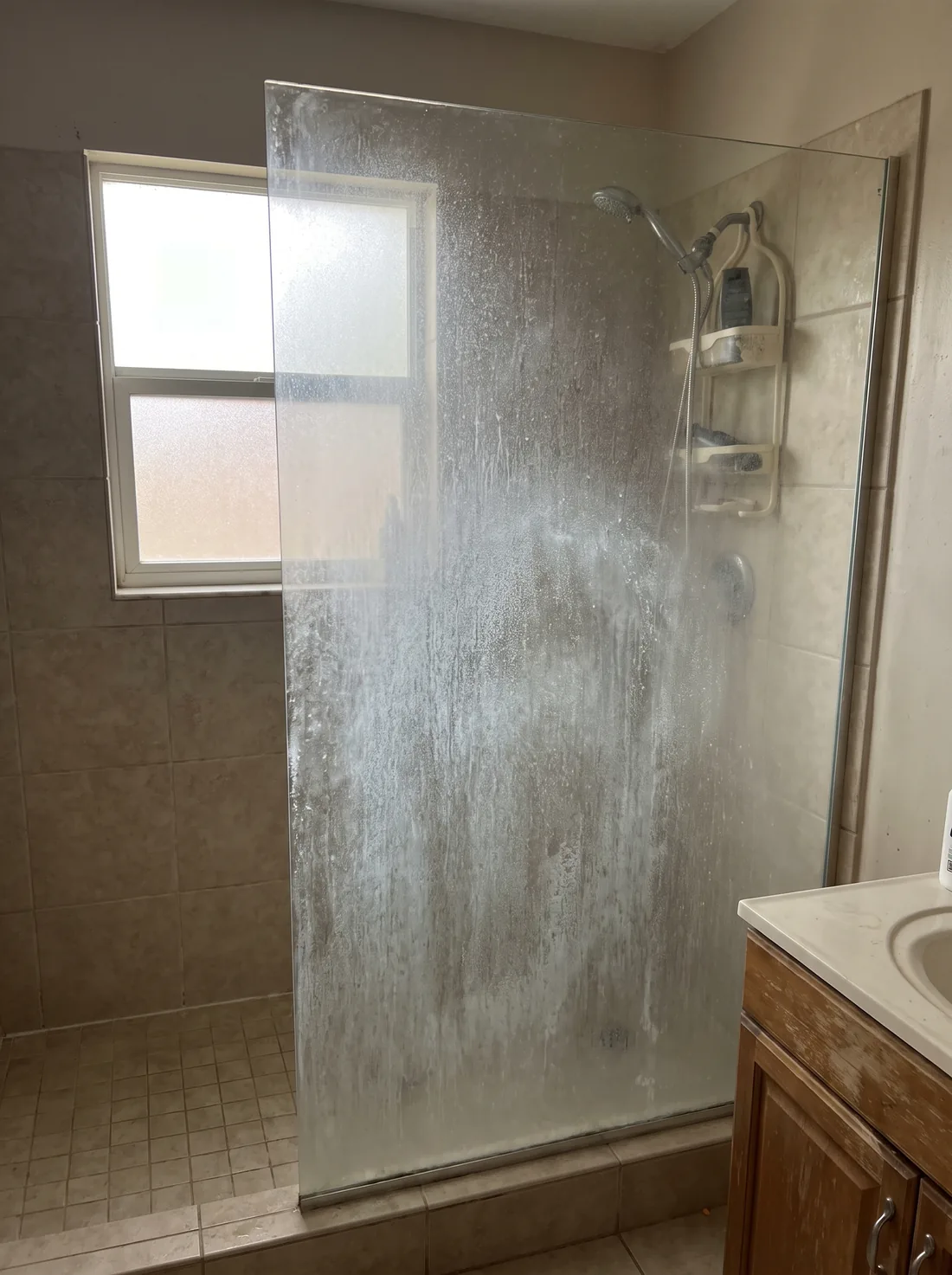
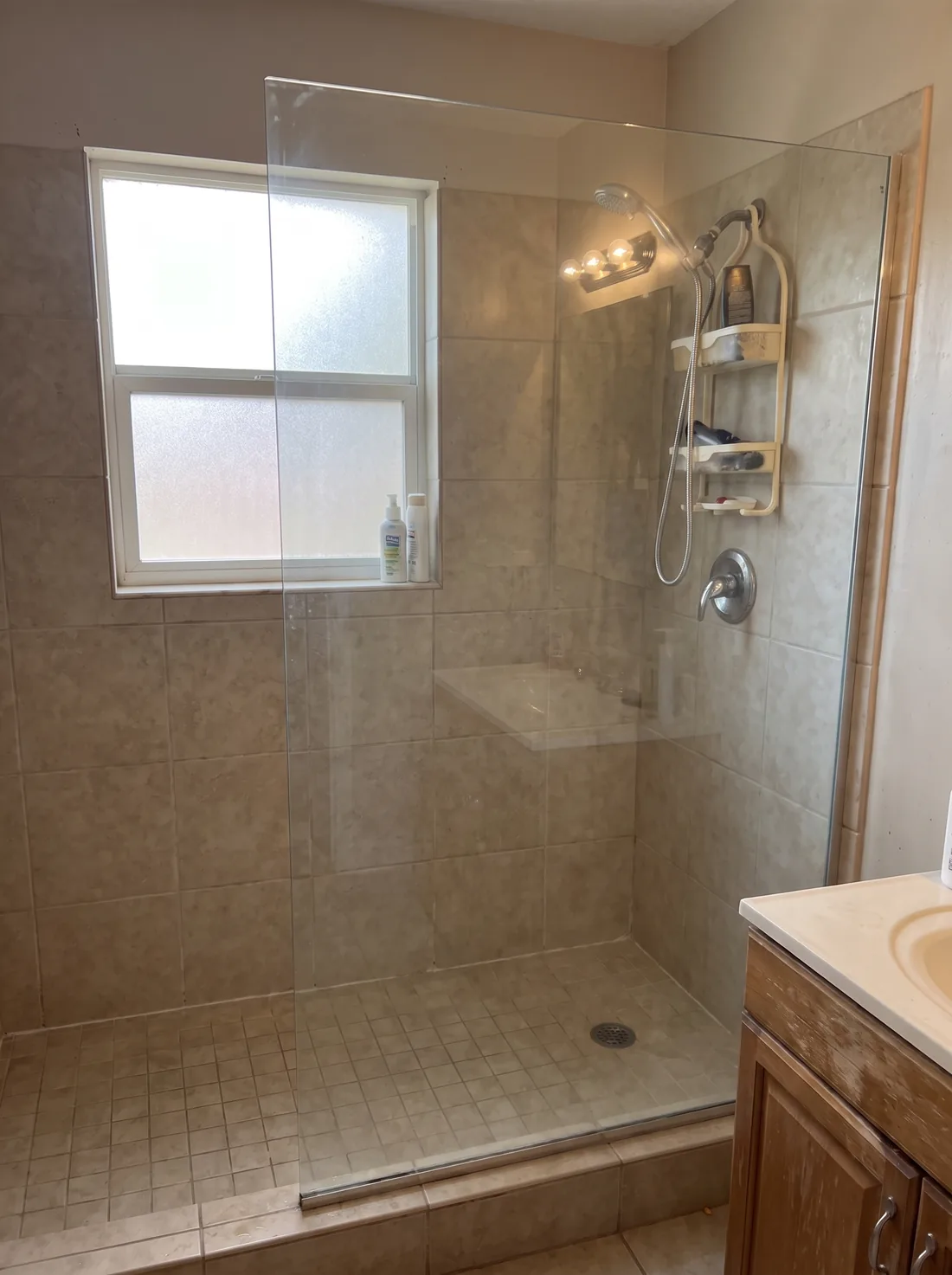
Soap scum versus mineral etching
Soap scum is a soft, slightly waxy film built from soap and body oils, and it responds to the right cleaner and a little dwell time. Mineral deposit is hard, gritty to the fingertip, and does not budge. If your fingernail catches slightly on the surface and it feels rough rather than slick, you are dealing with mineral rather than scum.
Why shower glass etches faster than windows
Hot water carries more dissolved mineral into contact with the glass and evaporates faster once it lands, and the glass gets wetted and dried multiple times a day rather than seasonally the way an exterior window does. Each cycle leaves a fresh layer of calcium and magnesium behind as the water evaporates, and repeated heat exposure bakes that deposit onto the surface more tightly than a cool exterior spot ever would. That compresses years of window-equivalent exposure into months, which is why a shower panel can be visibly etched within a couple of years of installation.
New glass often has a protective coating, and it wears off
Much shower glass ships with a factory-applied hydrophobic coating meant to make water sheet off instead of clinging and evaporating in place. That coating is what makes new shower doors easy to keep clear for the first year or two. Abrasive pads and harsh scrubbing wear that coating down faster than normal use would, and once it is gone the glass behind it etches at its natural, faster rate with nothing slowing it down. No cleaning restores a worn factory coating; that is a one-time feature of the glass when it was installed, not something a product replaces.
The products that make it permanent
Abrasive pads and powders scratch glass directly, and the scratches then hold more mineral and look worse than the etching did. Strong acidic removers can damage metal frames, hinges and any remaining coating faster than they remove the deposit. Once glass is scratched or its protective coating is fully stripped, nothing restores it, and this is where most DIY shower glass attempts end up making things worse rather than better.
What actually helps long term
A squeegee after every shower removes the water before it can evaporate and deposit anything, and it is by far the highest-value habit for shower glass, coated or not. For panels already affected, professional mineral removal is quoted by severity, and deeply etched glass improves substantially rather than returning fully to new.
Want This Done For You?
Free, no-obligation quote — we'll call or text you with your price.
Get My Free Quote