Why stucco stains differently
Stucco is a cementitious surface with an open texture, so water and whatever it carries soak in rather than beading off the way they do on a painted, sealed surface. That means staining is genuinely in the surface rather than on it, and it also means the wall holds moisture longer than vinyl or fiber cement siding does, which supports organic growth in shaded areas that would stay dry on a less absorbent material.
Where the streaks come from
Vertical streaking below windows, sills and roof edges is runoff carrying dirt, frame oxidation and roof material down the wall. Dark patches near grade are splash-back. Rust-colored stains near fasteners are metal corroding behind or within the surface, and that one is a repair issue rather than a cleaning one.
Cracks change where the water goes
Fine hairline cracking from normal curing shrinkage, sometimes called checking, is cosmetic and does not usually drive staining on its own. Wider cracking that follows a structural line, at a corner or above a window header, is different: it gives water a direct path into the wall assembly rather than letting it run off the face, and staining that radiates from one specific crack rather than following an obvious runoff pattern is often that crack doing the work. Cleaning the visible stain without sealing the crack behind it means the same stain rebuilds after the next real rain, because the source was never addressed.
Why pressure washing stucco is a mistake
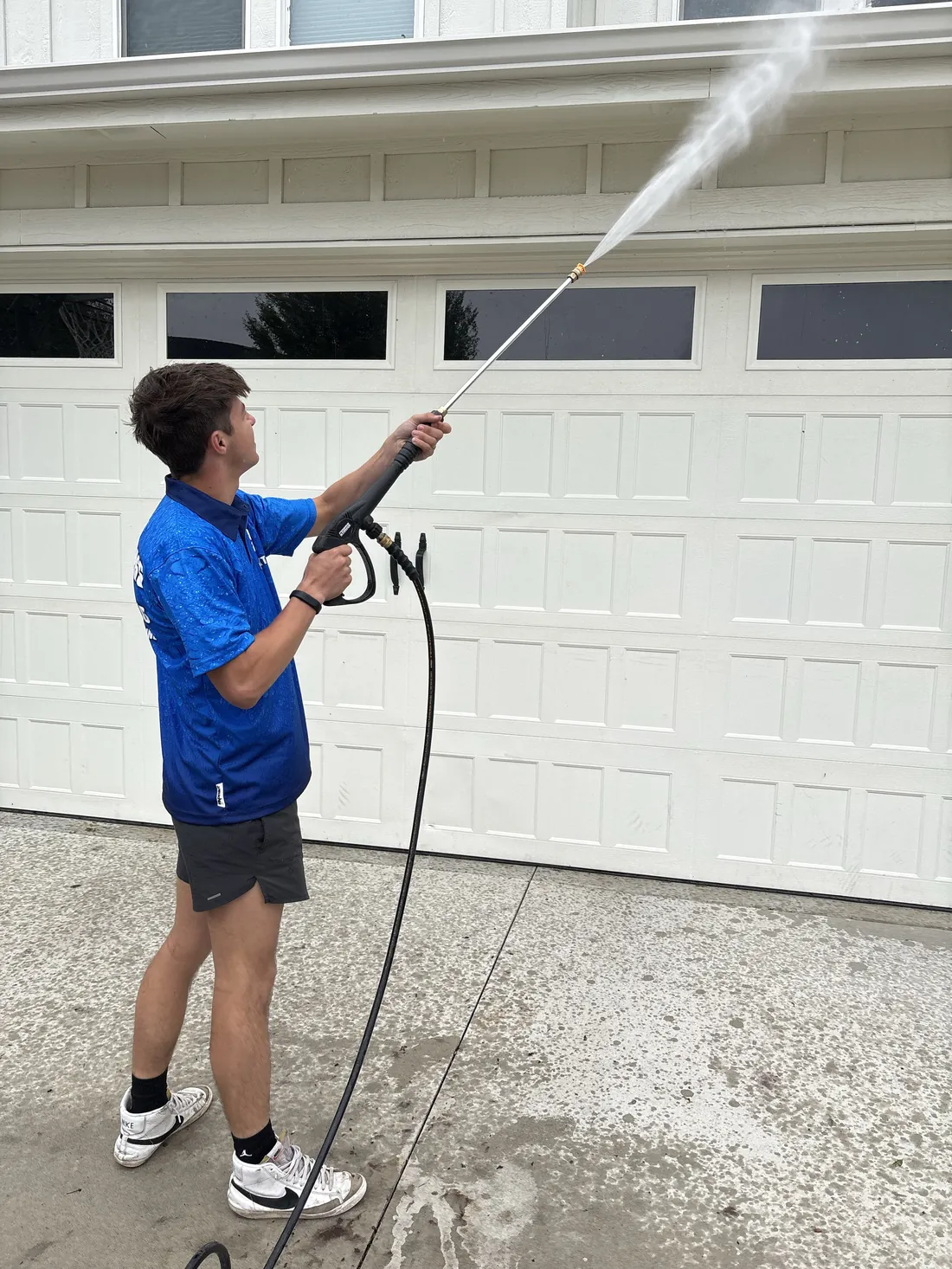
High pressure erodes the surface texture, opens the pores further, and drives water deep into the wall assembly, including through any existing cracks. On modern stucco built over a drainage plane, this can compromise how the wall is designed to shed water in the first place. The damage is not visible on the day it happens, which is exactly why it keeps being done by people who see an immediately clean-looking wall and assume no harm was done.
What works instead
Soft washing at $0.18 per square foot cleans chemically at low pressure, which suits a porous surface far better than force does. Realistic expectations matter here: absorbed staining lightens considerably rather than vanishing outright, and a wall that has been stained for a decade will look much better after a proper wash rather than looking new. Where the staining is tied to an active crack, we will point that out rather than cleaning the same spot again next season.
Want This Done For You?
Free, no-obligation quote — we'll call or text you with your price.
Get My Free Quote