What the film actually is
Wood combustion puts fine particulate, tar compounds and moisture into room air, even from a well-sealed stove, and more from an open fireplace or every time a loading door is opened to reload. Those compounds condense on the coolest surfaces available. Window glass is the coolest interior surface in most rooms, so it collects the heaviest deposit.
Why some stoves produce far more film than others
Complete combustion, hot fire, good airflow, and dry, properly seasoned wood, burns mostly to heat, light gas and a little fine ash. Incomplete combustion, from wet or unseasoned wood, a fire choked down for a slow overnight burn, or restricted air intake, throws off far more unburned tar compounds, the same volatile compounds that condense inside a chimney flue as creosote. Those same compounds condense on cool glass just as readily as they condense in a flue, which is why two households burning the same amount of wood can end up with very different amounts of film on their windows by spring.
Why it smears rather than wipes
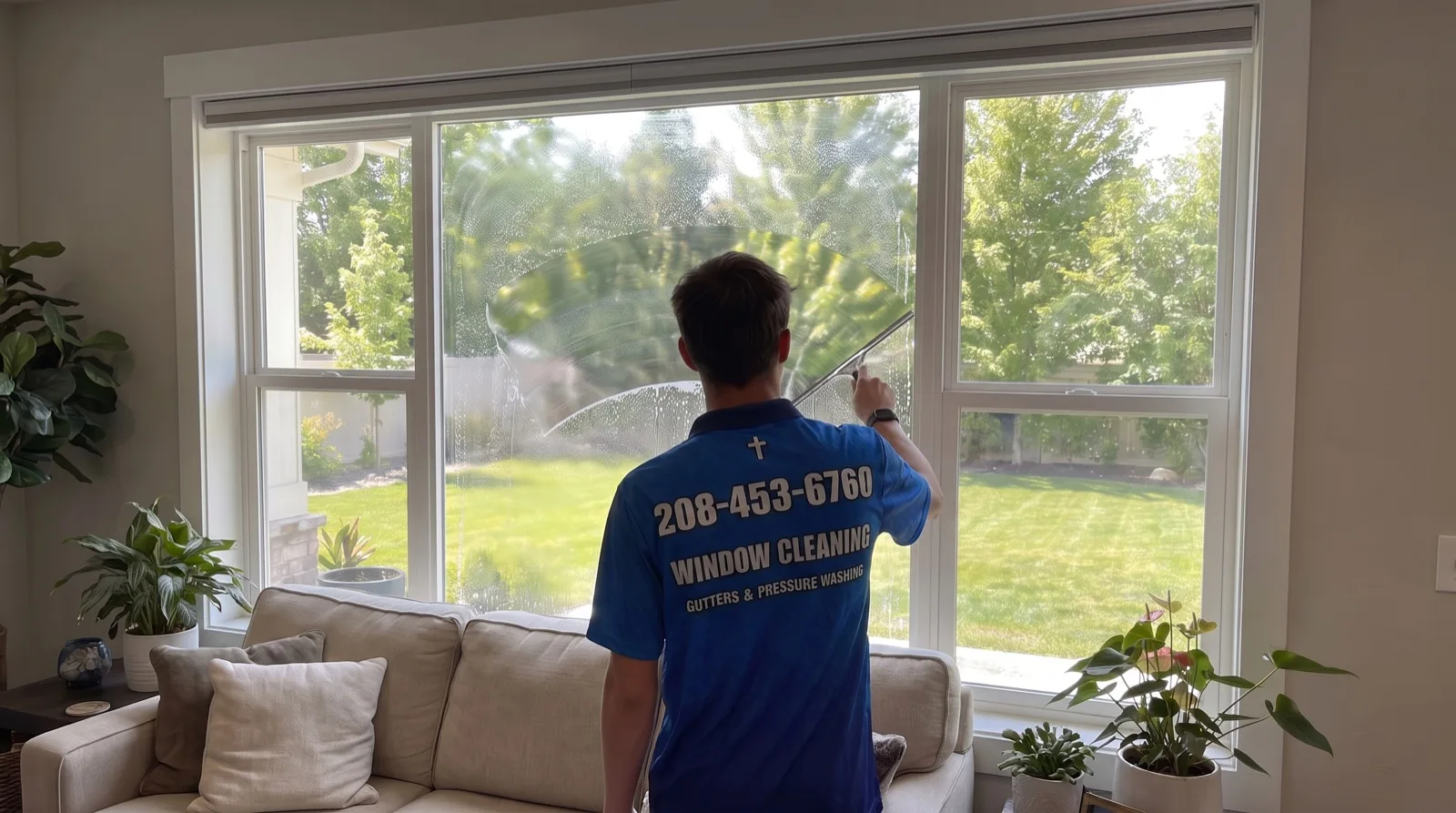
Because it is tar-based rather than particulate, dry wiping drags it into streaks and a damp cloth spreads it. It needs a cleaner that breaks the oil down and then a rinse that removes it rather than redistributing it. This is the most common reason people conclude their interior windows cannot be gotten properly clean.
It is mildly acidic on other surfaces
The same residue lands on frames, sills and window coverings. On painted wood it dulls the finish over time, and on fabric coverings it holds odor. Cleaning the glass and ignoring the frame usually leaves a visible line where one was cleaned and the other was not.
Heavy film every year can be worth a second look, and timing for the end of season
There is little point clearing film in January with three more months of burning ahead. A single thorough interior clean at the end of the heating season removes a winter of accumulation at once, and it is the highest-value interior booking of the year for a wood-heated house. Separately, if a household is burning properly seasoned wood and still seeing heavy film every single year, that pattern is worth mentioning to a chimney sweep rather than just cleaning harder: it can point to a draft or venting issue pulling more combustion byproduct into the room than a well-drafting stove should. That is a safety and venting question, not something a window cleaning addresses.
Want This Done For You?
Free, no-obligation quote — we'll call or text you with your price.
Get My Free Quote